

China Plays Both Sides: Beijing Courts Trump While Shielding Iran Ties
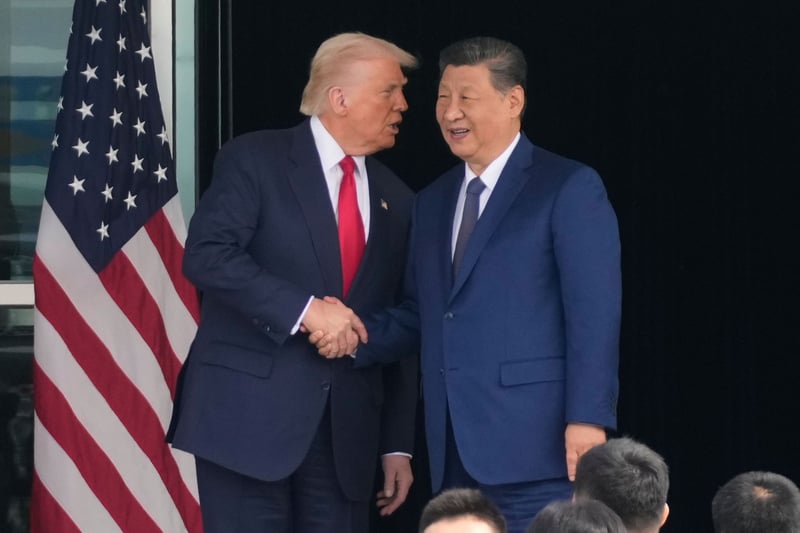
China is walking a delicate diplomatic tightrope as President Xi Jinping prepares to host Donald Trump in Beijing next month. While ramping up diplomatic efforts to end the US-Iran war, Beijing is simultaneously trying to keep its relationship with Tehran intact – and hoping to use the crisis as leverage in its upcoming summit with Washington.

.
A Balancing Act With High Stakes
Beijing finds itself in a delicate position: on one hand, it wants a smooth and productive summit with U.S. President Donald Trump, scheduled for May 14 and 15 in Beijing. On the other hand, it cannot afford to abandon Iran – one of its key oil suppliers and a strategic partner. The result is a carefully managed diplomatic performance that serves China's interests on multiple fronts.
The original summit had been planned for late March but was postponed when the U.S. and Israel launched strikes on Iran. Since then, Beijing has been working overtime to ensure the rescheduled meeting goes ahead without a hitch.
Trump dismissed concerns that the Iran war would "change the dynamic" of his Beijing visit, and said in a social media post that "President Xi will give me a big, fat hug when I get there." Behind the scenes, however, both sides are navigating treacherous waters.
.
Xi's Peace Plan – Symbols Over Substance?
In a notable diplomatic move this week, Xi Jinping broke his prolonged silence on the Iran conflict by presenting a formal peace initiative. Xi's framework puts forward four core principles: peaceful coexistence, respect for national sovereignty, balancing development with security, and upholding the international rules-based order.
The proposal was presented during a meeting with Sheikh Khaled bin Mohamed bin Zayed Al Nahyan, the Crown Prince of Abu Dhabi, in Beijing. The choice of venue was deliberate – the UAE is a Gulf rival of Iran, and by engaging Abu Dhabi, Xi signaled that China is positioning itself as a regional broker rather than simply a Tehran ally.
The initiative followed the collapse of US-Iran negotiations held in Islamabad, where key disagreements over Iran's nuclear program, sanctions relief, and regional security issues prevented any final agreement.
Critics, however, remain skeptical. According to Patricia Kim of the Brookings Institution, while Iran has asked Beijing to act as a guarantor of any ceasefire, Beijing has shown no interest in taking on that role. Kim says Beijing appears content to stay on the sidelines while Washington absorbs the pressure. In other words: China wants credit for diplomacy without the costs of commitment.
.
China's Leverage – Real or Inflated?
Trump himself acknowledged China's behind-the-scenes role in recent weeks. Trump said he personally wrote to Xi requesting that China not supply weapons to Iran, and that Xi responded by denying any such transfers were taking place. Whether this represents a genuine concession or a tactical maneuver by Beijing remains an open question.
According to analysts at the Brookings Institution, Beijing believes it already holds considerable leverage over Washington – particularly following last year's actions on rare earth exports – and expects that leverage to grow.
Eric Olander of the China-Global South Project noted that Trump's repeated public mentions of China's role in nudging Iran toward talks effectively put Beijing "in the room with negotiators, even if it's not a seat at the table" – a diplomatic foothold that costs China very little.
.
What Beijing Really Wants From the Summit
The Trump-Xi summit is expected to be carefully choreographed and deliberately limited in scope. Analysts say the meeting will focus on achievable symbolic wins rather than structural breakthroughs.
China may agree to purchase Boeing aircraft in what could be one of the largest such deals in history, along with significant agricultural purchases. These would be high-visibility gestures that play well in both Washington and Beijing – without requiring either side to make difficult concessions.
Broader topics such as AI governance, market access, and manufacturing overcapacity are expected to remain off the table. Scott Kennedy of the Center for Strategic and International Studies put it bluntly: there is "zero chance" of a sweeping deal between the two powers.
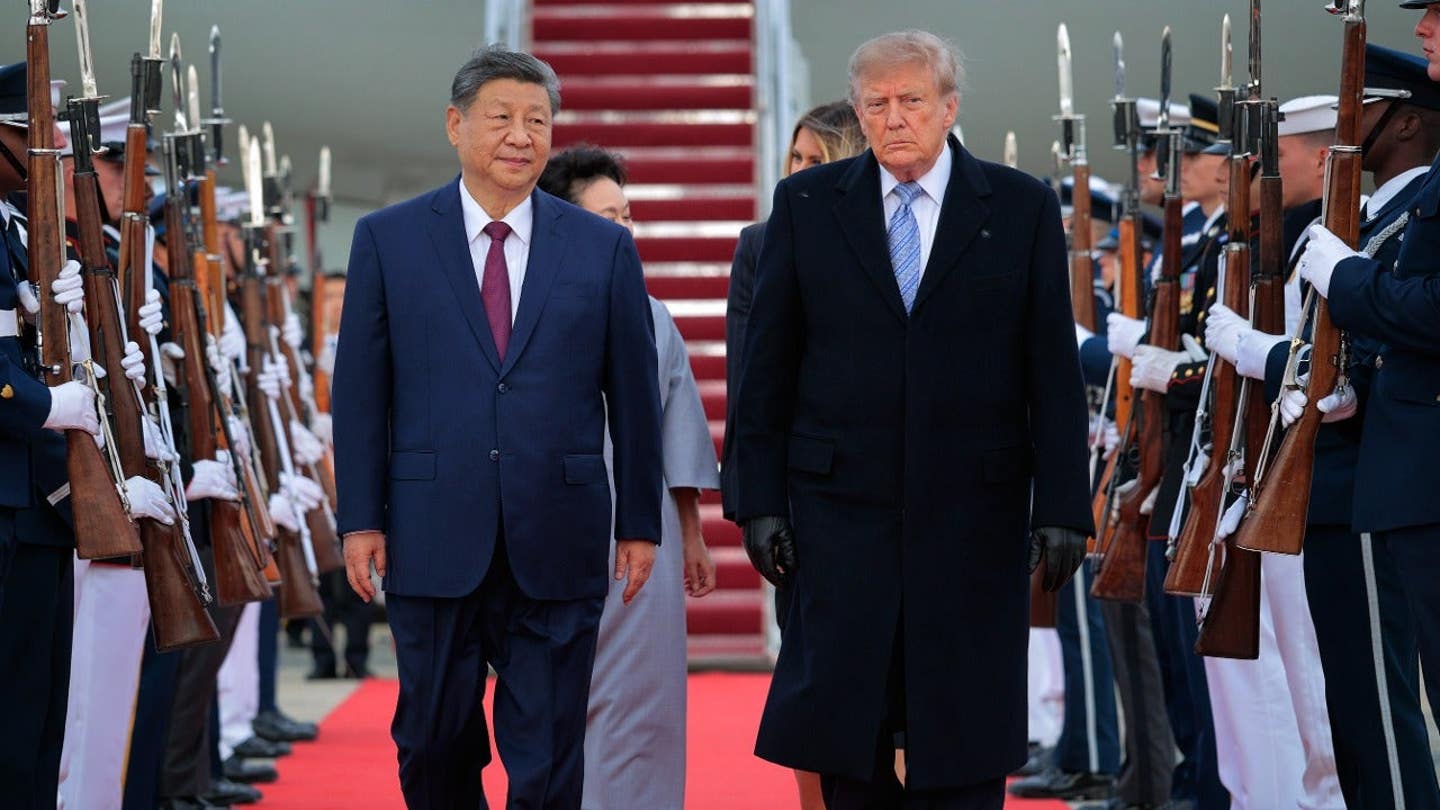
People familiar with Beijing's thinking say the dominant strategy heading into the meeting is straightforward: flatter Trump, roll out the red carpet, and protect strategic stability – while advancing China's interests on trade and Taiwan as quietly as possible.
.
Energy Security Drives Beijing's Hand
Beneath all the diplomatic maneuvering lies a hard economic reality. China is the world's largest crude oil importer, and the Middle East supplies roughly half of its fuel. A prolonged war – or worse, a disruption to oil flows through the Strait of Hormuz – would hit China's economy hard.
The vulnerability was on vivid display when a Chinese-linked tanker named Rich Starry attempted to navigate the Strait of Hormuz despite U.S. restrictions, reportedly turning back near Iran's Qeshm Island before making a second attempt and successfully passing through.
This energy dependency gives China strong incentives to push for de-escalation – but also limits how hard it is willing to push Iran, which remains a vital supplier.
.
The CCP's Calculated Neutrality
What Beijing's diplomatic flurry ultimately reveals is a calculated strategy of strategic ambiguity. The Chinese Communist Party is not genuinely committed to peace in the Middle East – it is committed to preserving its own options. By avoiding strong criticism of either side, it maintains access to both Washington and Tehran. By deploying symbolic gestures like Xi's four-point plan, it projects the image of a responsible global power. And by nudging Iran toward talks, it earns goodwill from Trump ahead of a high-stakes summit.
For Beijing, diplomacy is not a moral exercise – it is a tool of power. The people of Iran, caught in the crossfire of a devastating war, remain largely incidental to that calculation.
.
Sources
- Reuters – "China steps up Iran diplomacy while seeking smooth summit with Trump" (April 17, 2026): https://www.reuters.com/world/china/china-steps-up-iran-diplomacy-while-seeking-smooth-summit-with-trump-2026-04-17/
- South China Morning Post – "Trump dismisses concern Iran war will derail China trip" (April 15, 2026): https://www.scmp.com/news/china/diplomacy/article/3350188/trump-tells-letter-exchange-xi-jinping-over-chinas-role-iran-war-interview
- Brookings Institution – "The Delayed Trump-Xi Summit, Iran, and the US-China Relationship": https://www.brookings.edu/articles/the-delayed-trump-xi-summit-iran-and-the-us-china-relationship/
- China-Global South Project – "Trump Says China Agreed Not to Arm Iran" (April 16, 2026): https://chinaglobalsouth.com/2026/04/16/trump-xi-china-iran-weapons/
- The Swipe Up / Shubhankar Tiwari – "After discussions with Pakistan break down, Xi Jinping presents a four-point peace plan" (April 14, 2026): https://www.theswipeup.com/2026/04/after-discussions-with-pakistan-break.html
.
What's Your Reaction?
 Like
0
Like
0
 Dislike
0
Dislike
0
 Love
0
Love
0
 Funny
0
Funny
0
 Wow
0
Wow
0
 Sad
0
Sad
0
 Angry
0
Angry
0













Comments (0)