

Middle East Shipping Turmoil Hits Chinese Exporters as Rerouting Costs Surge
Middle East Shipping Turmoil Hits Chinese Exporters as Rerouting Costs Surge - Chinese exporters are facing mounting delays, higher freight rates, and shrinking profit margins as escalating disruptions in the Middle East force global carriers to reroute ships away from the Strait of Hormuz and the Red Sea. The sudden shift has raised transport costs, strained supply chains, and left many Chinese manufacturers uncertain about delivery schedules and contract commitments.


.
Lede
Chinese exporters are facing mounting delays, higher freight rates, and shrinking profit margins as escalating disruptions in the Middle East force global carriers to reroute ships away from the Strait of Hormuz and the Red Sea. The sudden shift has raised transport costs, strained supply chains, and left many Chinese manufacturers uncertain about delivery schedules and contract commitments.
A Region in Crisis: Why Shipping Routes Are Failing
Tensions across the Middle East have pushed major carriers to suspend or restrict transits through the Strait of Hormuz and parts of the Red Sea, two of the world’s most important maritime corridors.
- Several global shipping lines — including Maersk, Hapag‑Lloyd, MSC, and CMA CGM — have halted or limited transits due to safety concerns.
- Some carriers are experimenting with land‑bridge and multimodal corridors to bypass high‑risk zones, but these options are slower and more expensive.
The result is a fragmented and unpredictable logistics landscape that is hitting China’s export‑dependent economy at a sensitive moment.
How Chinese Exporters Are Being Affected
1. Freight costs have surged
- Shipping a container from China to Europe has more than doubled in some cases, rising from around $3,000 to roughly $7,000 during recent disruption waves.
- Insurance premiums have also climbed sharply as underwriters reassess risks in the Gulf and Red Sea.
2. Delivery delays are widespread
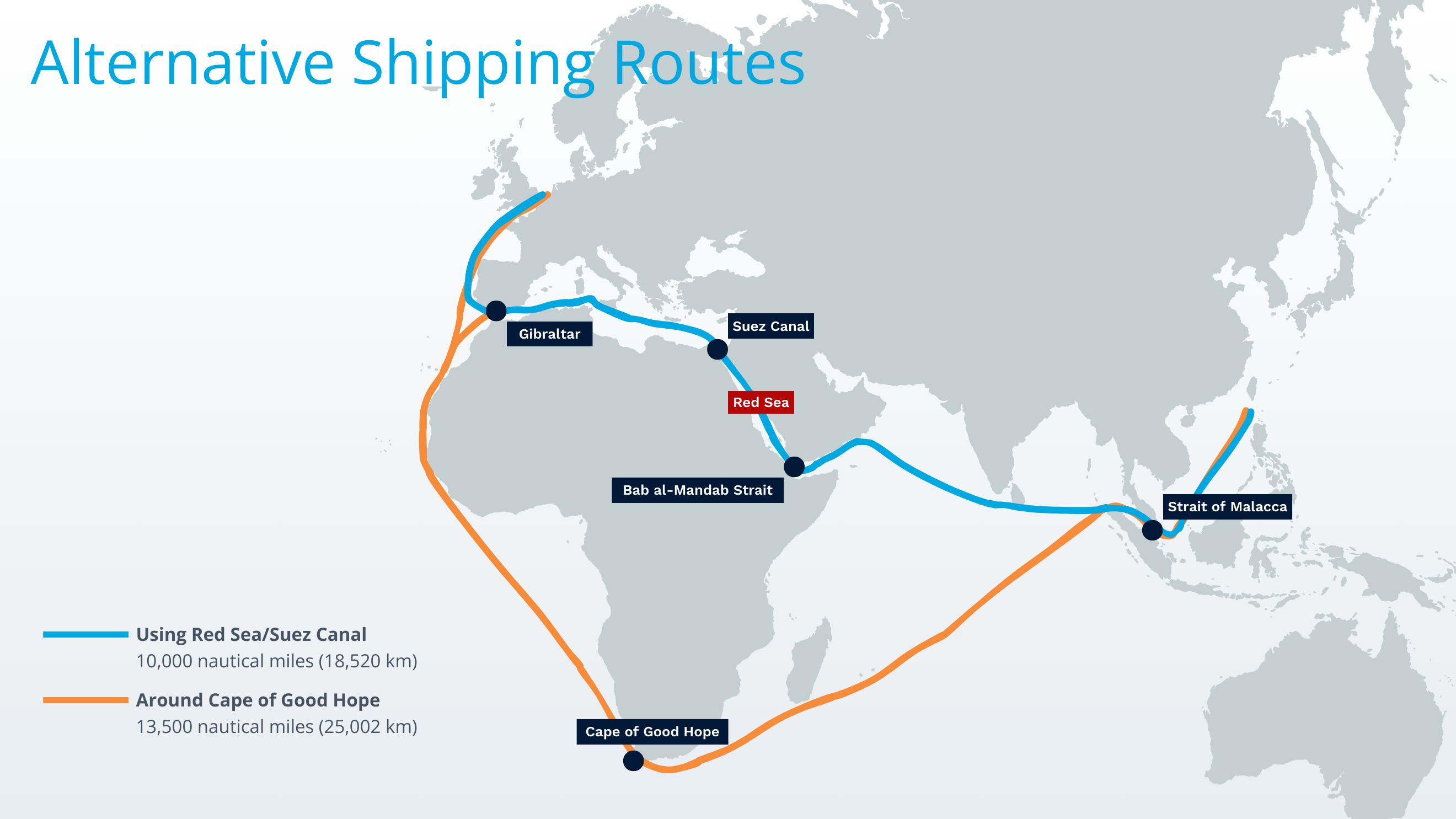
- Rerouting vessels around the Cape of Good Hope adds 10–14 days to many journeys, straining delivery schedules and contract obligations.
- Exporters in sectors such as machinery, electronics, and consumer goods report difficulty guaranteeing arrival times for overseas buyers.
3. Some industries are halting shipments entirely
- Chinese steel exporters, heavily reliant on Gulf markets, have stopped offering shipments to Middle Eastern customers due to vessel shortages and soaring freight rates.
4. Small and mid‑sized exporters are under severe pressure
- Thin‑margin traders — especially those shipping vehicles, machinery, and mixed cargo — say the cost spikes have “wiped out” profits and threaten business survival.
Why the Disruptions Matter for China
China relies heavily on maritime trade, and the Middle East is a key link between Asia, Europe, and Africa.
- The Red Sea and Suez Canal handle 12% of global trade and nearly 30% of global container traffic, making disruptions especially damaging.
- The Middle East conflict has also triggered fuel and fertilizer price increases, affecting production costs across Asia.
For China — whose economy depends on stable export flows — these disruptions expose vulnerabilities in global supply chains and highlight the risks of geopolitical chokepoints.
How Companies Are Responding
Rerouting and diversification
Exporters are shifting shipments to:
- Southern sea routes via the Cape of Good Hope
- Alternative ports in Southeast Asia
- Rail‑sea multimodal corridors through Central Asia
Risk management
Logistics firms are advising exporters to:
- Build longer lead times into contracts
- Use flexible delivery clauses
- Split shipments across multiple routes
- Increase inventory buffers in overseas warehouses
Government monitoring
Chinese trade officials are tracking the situation closely, though no major policy interventions have been announced. Exporters are urging authorities to provide temporary freight subsidies or insurance support.
Explainer: Why the Strait of Hormuz and Red Sea Are So Critical
For non‑expert readers, here’s why these waterways matter:
- Strait of Hormuz: A narrow passage between Iran and Oman through which a significant share of global oil and container traffic flows.
- Red Sea & Bab al‑Mandab: A key link between Asia and Europe via the Suez Canal.
- When these routes are disrupted, ships must detour thousands of kilometers, raising costs and delaying deliveries worldwide.
.
.
Sources
- Global Cold Chain Alliance — Middle East maritime disruption update (March 2026).
- Honour Ocean Shipping — China–Middle East freight surcharges and delays (2026).
- Maritime News — Carrier suspensions in the Strait of Hormuz and Red Sea (March 2026).
- UN News — Middle East conflict impact on Asia‑Pacific supply chains (March 2026).
- ET Infra / Reuters — Chinese steel exporters halt Middle East offers (March 2026).
- Reuters — Red Sea crisis pressures Chinese exporters; freight costs surge (2024).
- Reuters via Wall Street Observer — Shipping cost spikes and insurance pressures (2024).
- Newsweek — Strategic importance of Red Sea shipping routes (2025).
.
What's Your Reaction?
 Like
0
Like
0
 Dislike
0
Dislike
0
 Love
0
Love
0
 Funny
0
Funny
0
 Wow
0
Wow
0
 Sad
0
Sad
0
 Angry
0
Angry
0













Comments (0)