

Hong Kong’s ‘One Country, Two Systems’ Was Not Betrayed by Jimmy Lai—It Was Broken by Beijing


.
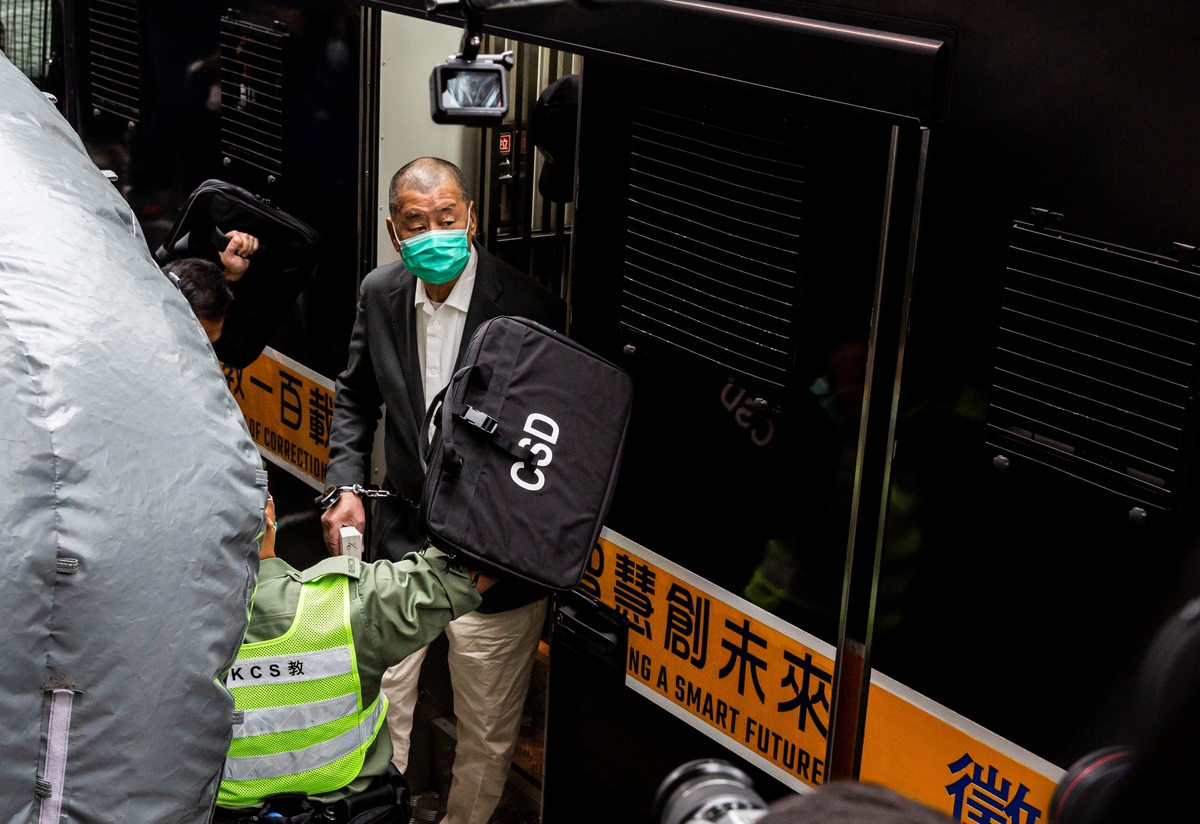
Over several days beginning on Jan. 12, the Hong Kong High Court is hearing submissions in a mitigation hearing (a plea for leniency). The proceedings do not concern guilt, which has already been determined, but sentencing. The verdict against Jimmy Lai Chee-ying—founder of Apple Daily, businessman, Catholic, and one of Hong Kong’s most prominent defenders of freedom—has already been handed down.
What is now before the court is a narrow procedural stage following a conviction that was never in serious doubt. The law has already spoken, and the scope for leniency is limited.
Lai’s case has become a defining symbol of what Hong Kong has lost. It is no longer merely about one man or one newspaper. It is about the dismantling of a legal and political system that once set Hong Kong apart from the rest of China and earned the world’s confidence.
A member of parliament from the UK has directly criticized the three judges who convicted Lai—Esther Toh Lye-ping, Alex Lee Wan-tang, and Susana D’Almada Remedios—arguing that they should be considered for Magnitsky sanctions. Two of the three were called to the bar in London and trained in the common law tradition that once defined Hong Kong’s judiciary. Their role in delivering a national security conviction against a peaceful publisher has raised profound concerns about judicial independence, professional ethics, and international accountability.
A Refugee Who Built His Life Under Colonial Hong Kong
Lai’s personal history mirrors Hong Kong’s rise. Born in mainland China, he fled communist rule at age 12 and arrived in Hong Kong as a penniless refugee. Under British colonial rule, he worked in factories, saved relentlessly, and eventually built a successful clothing business before entering the media industry.His success was not the result of political privilege but of a system grounded in the rule of law, economic freedom, and respect for private property.
‘One Country, Two Systems’ Destroyed by the CCP
For decades, the “one country, two systems” framework was the constitutional foundation of Hong Kong’s autonomy. It promised that the city would retain its independent judiciary, free press, and way of life for at least 50 years after 1997. This was not merely a political slogan, but an international commitment set out in the Sino–British Joint Declaration.That promise has been broken.
The National Security Law, imposed in mid-2020, fundamentally altered Hong Kong’s legal landscape. Vaguely defined offenses such as “collusion with foreign forces” and “sedition” allowed speech, journalism, and international advocacy to be recast as threats to national security. Judges for such cases were designated by the chief executive. Bail became exceptional. Political considerations replaced legal certainty.
.

When International Business Trusted Hong Kong
To understand the scale of what has been lost, one must recall the Hong Kong that existed when Apple Daily was still publishing freely.International businesses came to Hong Kong because it was predictable. Courts were independent. Contracts were enforced. Capital flowed freely. Information circulated openly. A free press served as a visible assurance that transparency and accountability mattered.
Apple Daily was part of that ecosystem. Its existence signaled that criticism of power was tolerated. For global investors, this mattered deeply. If the press were free, then property rights and shareholder protections would likely be secure as well.
Assets Frozen, Confidence Destroyed
Perhaps the most alarming consequence of Lai’s case for international business is the precedent it sets for property rights.Lai’s companies had their assets frozen without a completed trial. Shares in a publicly listed company were effectively rendered unusable by an administrative order. Banks complied. Investors around the world took note.
Hong Kong’s appeal was never simply about low taxes or geographic position. It was trust in the system. Once investors saw that assets could be frozen and businesses crippled on the basis of sweeping national security claims, Hong Kong’s risk profile changed fundamentally.
Transparency Silenced, Rule of Law Replaced
Beyond politics and capital flows, Apple Daily played an essential—if often understated—role in sustaining confidence in doing business in Hong Kong. A free, investigative, and sometimes uncomfortable press signaled to the world that corruption could be exposed, abuses could be scrutinized, and power could be questioned.When Apple Daily was still around, investors understood that transparency was woven into Hong Kong’s system and that transparency reinforced the rule of law.
.

The Myth of Non-Intervention
Hong Kong officials once proudly touted “positive non-intervention.” Beijing promised restraint and respect for local autonomy. In hindsight, this promise was always fragile.Long before 2020, warning signs were evident: pressure on media owners, reinterpretations of the Basic Law, and a shrinking political space. The National Security Law merely formalized what had long been apparent—the CCP never intended to tolerate a genuinely autonomous Hong Kong for 50 years.
A Test for the World
Lai is not a violent criminal, a separatist, or a terrorist. He neither advocated overthrowing the state nor promoted disorder or hatred. He was, and remains, a principled defender of “one country, two systems” and sincerely believed that Hong Kong could remain part of China while preserving its freedoms, the rule of law, and openness to the world. That belief was not naive; it was grounded in solemn promises Beijing made and enshrined in international agreements.What is deeply dishonorable is not Lai’s conduct but the behavior of the Chinese Communist Party, which has chosen to criminalize faith in its own commitments. By punishing those who took its promises seriously, the CCP has revealed not strength but insecurity—and not sovereignty but contempt for the rule of law. Lai’s so-called crime was expecting Beijing to honor its word, and for that he now pays the price.
Today, Lai faces the prospect of spending the rest of his life in prison. His case is not merely about sentencing but about whether justice still exists in Hong Kong. Silence is not neutrality. The international community must speak up clearly and forcefully in support of Lai and call for his immediate release.
What's Your Reaction?
 Like
0
Like
0
 Dislike
0
Dislike
0
 Love
0
Love
0
 Funny
0
Funny
0
 Wow
0
Wow
0
 Sad
0
Sad
0
 Angry
0
Angry
0














Comments (0)