

Former RCMP Director Alarmed by New Canada-China Agreement on Public Safety Cooperation


.
Former national director of the RCMP’s proceeds-of-crime program Garry Clement says Ottawa’s new agreement with Beijing on public safety is concerning because it potentially opens the door for the Chinese regime to “capitalize on intelligence.”
Prime Minister Mark Carney made several agreements with Beijing during his visit to China last week as part of a broader effort to establish closer ties with China and boost non-U.S. exports.
The PMO said this cooperation would “create safer communities” for people in both countries by combatting “narcotics trafficking, transnational and cybercrime, synthetic drugs and money laundering” more effectively. The government has not yet released details on what the agreement involves, and in the absence of clarity, Clement is raising concerns about how it could turn out.
Clement said in an interview that such an agreement is worrying because the Chinese regime’s law enforcement is “inseparable” from the state security apparatus acting on behalf of the Chinese Communist Party (CCP).
“The reality of it is [the CCP] does not respect human rights, and so what we’re doing is opening the door for them to capitalize on intelligence,” he said.
He also has concerns about how this type of agreement could be viewed by Canada’s partners in the Five Eyes intelligence alliance, noting that it “erodes our credibility” in such international partnerships.
The Epoch Times contacted Public Safety Canada about further details on the new agreement with China, but no comments were provided.
.

Secret Police Stations
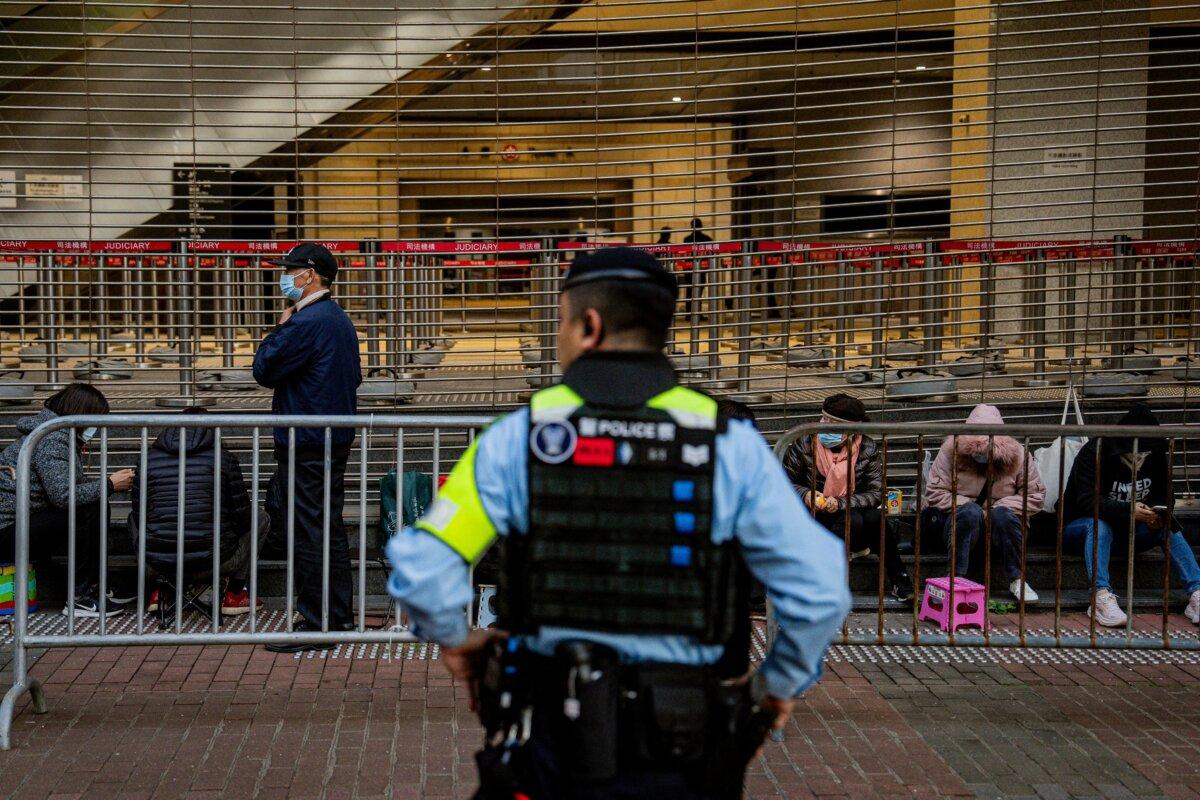
Clement noted that China’s police forces are involved in transnational repression, and China has operated secret police stations on Canadian soil.“I think with our history and the evidence that we’ve seen, we know there’s transnational repression, and it’s existed in Canada for a long time. We’ve confirmed there’s PRC-linked intimidation,” Clement said, referring to the People’s Republic of China (PRC).
A 2022 report by Spain-based human rights NGO Safeguard Defenders said secret police operations “eschew official bilateral police and judicial cooperation” and show the worrying growth of “transnational repression” and “long-arm policing” by the CCP.
The report also noted the stations target those sought by the regime, including dissidents and democracy activists.
Training Chinese Police
Clement also questioned whether the cooperation agreement between Canada and China on public safety could mean Canadian police could offer training to Chinese police. The Justice Institute of British Columbia previously partnered with China’s Public Security Bureau to train Chinese police in the province until 2019.“Normally, there’s nothing wrong with offering training if they’re going to apply some of the procedures and processes that we adopt in Canada,” Clement said. “But we have to ask ourselves, are these individuals really coming for training, or are they coming to try and absorb intelligence?”
He added that the CCP doesn’t follow the rule of law, and the Canadian delegation did not appear to discuss anything related to transnational repression with Chinese leader Xi Jinping while in Beijing.
.
Foreign Interference
Clement said that an important step for Canada to take in the face of the increased CCP threats is to implement its long-promised foreign agent registry.“We shouldn’t be doing anything until that foreign agent registry is actually implemented, because without it we’re opening the floodgates, as far as I’m concerned, to real espionage activities on the part of the Chinese.”
Foreign Affairs Minister Anita Anand said at a parliamentary committee on Nov. 27 that Canada “will never tolerate any form of foreign interference or meddling in our democracy.”
A public inquiry probing foreign interference in Canada concluded last year that China is the most active foreign power meddling in Canada’s affairs.
What's Your Reaction?
 Like
0
Like
0
 Dislike
0
Dislike
0
 Love
0
Love
0
 Funny
0
Funny
0
 Wow
0
Wow
0
 Sad
0
Sad
0
 Angry
0
Angry
0

















Comments (0)