

Beijing's Long Arm: American Uyghur Scholar Expelled From Malaysia at China's Demand
A prominent Uyghur-American scholar was detained and deported from Malaysia in March 2026 after Beijing reportedly pressured Malaysian authorities to deny him entry. The incident, along with a parallel crackdown in Kazakhstan, is raising fresh alarms about China's growing ability to silence critics far beyond its own borders.

.
Detained at the Gate: What Happened in Kuala Lumpur
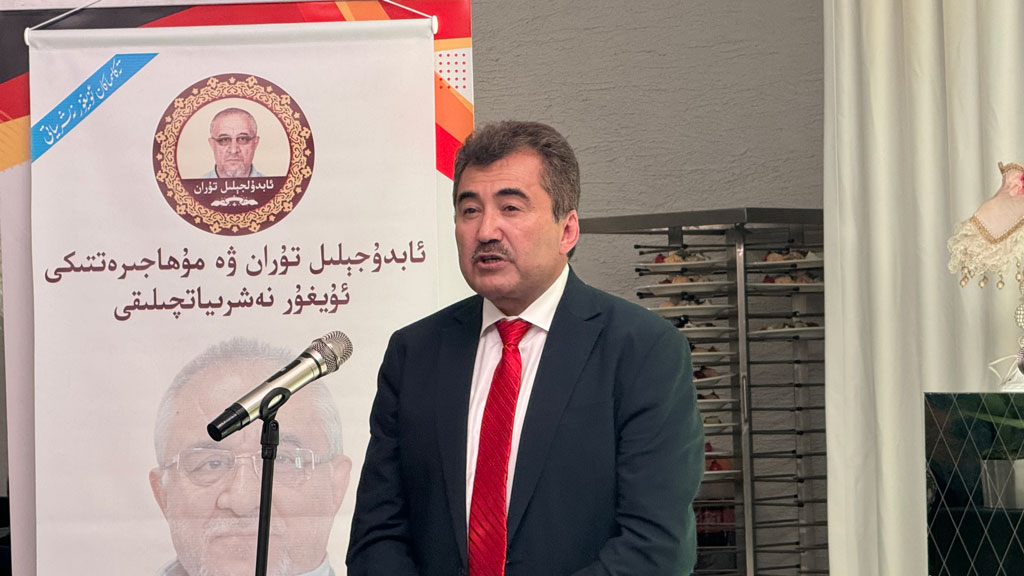
On the morning of March 29, 2026, Abdulhakim Idris — a U.S. citizen and executive director of the Center for Uyghur Studies in Washington, D.C. — landed at Kuala Lumpur International Airport. He never made it past immigration.
Malaysian authorities detained Idris for nearly a full day and subsequently expelled him from the country, preventing him from launching the Malay-language edition of his book about how the Chinese Communist Party pressures governments in the Islamic world to remain silent about its persecution of Uyghurs.
According to Idris's own account, he was interrogated for around five hours and then transferred to a detention facility inside the airport, where he was held for 21 hours. He was placed on a deportation flight in the early hours of March 30. His passport was only returned to him during a transit stop in Istanbul.
No official explanation was ever provided for the decision to deny him entry. But the reason, according to Idris and the organization that had invited him, was no mystery: Beijing had asked for it.
"They informed me that my deportation was a direct request from Beijing," Idris stated publicly. No one could reverse the decision once it had been made.
Who Is Abdulhakim Idris?
Idris is one of the leading academic voices on Chinese influence in Muslim-majority countries and on the situation of Uyghurs — a predominantly Muslim ethnic group from China's far-western Xinjiang region. His book Menace examines how the Chinese Communist Party (CCP) has leveraged its political and economic power to suppress Uyghur-related discourse across the Islamic world.
The World Uyghur Congress noted that Idris has lost contact with more than 20 family members and has faced ongoing psychological pressure linked to his advocacy work. His wife, Rushan Abbas, is a well-known activist herself — and her own sister, Dr. Gulshan Abbas, has been imprisoned in China since 2018, reportedly as a form of retaliation.
Idris has also faced death threats and staged protests at previous book launch events.
"A Wake-Up Call for the World"
The deportation drew swift and sharp condemnation from human rights organizations worldwide.
Rushan Abbas, executive director of the nonprofit Campaign for Uyghurs, described the incident as a direct warning to all democracies. "Beijing successfully weaponized a third country to detain and expel a U.S. citizen. This poses dangerous consequences far beyond the Uyghur community," she said in a statement released on April 16.
Adrian Zenz, a senior fellow at the Victims of Communism Memorial Foundation in Washington, called the expulsion one of the most brazen examples of transnational repression he had seen, warning that the international community must respond clearly. Without a firm reaction, he argued, no American advocate, journalist, or researcher working abroad would be safe from Beijing's reach.
Freedom House, which tracks such cases globally, has documented that Uyghur individuals are involved in over 20 percent of incidents in its transnational repression database, which catalogs direct, physical cases worldwide from 2014 to 2025.
A Pattern, Not an Isolated Incident
The Malaysia case is not the first time Idris has encountered Beijing-linked interference during overseas advocacy work.
During a trip to Indonesia in 2025, Idris was detained at the airport for three hours before the U.S. government intervened and secured his entry. In that case, diplomatic pressure worked. In Malaysia, it did not.
The CCP's efforts to silence Uyghur voices abroad are not limited to individual scholars. The pattern includes surveillance, intimidation, proxy coercion, and — increasingly — direct pressure on third-country governments. The World Uyghur Congress said such actions form part of a strategy that includes arbitrary detention, deportation, surveillance, and intimidation, often extending beyond China's borders and affecting diaspora communities.
It is also worth recalling that in April 2025, Malaysian police raided a private gathering in Kuala Lumpur, detaining dozens of Falun Gong practitioners who were engaged in a routine study session — an event that took place just ahead of a state visit by China's top leader. That mass arrest drew condemnation from human rights organizations and the U.S. State Department.
Kazakhstan Follows Suit: 19 Activists Imprisoned
In a parallel development that underscores just how far Beijing's influence now reaches, a court in Kazakhstan handed down prison sentences to 19 activists on April 13, 2026 — for peacefully protesting against human rights abuses in Xinjiang.
The activists, linked to the Atajurt movement, were convicted in the city of Taldykorgan. Eleven of them received five-year prison sentences on charges of "inciting interethnic or social discord." Eight others received non-custodial restrictions. All defendants were banned from public or political activities for three years.
The protest had remained entirely peaceful throughout and included no calls for violence. The activists had drawn attention to the persecution of ethnic Kazakhs in Xinjiang, demanded the release of a fellow activist detained while traveling to China in 2025, and voiced concern about China's growing influence in Kazakhstan. Just one day after the protest, the Chinese consulate in Almaty issued a diplomatic note demanding that authorities "take appropriate measures." Criminal proceedings followed.
Human Rights Watch researcher Yalkun Uluyol called the convictions unprecedented, saying they signal that Kazakhstan is willing to sacrifice the freedoms of its own citizens to preserve relations with Beijing.
Amnesty International's director for Eastern Europe and Central Asia, Marie Struthers, called the ruling a misuse of vague legal provisions to silence legitimate dissent, and demanded the activists be released immediately.
Beijing's Ministry of Foreign Affairs, for its part, described the sentencing as an "internal affair" and praised Kazakhstan as a "friendly neighbor" familiar with China's policies in Xinjiang.
The Bigger Picture
What is unfolding in Malaysia, Kazakhstan, and elsewhere reflects a documented and escalating strategy. China — under the CCP's leadership — has built what Freedom House has described as the world's most sophisticated and comprehensive system of transnational repression. It targets not only Uyghurs, but Tibetans, Falun Gong practitioners, Hong Kong activists, and Chinese dissidents of all backgrounds.
For Idris, the message of his expulsion is unambiguous: the CCP is expanding its reach into Muslim-majority nations in an effort to neutralize voices that expose its policies in Xinjiang.
The question now facing democratic governments — including the United States, which claims Idris as its own citizen — is whether they will respond with the kind of clear, coordinated pushback that experts say is the only language Beijing understands.
.
Sources:
- Freedom House – Interview with Abdulhakim Idris: https://freedomhouse.org/article/detained-denied-deported-how-chinese-authorities-attempted-silence-uyghur-scholar-and
- Campaign for Uyghurs – Press Release, April 16, 2026: https://campaignforuyghurs.org/malaysian-government-bows-to-beijing-detains-and-expels-uyghur-american-scholar/
- Human Rights Watch – Kazakhstan jails activists: https://www.hrw.org/news/2026/04/13/kazakhstan-jails-activists-for-peaceful-xinjiang-protest
- Amnesty International – Kazakhstan sentencing statement: https://www.amnesty.org/en/latest/news/2026/04/kazakhstan-sentencing-of-19-activists-over-peaceful-xinjiang-protest-a-travesty-of-justice/
- Associated Press / Washington Post – Kazakhstan convictions: https://www.washingtonpost.com/world/2026/04/16/kazakhstan-china-protest-xinjiang/4920432a-3970-11f1-90c4-9772c7fabc03_story.html
- World Uyghur Congress – Condemnation statement (via ANI): https://aninews.in/news/world/europe/world-uyghur-congress-condemns-deportation-of-uyghur-activist-from-malaysia20260418161808/
- IPHR – Background on Kazakhstan trial: https://iphronline.org/articles/kazakhstan-verdict-looming-in-trial-of-activists-protesting-repression-in-xinjiang-ensure-justice-and-release-them/
.
What's Your Reaction?
 Like
0
Like
0
 Dislike
0
Dislike
0
 Love
0
Love
0
 Funny
0
Funny
0
 Wow
0
Wow
0
 Sad
0
Sad
0
 Angry
0
Angry
0











Comments (0)