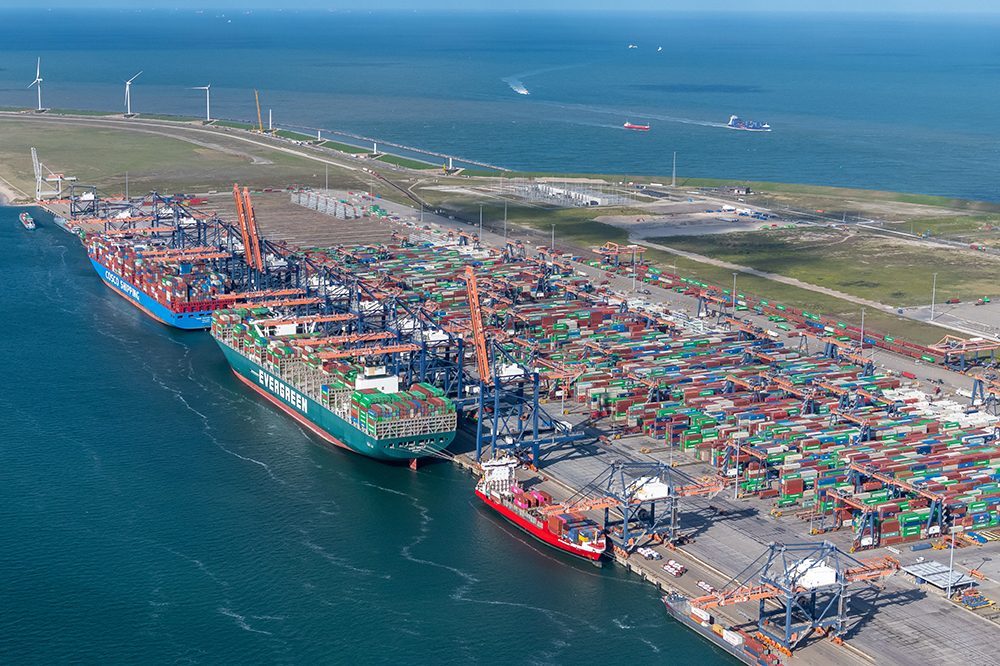
Ottawa is seeking a meeting with China to raise its own trade concerns after Beijing filed a complaint with the World Trade Organization (WTO) over Canada’s latest tariffs on Chinese steel.
Canada is standing by its tariffs on Chinese steel, citing Beijing’s non-market practices, according to a statement to the media from International Trade Minister Maninder Sidhu’s office. China on Aug. 15 filed a
complaint to the WTO over additional tariffs Canada imposed on Chinese steel and aluminum last month, arguing they are inconsistent with international trade rules.
The minister’s office said Ottawa is now seeking a joint economic and trade commission meeting with China to put its concerns on the table.
Prime Minister Mark Carney on July 16
announced additional 25 percent tariffs on steel imports from all non-U.S. countries containing steel melted and poured in China, saying they were aimed at protecting Canada’s domestic industry against trade diversion from other countries.
“China is engaging in non-market acts, policies, and practices with respect to their steel and aluminum sectors which could lead to an increase of Chinese imports that adversely affect domestic production, as well as planned investments in Canada’s steel and aluminum industries,” reads the government surtax
order on the Chinese metals,
registered in the Canada Gazette on Aug. 13.
It adds that while existing tariffs have decreased direct imports from China, “such measures also create an incentive for China to export their steel and aluminum to other countries along the supply chain for further manufacturing before being exported to their final destination, including to Canada, without being subject to tariffs applicable to China.”
Ottawa says China’s non-market policies and practices include “pervasive” subsidization, “insufficient or non-existent” labour and environmental standards it says are contrary to Canadian values, and other measures to “artificially” lower production costs.
“As a result, China is exporting steel and aluminum at unfairly low prices, distorting global trade,” says the surtax order.
Canada had already placed a 25 percent tariff on steel and aluminum from China in October 2024, along with 100 percent tariffs on Chinese-made electric vehicles (EVs),
citing “unfair competition” from Chinese producers. The measures followed a similar
move by the United States.
A few weeks after Canada announced its latest tariffs on Chinese steel and aluminum, Beijing
imposed 75.8 percent temporary tariffs on Canadian canola, saying they stemmed from an “anti-dumping” investigation the regime initiated last year after Canada imposed tariffs on Chinese EVs and metals.
But Canada has rejected the investigation’s findings.
“We do not dump canola. Our hard-working farmers provide world-class food to Canadians and international trading partners,” Sidhu said in an Aug. 12 joint
statement with Minister of Agriculture and Agri-Food Heath MacDonald.
The latest Chinese tariffs added to levies the regime
imposed earlier this year on Canadian agricultural products, including canola-related, seafood, and pork products.
China’s targeting of Canadian canola has sparked calls from elected officials—especially in Western Canada—for Ottawa to support the prairie-based industry and seek the removal of Beijing’s tariffs.
Saskatchewan Premier Scott
Moe and Manitoba Premier Wab
Kinew have both called on Ottawa to support the agricultural sector, saying it deserves the same support that industries such as the steel and auto sectors have received.
Likewise, Alberta Premier Danielle Smith has
said her province will continue to support “our western producers,” adding that “Ottawa needs to do the same.”
China has previously
targeted the Canadian canola industry in an apparent retaliatory move. In 2019, Beijing imposed a three-year ban on Canadian canola. This followed the arrest of Chinese tech company Huawei’s senior executive Meng Wanzhou in Vancouver a few months earlier.
.
The Canadian Press contributed to this report.
.




 Like
0
Like
0
 Dislike
0
Dislike
0
 Love
0
Love
0
 Funny
0
Funny
0
 Wow
0
Wow
0
 Sad
0
Sad
0
 Angry
0
Angry
0













Comments (0)