

China's Shadow Over Argentina's River Deal
The United States is raising the alarm over alleged Chinese influence in a high-stakes Argentine infrastructure tender. A top U.S. congressman has written directly to Secretary of State Marco Rubio — and Washington's concern is now shaping events in Buenos Aires.

.
A 25-Year Contract, a Vital Waterway — and a Geopolitical Battle
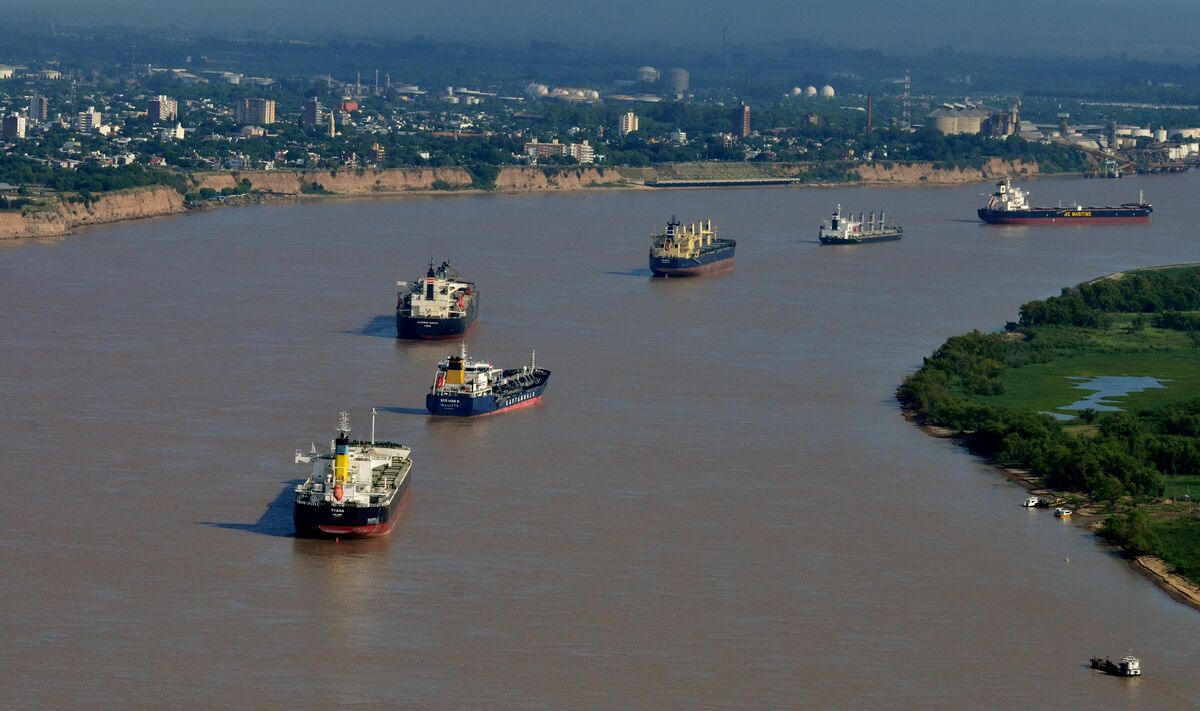
Argentina is in the final stages of awarding one of its most consequential infrastructure contracts in years: a 25-year concession to dredge and operate the Paraná River, the artery through which roughly 80 percent of the country's agricultural and agro-industrial exports flow to world markets. The deal is valued at an estimated $10 billion in investment.
Two major European dredging consortia are competing for the prize. Jan De Nul, a Belgian firm that has managed the Paraná waterway for decades, is currently leading on points. Its rival is Deme Group, whose consortium includes U.S. investment firm KKR and American dredging company Great Lakes Dredge & Dock Corp.
A decision is expected within days.
Washington Sounds the Alarm
On April 23, U.S. House Foreign Affairs Committee Chairman Representative Brian Mast sent a letter to Secretary of State Marco Rubio warning of what he described as "Chinese malign influence" in the bidding process — a letter reviewed by Reuters.
The tender's rules explicitly excluded state-owned companies, effectively barring Chinese state enterprises from participating directly. But Mast alleged that Beijing was attempting to "circumvent that choice through a private sector proxy."
His letter focused specifically on Servimagnus, an Argentine firm that is part of Jan De Nul's consortium. Mast claimed that Jan De Nul "maintains deep and ongoing links to PRC state-owned entities" through this partnership. Awarding the contract to Jan De Nul, the letter argued, "would be unacceptable and damaging to Argentina's national security, America's national security and our bilateral relationship."
China's foreign ministry had not responded to requests for comment at the time of publication.
Jan De Nul and Servimagnus Reject the Claims
Jan De Nul and Servimagnus issued a firm denial. In a joint statement, the companies called the allegations "absolutely false and malicious," insisting that "there is no participation by Chinese companies, either as partners or as suppliers" in the bid.
Argentina's National Ports and Navigation Agency also pushed back, noting that while both Jan De Nul and Deme have had partnerships with Chinese companies in the past, "this is not grounds for disqualification."
U.S. Lobbying Intensifies Behind the Scenes
The dispute has moved well beyond formal letters. Deme's consortium received backing from the U.S. Department of Commerce's Advocacy Center — a government body that supports American companies and their partners pursuing foreign contracts.
That support translated into direct diplomatic pressure. Santiago Caputo, a senior adviser to Argentine President Javier Milei, traveled to Washington last week for meetings with Mast, with Michael Jensen of the National Security Council's Western Hemisphere directorate, and with Argentina's U.S. ambassador Alec Oxenford.
According to a person familiar with the visit, Caputo was told that the U.S. had "grave concerns" about Chinese involvement — concerns that were partly rooted in allegations of frequent contact between the Chinese embassy in Buenos Aires and the offices of Servimagnus.
The Deme consortium itself also weighed in, sending a May 11 letter to Jensen alleging "clear bias" in the process and claiming the timeline for submitting technical offers had been rushed in ways that favored Jan De Nul.
Argentina's Anti-Corruption Office Flags Irregularities
Adding another layer of complexity, Argentina's national anti-corruption prosecutors' office has flagged "serious and obvious" procedural irregularities in the bidding process — a development that could further delay or complicate the final award.
Bigger Picture: China, Milei, and the Battle for Latin America
The dispute reflects a broader strategic dynamic. The Trump administration has made curbing Chinese economic influence in Latin America a foreign policy priority, and Argentina under President Milei — a close ally of Trump — has positioned itself firmly in the Western camp since taking office.
China remains one of Argentina's top trading partners. As of March, Beijing was Argentina's second-largest trade partner. The Paraná River contract, therefore, is not simply about dredging infrastructure — it has become a proxy battleground in the wider contest between Washington and Beijing for economic and strategic influence across the continent.
.
Sources:
- Reuters – U.S. House Foreign Affairs Committee Chair warns of China role in Argentina contract bid (May 21, 2026): https://www.reuters.com/world/us/us-house-foreign-affairs-committee-chair-warns-china-role-argentina-contract-bid-2026-05-21/
- U.S. Department of Commerce – Advocacy Center (overview): https://www.trade.gov/advocacy-center
- Human Rights Watch / Council on Foreign Relations – China's Influence in Latin America (background): https://www.cfr.org/backgrounder/china-influence-latin-america
- KKR & Co. – Official investor profile: https://www.kkr.com
- Great Lakes Dredge & Dock Corp.: https://www.gldd.com
.
What's Your Reaction?
 Like
0
Like
0
 Dislike
0
Dislike
0
 Love
0
Love
0
 Funny
0
Funny
0
 Wow
0
Wow
0
 Sad
0
Sad
0
 Angry
0
Angry
0










Comments (0)