

China Pledges Farm Trade Boost After Trump-Xi Summit — But Details Remain Elusive
After President Trump's high-profile summit with China's Xi Jinping in Beijing last week, both sides have announced a major agricultural trade deal — including a $17 billion annual purchase commitment and tariff reductions. But as of Wednesday, Beijing has yet to confirm the dollar figures or name specific products, raising questions about how and when the deal will actually take effect.

.
Big Numbers, Few Details
China's Ministry of Commerce issued a statement on Wednesday reaffirming that both countries have agreed to reduce tariffs on agricultural goods and expand two-way farm trade. The language closely mirrored an earlier statement from Saturday, and again stopped short of specifying which products are covered, what tariff rates would apply, or any concrete timeline for implementation.
The gap between Washington's and Beijing's public accounts is striking. The White House announced that China has committed to purchasing at least $17 billion worth of U.S. agricultural products annually through 2028 — on top of existing soybean commitments dating back to October 2025. China's Ministry of Commerce has not confirmed that figure in any official communication.
What Was Actually Agreed
According to the White House, the deal includes several concrete measures. China will restore market access for U.S. beef exporters, re-certifying hundreds of U.S. processing facilities — including plants operated by industry giants Tyson and Cargill — that had largely been shut out after their registrations lapsed last year.
China also agreed to resume importing U.S. poultry from states that the U.S. Department of Agriculture (USDA) has confirmed are free of highly pathogenic avian influenza (a severe form of bird flu). Both sides additionally agreed to discuss agricultural biotechnology issues that Washington had raised, though no specifics were provided on this front either.
The Scale of the Collapse — and What a Recovery Would Mean
To understand the significance of this deal, the numbers from recent years are telling. U.S. agricultural exports to China peaked at $38 billion in 2022, with soybeans alone accounting for nearly $18 billion of that. By 2025, total exports had fallen to just $8 billion — a drop of nearly 65 percent in a single year — after rounds of retaliatory tariffs made American farm goods economically unviable for Chinese buyers.
The October 2025 trade truce between Trump and Xi had already partially reopened the door: China committed to purchasing 12 million metric tons of U.S. soybeans in the 2025–26 marketing year, and 25 million metric tons annually for the following three years. Beijing quietly met the first target without ever publicly acknowledging the commitment — a pattern analysts say is typical of how China handles politically sensitive trade agreements.
A $30 Billion Framework in the Making?
Trade analysts see the pieces of a larger picture beginning to take shape. Both sides have agreed to establish a joint Board of Trade that will oversee up to $30 billion worth of goods subject to tariff reductions — down to historic lows or below.
Evan Rogers Pay, a director at Trivium China, a Beijing-based research firm, noted that the agricultural sector is likely to be the primary focus of those reductions. When the $17 billion annual purchase commitment is combined with the 25-million-metric-ton soybean deal, the total value comes out to roughly $30 billion — a number that aligns neatly with the Board of Trade's mandate.
Why Beijing Stays Vague
China's reluctance to mirror Washington's detailed public announcements is not unusual, trade experts say. Beijing consistently avoids putting specific numbers in its official readouts, even when deals are real and being implemented. The soybean commitment from October 2025 is a prime example: China fulfilled it, but never once confirmed it in print.
This approach gives Beijing diplomatic flexibility. It can honor commitments quietly and walk them back with minimal political cost if relations sour — without ever having formally acknowledged them in the first place.
The Chinese Ministry of Commerce statement did, however, reference the broader tariff-reduction framework and confirmed the beef re-certification and poultry measures — lending credibility to the broader deal even as the dollar figures remain officially unacknowledged on Beijing's side.
American Farmers Are Watching Closely
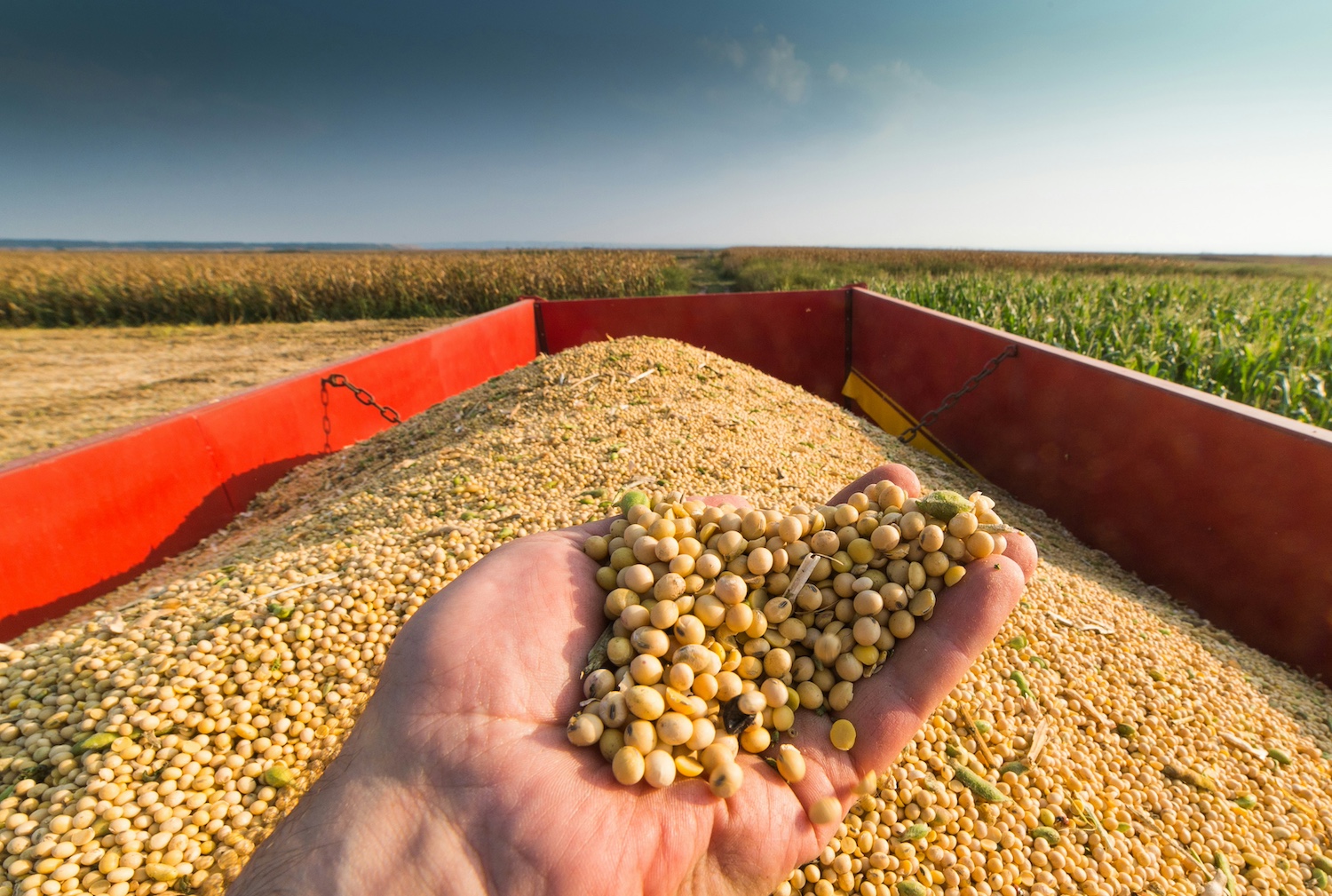
For U.S. farmers, particularly soybean growers, the past year has been painful. When China stopped buying American soybeans entirely in 2025, it pivoted to long-term contracts with Brazil and Argentina — deals that will take years to unwind, if ever.
The new commitments offer a path back. But market participants note that Beijing still imposes an additional 10 percent tariff on U.S. farm imports, and for commercial buyers — as opposed to state-owned enterprises — to return in volume, those tariffs will likely need to come down. A 10 percent reduction on soybeans, analysts say, could be enough to bring private Chinese crushers back to the market.
U.S. Trade Representative Jamieson Greer said last week that Washington expects China to purchase "double-digit billions" in U.S. farm goods over the next three years. The American Soybean Association, while welcoming the progress, called for additional purchases in the current marketing year and said farmers need "certainty and consistency" to plan effectively.
What Comes Next
Trump and Xi are reportedly scheduled to meet again in the United States in September — which may be the next opportunity to lock in more specifics. The joint Board of Trade, once operational, is expected to become the primary vehicle for hammering out product lists, tariff schedules, and verification mechanisms.
For now, the deal exists in a familiar diplomatic gray zone: real enough to move markets, vague enough to remain deniable. The question is whether the details — products, rates, timelines — will follow before the next harvest season, when American farmers need to know whether China will actually show up as a buyer.
.
Sources:
- Reuters – "China signals tariff cuts, advances in farm market access after Trump-Xi summit" (May 16, 2026): https://www.usnews.com/news/top-news/articles/2026-05-16/china-signals-tariff-cuts-advances-in-farm-market-access-after-trump-xi-summit
- CNBC – "White House touts deals on soybeans and rare earths after Trump-Xi summit" (May 18, 2026): https://www.cnbc.com/2026/05/18/us-china-announce-deals-after-trump-xi-summit.html
- NBC New York / AP – "China agrees to boost trade for U.S. agricultural products after Trump-Xi summit" (May 18, 2026): https://www.nbcnewyork.com/news/national-international/china-agrees-boost-trade-us-agricultural-products/6502880/
- World Grain – "White House expands trade deal with China" (May 20, 2026): https://www.world-grain.com/articles/22770-white-house-expands-trade-deal-with-china
- The Columbian / AP – "China agrees to boost trade for U.S. beef and poultry following Trump-Xi summit" (May 18, 2026): https://www.columbian.com/news/2026/may/18/china-agrees-to-boost-trade-for-u-s-beef-and-poultry-following-trump-xi-summit/
.
What's Your Reaction?
 Like
0
Like
0
 Dislike
0
Dislike
0
 Love
0
Love
0
 Funny
0
Funny
0
 Wow
0
Wow
0
 Sad
0
Sad
0
 Angry
0
Angry
0











Comments (0)