

Evergrande's Liquidators Sue PwC for $8.4 Billion Over Alleged Audit Failures
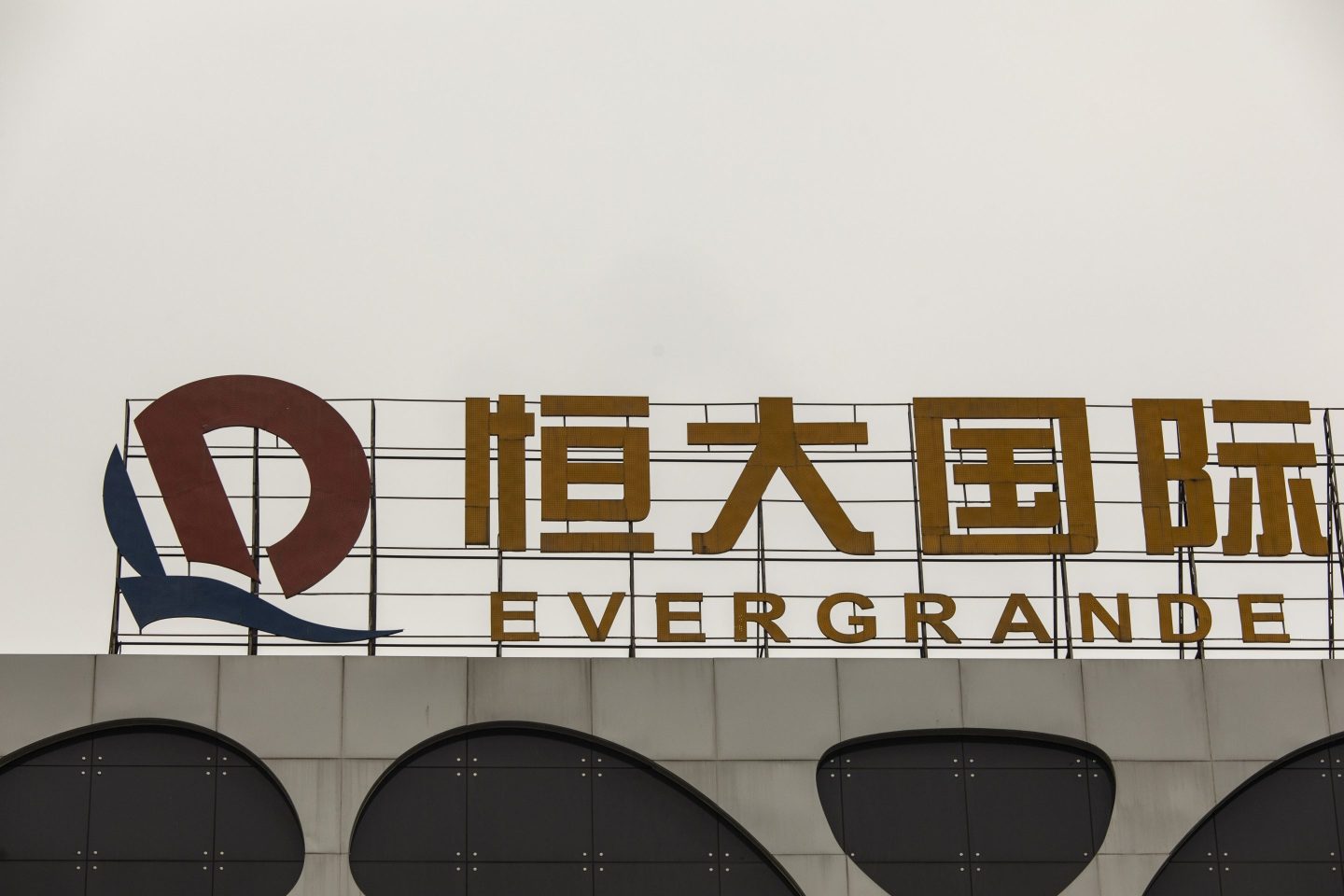
The liquidators of collapsed Chinese property giant Evergrande are taking global auditing firm PwC to court in Hong Kong, demanding $8.4 billion in damages. They claim PwC failed in its duty to properly audit the developer's books — even as regulators on both sides of the border had already fined the firm heavily for exactly that.

.
A Lawsuit That Could Shake the Auditing World
The fallout from China's worst property market collapse in modern history has reached the courtroom — and this time, the target is one of the world's most powerful accounting firms.
Liquidators managing the wreckage of Evergrande Group filed a damages claim Monday in a Hong Kong court, seeking 57 billion yuan — approximately $8.4 billion — from PricewaterhouseCoopers (PwC). The accusation: that PwC was negligent in its role as auditor while Evergrande quietly racked up over $300 billion in liabilities, ultimately becoming one of the largest corporate failures in history.
Who Gets the Bill?
The damages claim is split between multiple PwC entities. Around 38 billion yuan is being sought from PwC International, PwC Hong Kong, and PwC's China arm jointly. The remaining portion targets only the Hong Kong and Chinese units.
Monday's hearing focused specifically on one central question: how much legal responsibility PwC International — the umbrella organization based in London — should bear.
Richard Handyside, a lawyer representing PwC International, argued that the global parent should not even be a party to the case. His reasoning: PwC is structured as a network of independent member firms, not a traditional corporate group. The Hong Kong and Chinese units, he argued, are not subsidiaries of PwC International, and there were no direct communications between the parent and Evergrande.
Liquidators Push Back Hard
The liquidators see things very differently. Their lawyer, Adrian Beltrami, argued that PwC International sits at the top of the organizational structure and is ultimately responsible for ensuring that its member firms uphold professional standards. Failing to do so, he argued, makes the parent entity liable.
The legal dispute reflects a broader question about how global audit networks — typically organized to limit liability across borders — can be held accountable when local arms fail their clients and the public.
Regulators Had Already Acted
Long before this lawsuit, both Chinese and Hong Kong regulators had already found serious fault with PwC's work on Evergrande's accounts.
In 2024, China's securities regulator, the China Securities Regulatory Commission (CSRC), imposed a record fine of 441 million yuan (roughly $65 million) on PwC's Chinese arm, PwC Zhong Tian LLP, and suspended it from business for six months. The investigation found that the firm had effectively looked the other way while Evergrande inflated its revenue figures — and even enabled the company to issue bonds based on those falsified numbers.
Hong Kong regulators were equally stern. PwC Hong Kong was fined HK$300 million and similarly suspended for six months. Earlier this year, the firm also reached an agreement with Hong Kong's securities watchdog to set aside HK$1 billion (about $128 million) to compensate Evergrande's minority shareholders.
The Scale of the Disaster
Evergrande defaulted on its international debt in late 2021, triggering shockwaves across China's real estate sector and beyond. In early 2024, a Hong Kong court ordered the company to be liquidated — a process that has proven extraordinarily difficult given the scale of the collapse.
Creditor claims against Evergrande total around $45 billion. Yet as of last August, only approximately $255 million worth of assets had been sold. That stark gap between what is owed and what can be recovered explains why liquidators are now aggressively pursuing every possible avenue — including the auditors who, they say, should have sounded the alarm years earlier.
What Comes Next
The case is still in early stages, and the court has yet to rule on whether PwC International can be named as a defendant. Whatever the outcome of that procedural question, the substantive claims against PwC Hong Kong and PwC's Chinese arm will move forward.
The case is being closely watched by the global audit industry. If successful, it could set a precedent for how auditors can be held financially responsible when major corporate frauds go undetected — or, worse, are enabled — on their watch.
.
Sources:
- Reuters – "Evergrande liquidators seek $8.4 billion from PwC, accusing it of negligent audits" (May 18, 2026): https://www.reuters.com/legal/government/evergrande-liquidators-seek-84-billion-pwc-accusing-it-negligent-audits-2026-05-18/
- Reuters – "China imposes six-month business suspension on PwC's auditing unit in mainland China" (Sept. 13, 2024): https://www.reuters.com/business/finance/china-imposes-six-month-business-suspension-pwcs-auditing-unit-mainland-china-2024-09-13/
- Reuters – "PwC Hong Kong to pay Evergrande shareholders HK$1 billion compensation, SFC says" (April 23, 2026): https://www.reuters.com/world/pwc-hong-kong-pay-evergrande-shareholders-hk1-billion-compensation-sfc-says-2026-04-23/
- Reuters – "China fines Evergrande's Hengda $577 mln for fraudulent bond issuance" (May 31, 2024): https://www.reuters.com/world/china/china-fines-evergrandes-hengda-577-mln-fraudulent-bond-issuance-2024-05-31/
.
What's Your Reaction?
 Like
0
Like
0
 Dislike
0
Dislike
0
 Love
0
Love
0
 Funny
0
Funny
0
 Wow
0
Wow
0
 Sad
0
Sad
0
 Angry
0
Angry
0












Comments (0)