

Two Summits, Two Relationships: What Trump's and Putin's Beijing Visits Really Reveal
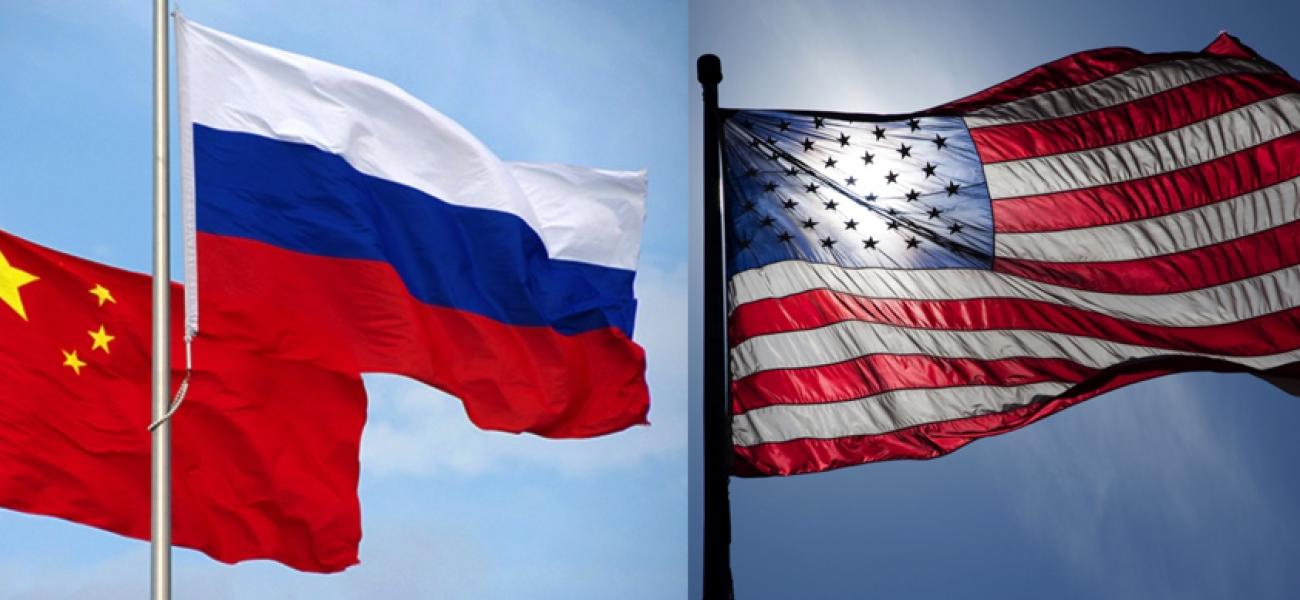
Within days of each other, Xi Jinping hosted two of the world's most powerful leaders in Beijing — Donald Trump and Vladimir Putin. On the surface, the visits looked remarkably similar: ceremonial guards, flag-waving children, grand halls. But the substance behind the pageantry tells two very different stories — about China's place in the world, and about what kind of partner each man is to Beijing.

.
Same Stage, Different Scripts
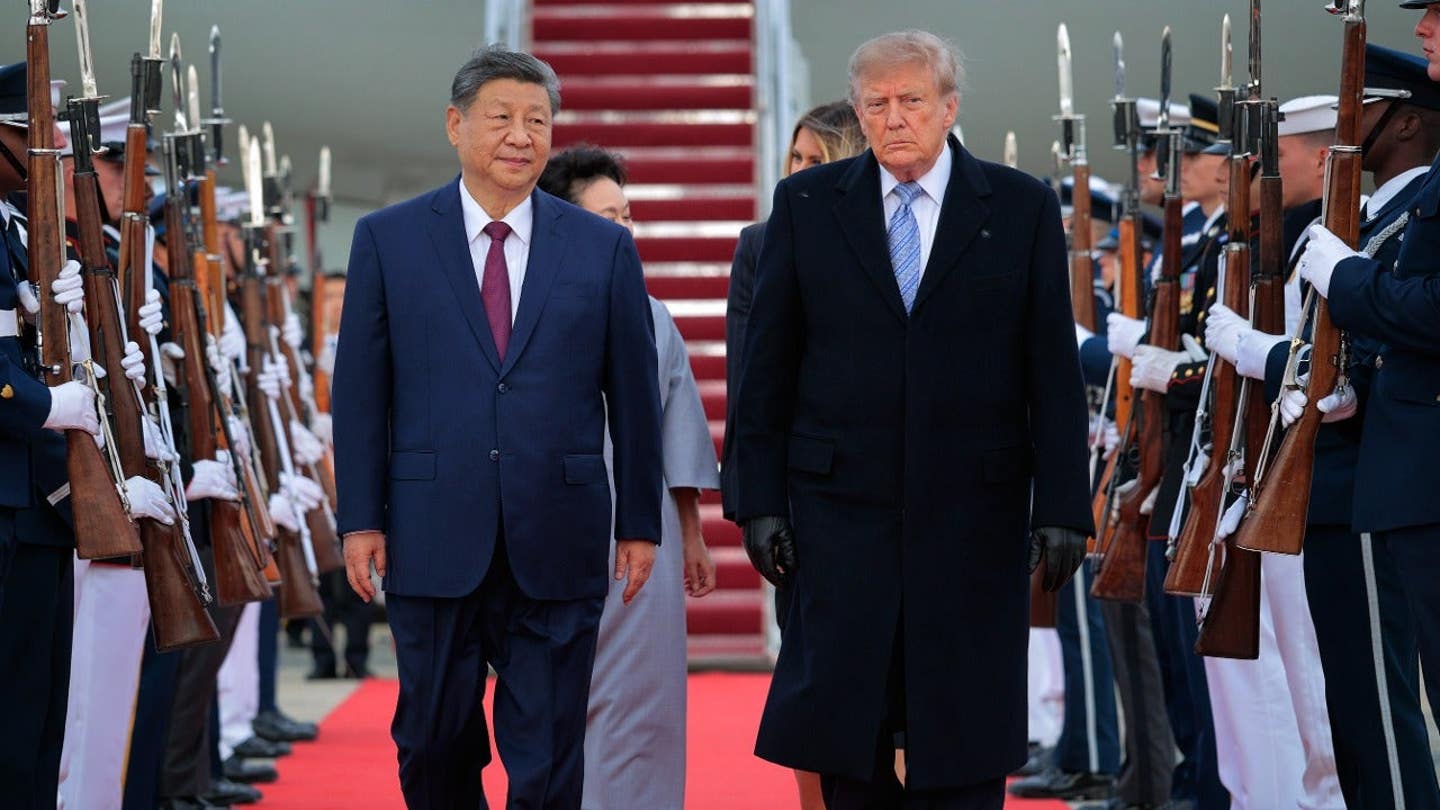
The choreography was almost identical. Both Trump and Putin were welcomed at Tiananmen Square with military honors, a marching band, and children presenting flowers. Both held closed-door meetings with Xi at the Great Hall of the People. Both sat for formal bilateral talks and shared meals with their Chinese host.
But the similarities ended at the schedule.
Trump stayed three days — longer than Putin's two — and received gestures of personal hospitality that go well beyond the standard diplomatic playbook. Xi gave Trump a rare private tour of the Zhongnanhai compound, the walled former imperial garden at the heart of Chinese power that few foreign leaders have ever entered. He walked Trump through ancient gardens, pointed out trees centuries old, and invited the American president to touch a 280-year-old trunk. Before that, the two visited the Temple of Heaven together.
Putin, by contrast, spent most of his time inside the Great Hall of the People, toured a photo exhibition on China-Russia relations, and had tea.
The difference is not accidental. "Xi knows what Trump values: being treated like a VIP, respected in front of the cameras," said George Chen, partner for Greater China practice at The Asia Group. With Putin, Chen noted, Xi "switched to substance."
That contrast is worth sitting with — because it is not necessarily a disadvantage for Washington.
The "More Agreements" Misreading
Much has been made of the fact that China and Russia signed more than 40 cooperation agreements during Putin's visit, including a joint declaration describing the two countries as "important centers of power in a multipolar world." Trump and Xi, by contrast, signed nothing publicly during the visit itself.
At first glance, this looks like a win for Moscow. Look closer, and the picture is more complicated.
The agreements signed with Russia covered trade, technology, and media — but notably, no deal was reached on the long-discussed Power of Siberia 2 gas pipeline, which would send Russian gas through Mongolia to China. That was a significant setback for Putin, who has been pushing for the project for years. "This is a huge setback for Russia and Putin," said Lyle Morris, senior fellow at the Asia Society Policy Institute's Center for China Analysis.
Meanwhile, the economic outcomes from Trump's visit — however modest and "preliminary" in Beijing's own characterization — reflect a different kind of relationship entirely. China and the United States are the world's two largest economies. A Board of Trade, a Board of Investment, agricultural purchase commitments, and a Boeing aircraft deal worth potentially hundreds of planes: these are not the deliverables of a junior partnership. They are the working mechanisms of rivals who have decided, for now, to compete within guardrails rather than outside them.
As we noted in our previous analysis, the absence of a joint declaration between Trump and Xi is not a sign of failure — it is a sign of how different this relationship is. Russia needs China. The relationship between Washington and Beijing is a rivalry between equals navigating shared economic dependence. Joint declarations are easier when one side has far more to gain.
Taiwan: Where the Two Summits Diverge Most Sharply
The starkest difference between the two visits was on Taiwan.
In the joint declaration signed by Xi and Putin, Russia explicitly reiterated its opposition to Taiwanese independence "in any form" and voiced support for what it called China's efforts to achieve "national unification." Moscow and Beijing are fully aligned on the issue — a fact that reflects Russia's growing strategic dependence on China since its invasion of Ukraine.
With Trump, the picture is more nuanced — and more meaningful.
Xi issued a stern private warning that mishandling Taiwan could lead to conflict. Trump listened, made no commitments, and declined to answer when Xi asked directly whether the United States would defend the island. "There's only one person that knows that, and it is me," Trump told reporters on Air Force One.
That deliberate ambiguity is not weakness — it is the core of decades of U.S. Taiwan policy. Washington's strategic ambiguity has deterred both Chinese military action and Taiwanese unilateral moves toward formal independence for more than 40 years. Trump's refusal to answer Xi's question was, in that sense, the correct answer.
Secretary of State Rubio was explicit: "U.S. policy on the issue of Taiwan is unchanged as of today." Taiwan's foreign minister thanked Washington for its continued support.
Putin, for his part, simply agreed with Xi. That is the easier position — and the weaker one, because it offers Beijing nothing it does not already have.
Strategic Stability vs. Strategic Partnership: Which Is More Valuable?
The framing Xi proposed for the U.S.-China relationship — "constructive strategic stability" — and the framing he used with Putin — an "unlimited" strategic partnership and essential alliance — sound like the latter is stronger. But analysts are not so sure.
China's relationship with Russia carries real costs: Western sanctions, reputational damage in Europe, and entanglement in a war that has made Beijing's "neutrality" increasingly difficult to sustain. The no-limits partnership has limits — Beijing has been careful not to provide lethal weapons to Russia and has watched its European trade relationships strain under the association.
The U.S.-China relationship, by contrast, is the most economically consequential bilateral relationship in the world. Stabilizing it — even imperfectly, even temporarily — has real value for both sides. The new trade mechanisms, the Boeing deal, the agricultural commitments, the AI guardrail discussions: these are the architecture of managed competition, not deep friendship. But managed competition between the world's two largest economies matters far more for global stability than any number of joint declarations between Beijing and Moscow.
Results Take Time — And That's Normal
It is worth stating clearly what the comparison between the two summits often obscures: diplomatic outcomes are rarely immediate.
The agreements Trump and Xi discussed are, by Beijing's own description, "preliminary." Negotiations on Boeing details, agricultural volumes, tariff reductions, and trade mechanisms are continuing. Xi's expected reciprocal visit to the White House later this year will provide another opportunity to solidify what was begun in Beijing. Deals of this complexity — between economies of this size, with this many competing interests — do not close in two days.
The 2017 Trump-Xi summit produced $250 billion in announced deals. Many of those announcements were never fully implemented. The announcements from this summit are smaller and more cautious — but they may prove more durable precisely because expectations were managed from the start.
"Constructive strategic stability" is not a headline. It is not a triumph. But in a world where the alternative was triple-digit tariffs, rare earth embargoes, and the real possibility of economic decoupling between the two largest economies on earth, it represents something genuinely important: a choice, by both sides, to keep the channels open.
Putin's 25th visit to Beijing produced a reaffirmation of a partnership both countries need. Trump's second produced the beginnings of a framework for rivals who cannot afford to stop talking. History will judge which of those relationships carries more weight.
.
Sources:
- AP – "The differences — and similarities — in the Trump and Putin visits to China" (May 2026): https://apnews.com/article/china-russia-us-summits-xi-putin-trump-d344badcd75d5aa2a5cda4aa146785ca
- Reuters – "Trump returns from China with stability and a stalemate" (May 16, 2026): https://www.reuters.com/world/china/trump-returns-china-with-stability-stalemate-2026-05-16/
- Reuters – "China says Trump visit deals are 'preliminary'" (May 16, 2026): https://www.reuters.com/world/china/china-says-trump-visit-deals-are-preliminary-2026-05-16/
- Reuters – "Trump leaves Beijing with few wins but warm words for Xi" (May 15, 2026): https://www.reuters.com/world/china/trump-xi-set-second-day-talks-after-taiwan-warning-2026-05-14/
.
What's Your Reaction?
 Like
0
Like
0
 Dislike
0
Dislike
0
 Love
0
Love
0
 Funny
0
Funny
0
 Wow
0
Wow
0
 Sad
0
Sad
0
 Angry
0
Angry
0












Comments (0)