

China’s High-Level CCP Meeting Signals Tighter Political Standards for Officials: Analysts

.
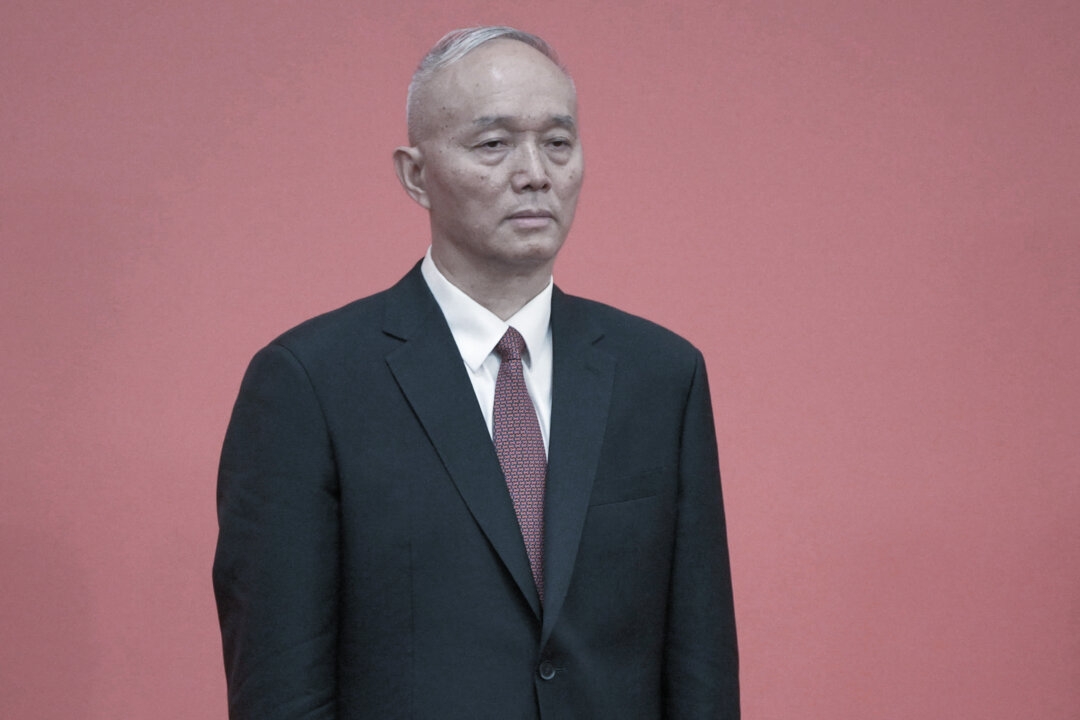
The Feb. 24 meeting, chaired by Politburo Standing Committee member Cai Qi and attended by the Party’s anti-corruption chief, Li Xi, emphasized the need to “integrate study, inspection, and rectification” and to establish mechanisms to ensure consistent “political performance,” People’s Daily reported.
At first glance, the meeting appeared routine—another internal session focused on Party discipline. But insiders and analysts say the presence of high-level officials was unusual and suggests broader political significance.
The Underlying Political Signal
An insider from within the CCP told The Epoch Times that the meeting focused less on administrative skills and more on aligning with Chinese leader Xi Jinping.“Strictly speaking, this is a political warning to senior officials from Cai Qi,” the insider said.
“The so-called study means strengthening political identification and compliance with Xi’s command. ‘Inspection’ means investigating violations of Party discipline. And ‘rectification’ is about targeting what they call ‘outstanding problems’—in reality, dissenting voices at high levels.”
That detail stood out to the insider.
“When the top leadership raises the issue of ‘political performance,’ it ultimately comes down to where you stand [politically],” the insider said. “By deploying this tactic through the Party-building apparatus, they are redrawing internal lines—determining who is on the core track and who is on the margins.”
High-Level Attendance Raises Eyebrows
The composition of the meeting itself was unusual.Under the CCP’s political ranking system, officials at the “vice-national” level—such as Mu, vice chair of the Chinese People’s Political Consultative Conference—are considered national leaders, subordinate only to Xi and the Politburo Standing Committee, China’s top decision-making body. Such a concentration of senior officials at a routine Party-building meeting is rare.
Chen, a Chinese political science scholar based in Europe, told The Epoch Times that the joint appearance of Cai, who oversees Party-building and political ideology, and Li Xi, head of the Central Commission for Discipline Inspection, carries particular weight.
“Li Xi’s presence itself is a warning,” Chen said. “If your [political] direction is deemed incorrect, it can quickly become a disciplinary issue. Performance problems can be elevated into political problems.”
Power Consolidation or Power Anxiety?
The meeting comes at a time of mounting economic strain in China.Against that backdrop, the CCP has chosen to emphasize ideological alignment within the Party rather than publicly highlighting economic reform.
That priority has prompted debate among analysts.
“In a system where power is already highly centralized under Xi Jinping, frequent internal rectification campaigns can signal not strength but unease,” Chen said. “If power were completely secure, there would be less need to repeatedly recalibrate the cadre corps.”
Chen noted that a heavy emphasis on political direction suggests sensitivity to internal cohesion. “Repeatedly demanding loyalty implies that loyalty cannot simply be assumed,” the scholar said.
While officially framed as an effort to ensure officials’ political performance, the Feb. 24 meeting has been widely interpreted by analysts as part of a broader effort to reinforce political discipline ahead of upcoming leadership reshuffles during the top annual “Two Sessions” meetings scheduled for early March.
What's Your Reaction?
 Like
0
Like
0
 Dislike
0
Dislike
0
 Love
0
Love
0
 Funny
0
Funny
0
 Wow
0
Wow
0
 Sad
0
Sad
0
 Angry
0
Angry
0














Comments (0)