

China Uses Thai King’s Visit to Deepen Repression, Export Digital Colonialism: Analysts
China Uses Thai King’s Visit to Deepen Repression, Export Digital Colonialism: Analysts - Beijing is using a railway to create ‘a gravitational pull of dependency,’ making it impossible for Bangkok to refuse extradition requests.


.
China’s push to strengthen strategic ties with Thailand aims to ensure Bangkok complies with the Chinese Communist Party (CCP) security operations, while also exporting a model of “colonialism with source code” to the kingdom, experts have told The Epoch Times.
King Vajiralongkorn and Queen Suthida conclude their five-day state visit to China on Nov. 17. The trip, at Xi’s invitation, marked the 50th anniversary of diplomatic ties between the countries and the first state visit to China by a reigning Thai monarch.
Development for Repression
China’s Ministry of Foreign Affairs said in a Nov. 14 statement that China hopes to steadily advance cooperation with Thailand on major projects such as the China-Thailand railway.Pavin Chachavalpongpun, a professor at Kyoto University’s Center for Southeast Asian Studies in Japan, said that Xi’s pledge to advance major infrastructure projects represents a direct use of economic incentives as a strategic tool.
“China will undoubtedly use the threat of slowing down funds, delaying technical assistance, or withdrawing capital from this massive project as primary leverage to pressure Thailand into compliance on politically sensitive non-economic matters,“ Pavin told The Epoch Times.
Pavin warned that the clearest trade-off involves Thailand maintaining or even expanding its role “as a compliant security hub for repatriating Chinese critics,” most notably Uyghur refugees.
“The ongoing success of the railway project will be tacitly, if not explicitly, conditional on Bangkok’s sustained cooperation in handing over or managing perceived Chinese dissidents, solidifying Thailand’s function as a border state for China’s internal security concerns,” he added.
.

“The Chinese government has also successfully secured the forced return of Uyghurs without issuing extradition orders or going through formal bilateral legal channels, instead leveraging its political or financial influence over host government,” HRW said in the report.
“The physical acts of transnational repression, including detention, arrests, or extradition, are often done through China’s collaboration with the security services of the host states. Governments that have permitted these extraditions have violated international legal protections against nonrefoulement.”
HRW said that in 2014, Thai authorities charged hundreds of Uyghurs —many of whom had fled from escalating repression—with immigration violations and held them in detention centers.
“In 2015, while Thai authorities released about 170 of the detained Uyghur women and children to Türkiye, they also forcibly returned over 100 Uyghur men to China. The remaining dozens of Uyghurs were held in indefinite detention until February 2025, when Thailand forced another 40 Uyghur men to China.”
.

Prem Singh Gill, a fellow of the Royal Asiatic Society of Great Britain and Ireland and a member of Thailand’s People’s Party, described the railway deal as a brutally simple calculation, with each billion dollars of Chinese investment “raising the price of saying ‘no’ to extradition requests” and eroding Thailand’s moral authority.
“China’s approach is that it never explicitly demands quid pro quo. Instead, it creates a gravitational pull of dependency so strong that Thailand’s government will instinctively know what Beijing expects when the next Uyghur refugee appears in Bangkok,” Gill told The Epoch Times.
‘Strengthening Strategies’
The Chinese state-run news agency Xinhua reported that Xi said China is ready to “strengthen synergy of strategies” with Thailand so that the two countries can gain more tangible benefits from bilateral cooperation.Stripping away the diplomatic language, Gill interpreted Xi’s terminology to mean “let us hunt people in your country,” meaning Beijing was asking Thailand to become a franchise location for Chinese state security operations.
“The coordination starts with information-sharing. Thai police feeding details about Chinese nationals. Then comes the next phase: operational cooperation, where Chinese agents don’t just receive intelligence but actively participate in surveillance, interrogations, and ultimately, extractions,” Gill said.
Gill noted that since the kingdom has established itself as Southeast Asia’s most reliable partner for making inconvenient people disappear back to China, Beijing now wants to formalize and expand this arrangement, which he viewed as a “logical evolution“ of what ”strengthen synergy of strategies” actually means.
“Imagine Chinese security personnel embedded in Thai immigration offices, accessing databases in real-time, and flagging targets automatically. Think of joint operations in which Thai police provide the legal cover while Chinese agents provide the muscle. This isn’t paranoid speculation,” Gill said.
Echoing that concern, Pavin cautioned that the call for strengthening a synergy of strategies “carries a significant risk,” as it extends beyond Beijing’s goal of hunting its critics.
.

“While China uses this vague term to secure cooperation against its dissidents and Uyghurs under the guise of shared security, the Thai government is likely to co-opt this broad framework for its own domestic repression,” said Pavin, who is himself living in self-exile due to state oppression.
By aligning with a powerful global actor like China, Pavin said, Bangkok gains a new level of legitimacy and political cover to intensify crackdowns against its own domestic dissidents, particularly pro-democracy activists or those accused of lèse-majesté.
Digital Authoritarianism Export
Xi also hopes to enhance collaboration with Thailand in emerging fields such as artificial intelligence (AI) and the digital economy, Xinhua reported.Punchada Sirivunnabood, dean and a professor at the Faculty of Social Sciences and Humanities at Mahidol University in Thailand, suggested that Bangkok must be careful with this cooperation, given that AI is a strategic sector that Thailand is targeting for future growth.
“Thai people buy a lot of Chinese technological products, and it might allow China to get our information from inside the country, which is a bit scary,” Punchada told The Epoch Times. “The government may try to have regulations or any protection to ensure that those Chinese technology or AI products will not really compromise the security of the Thai people.”
Gill characterized this cooperation more grimly, asserting that Beijing’s AI and digital economic offers are “colonialism with source code” designed to install remote control mechanisms.
“Every data center processing Thai information through Chinese architecture becomes a potential access point for Chinese intelligence. Thailand thinks it’s modernizing; it’s actually volunteering to become a beta testing site for authoritarian tech that will ultimately serve Beijing’s interests, not Bangkok’s,” Gill said.
Gill predicted that Thailand’s sovereignty would erode gradually through this dependence on Chinese technical expertise to maintain these systems. Initially in smart cities, then expanding to airports, border checkpoints, and public spaces, all feeding data into Chinese-designed networks.
“Eventually, Thailand will discover it can’t even monitor its own territory without Chinese cooperation because Beijing built the entire architecture. At that point, saying ‘no’ to Chinese security requests becomes technically impossible, not just politically difficult,” Gill pointed out.
.
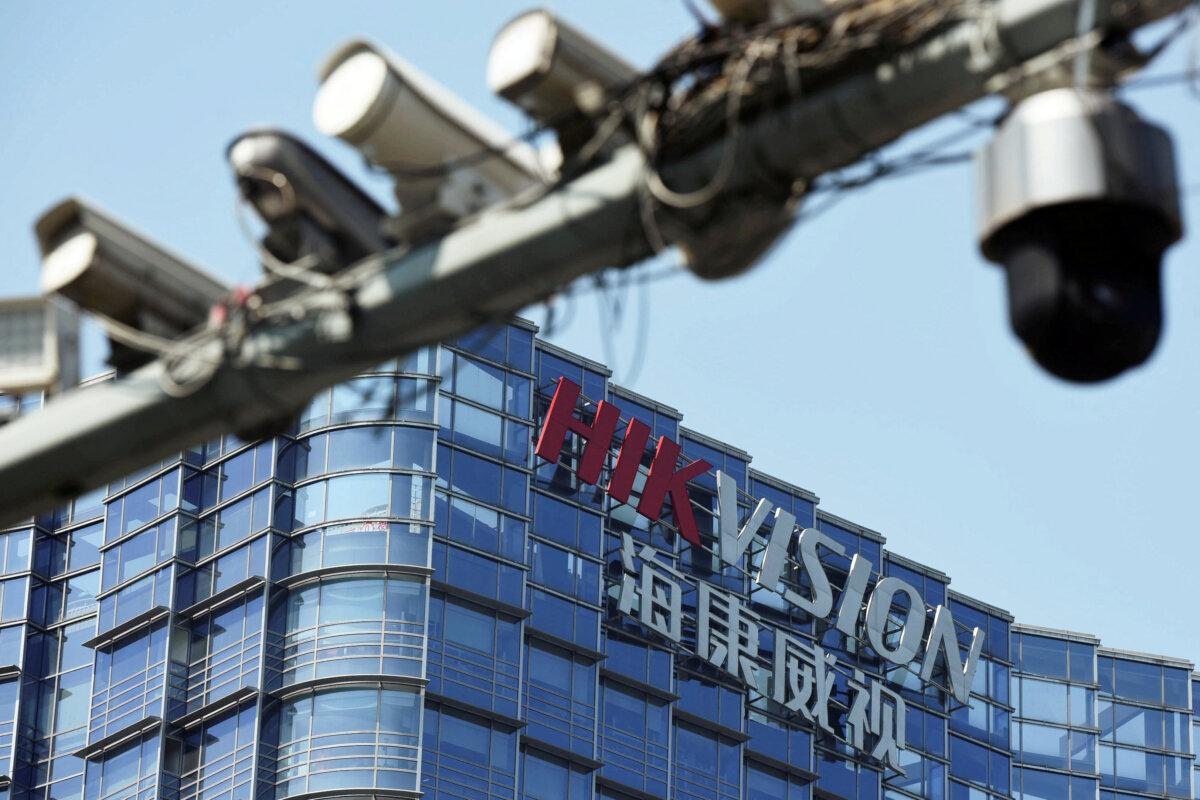
In a similar vein, Pavin underscored that Xi’s AI and digital economy proposal would export China’s authoritarian model to Thailand through state-linked surveillance firms like Huawei and Hikvision, enabling Bangkok to rebuff outside scrutiny while profoundly compromising its global reputation.
“By adopting a Chinese framework for the digital economy, Bangkok can effectively dismiss condemnation from democratic nations, severely damaging its international standing by embracing a technologically advanced, repressive system of state control,” Pavin said.
.
What's Your Reaction?
 Like
0
Like
0
 Dislike
0
Dislike
0
 Love
0
Love
0
 Funny
0
Funny
0
 Wow
0
Wow
0
 Sad
0
Sad
0
 Angry
0
Angry
0
















Comments (0)