

China and Russia Unite at UN to Push for Hormuz Ceasefire — But Block Military Action
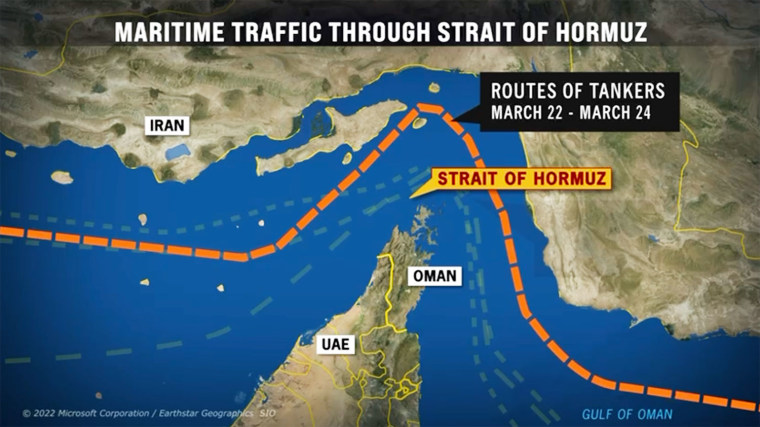
Chinese Foreign Minister Wang Yi spoke by phone with his Russian counterpart Sergei Lavrov on Sunday, April 5, pledging continued cooperation at the UN Security Council to cool down the escalating Middle East crisis. The call comes as the UNSC prepares to vote on a Bahrain-sponsored resolution aimed at restoring commercial shipping through the Strait of Hormuz — a narrow waterway that serves as a vital artery for roughly 20 percent of the world's oil and gas supplies.

.
As global shipping through one of the world's most critical waterways remains paralyzed, Beijing and Moscow are coordinating their diplomatic moves at the United Nations — insisting that peace talks, not force, are the only real solution.
.
A Phone Call With High Stakes
Chinese Foreign Minister Wang Yi spoke by phone with his Russian counterpart Sergei Lavrov on Sunday, April 5, pledging continued cooperation at the UN Security Council to cool down the escalating Middle East crisis. The call comes as the UNSC prepares to vote on a Bahrain-sponsored resolution aimed at restoring commercial shipping through the Strait of Hormuz — a narrow waterway that serves as a vital artery for roughly 20 percent of the world's oil and gas supplies.
According to China's Foreign Ministry, Wang stressed that a ceasefire is the only lasting solution to the Hormuz navigation crisis, and that all disputes must be settled through dialogue and negotiation rather than military means.
What's Happening in the Strait of Hormuz
The current crisis erupted against the backdrop of US and Israeli strikes against Iranian targets beginning on February 28. Iran subsequently retaliated and took steps to disrupt maritime traffic through the Strait, including attacks on commercial vessels and the reported deployment of naval mines.
Iran has largely shut down traffic through the Strait of Hormuz, targeting vessels and tightening its control over one of the world's most important energy chokepoints. Oil prices surged past $140 per barrel as tanker traffic plummeted, reaching the highest levels since the 2008 financial crisis.
On March 21, US President Donald Trump threatened to "hit and obliterate" Iran's power plants if the strait was not fully reopened, initially issuing a 48-hour ultimatum before extending the deadline to April 6.
Beijing and Moscow Block Force — and Here's Why
The latest draft of the Bahraini resolution has been scaled back after opposition from veto-wielding Security Council members China, Russia, and France, who objected to earlier language that would have authorized countries to use "all necessary means" to secure the waterway. The vote, originally scheduled for April 3, has been delayed multiple times and is now expected sometime next week.
Wang Yi told EU foreign policy chief Kaja Kallas on April 2 that UN Security Council actions must not provide legal cover for unauthorized military operations, nor heighten tensions or escalate conflict. Russia's UN Ambassador Vassily Nebenzia echoed this view, saying the proposal "does not solve the puzzle" and calling on the US and Israel to "stop playing with fire."
French President Emmanuel Macron also stated it would be unrealistic to launch a military operation to force open the Strait of Hormuz.
China's Balancing Act: Ally of Iran, Defender of Trade
China's position is not simply ideological — it is also deeply economic. China is the largest buyer of Iranian oil, receiving it at a discount that provides Tehran with a critical economic lifeline amid heavy US sanctions. China imported almost three-quarters of the oil it consumed in 2024, with roughly 44 percent coming from the Middle East.
At the same time, a prolonged Hormuz blockade directly threatens Beijing's own energy security. China increased its strategic crude oil stockpiles in 2025, with imports rising 4.9 percent, giving it some buffer — but not indefinite protection.
Even as China speaks up in defense of Iran and calls for a ceasefire, analysts do not expect Beijing to go further and lend military support to the regime. China's foreign policy principles, as analysts note, do not accommodate direct military involvement in third-party conflicts.
A China–Pakistan Peace Plan
Beyond the UN maneuvering, Beijing has been pursuing its own diplomatic track. China and Pakistan issued a joint five-point initiative calling for a cessation of hostilities, the start of peace talks as soon as possible, protection of civilian targets and shipping lanes, and respect for the UN Charter. EU foreign policy chief Kallas acknowledged the initiative and commended China's mediation efforts.
Wang said that a ceasefire and an end to hostilities are the strong call of the international community and represent the fundamental solution to ensuring safe navigation through the Strait of Hormuz.
The World Is Watching — And Feeling the Impact
More than 35 countries — including the UK, France, Germany, Japan, Australia, and several Gulf states — issued a joint statement condemning Iran's attacks on commercial vessels and its de facto closure of the Strait, calling on Tehran to cease hostilities and comply with UN Security Council Resolution 2817.
UN Secretary-General António Guterres warned that the world is "on the edge of a wider war that could engulf the entire region," stating that when the strait is strangled, "the world's most vulnerable cannot breathe."
The diplomatic window remains narrow. With Trump's April 6 ultimatum now passed and no ceasefire in sight, the pressure on the UN Security Council — and on China's carefully calibrated diplomacy — is only growing.
.
Sources
- Reuters – China ready to cooperate with Russia to ease Middle East tension: https://www.reuters.com/world/china/china-ready-cooperate-with-russia-ease-middle-east-tension-foreign-minister-says-2026-04-05/
- Radio Free Europe/Radio Liberty – UN Security Council Delays Vote On Plan To Open Strait Of Hormuz: https://www.rferl.org/a/iran-trump-strait-hormuz-shipping-energy-food-un-security-council/33723994.html
- Security Council Report – Maritime Security, April 2026 Monthly Forecast: https://www.securitycouncilreport.org/monthly-forecast/2026-04/maritime-security-4.php
- Asia News Network – Why China condemns US-Israel strikes on Iran but stops short of military support: https://asianews.network/why-china-condemns-us-israel-strikes-on-iran-but-stops-short-of-lending-military-support/
- Xinhua/GlobalSecurity.org – Chinese FM says UN Security Council actions should not legitimize unauthorized military operations: https://www.globalsecurity.org/wmd/library/news/iran/2026/04/iran-260403-pdo02.htm
- Global Times – China urges caution as UNSC set to vote on reopening Hormuz: https://www.globaltimes.cn/page/202604/1358171.shtml
- UK Government – Joint Statement on the Strait of Hormuz (March 19, 2026): https://www.gov.uk/government/news/joint-statement-from-the-leaders-of-the-united-kingdom-france-germany-italy-the-netherlands-and-japan-on-the-strait-of-hormuz-19-march-2026
.
What's Your Reaction?
 Like
1
Like
1
 Dislike
0
Dislike
0
 Love
0
Love
0
 Funny
0
Funny
0
 Wow
1
Wow
1
 Sad
0
Sad
0
 Angry
0
Angry
0















Comments (0)