

As Beijing Tightens Hold on Burma, Fractures Emerge


.
When the Chinese Communist Party (CCP) invited two dozen global heads of state to Tianjin, China, ahead of its massive war anniversary parade last month, it seemed to elevate the role of one military dictator.
Min Aung Hlaing, leader of the military regime in Burma (also known as Myanmar), had been snubbed by CCP leadership when he sought a meeting a few years ago.
But the once “anti-China” officer was granted a bilateral meeting with CCP leader Xi Jinping this time around, with Xi promising to back his bid to join the Shanghai Cooperative Organization.
Today, the CCP appears firmly behind the junta in Burma even as it continues, in many ways, to direct and fund various groups that oppose it.
But as the CCP solidifies its position in Burma, it is dictating terms that may be too much for some of these groups to accept. And reported interest from the United States in the vast critical minerals supply in Burma may further complicate matters.
The CCP has immense investments in Burma, not the least being a corridor that would allow China direct access to the Indian Ocean and give it a strategic advantage amid heightening geopolitical tensions.
World’s 3rd-Largest Critical Mineral Supply
Burma borders India to the west, China to the northeast, and Thailand to the southeast.Among the foreign policy experts who criticize the United States for its disinterest in Burma are a number who say the country’s large rare earths supply is reason enough to consider increased engagement.
When Beijing stopped magnet exports earlier this year in retaliation for U.S. tariffs, the sudden supply chain disruption resulted in several automakers shutting down production within a few months.
The United States has not publicly shown interest in Burmese rare earths, but the Trump administration has heard pitches from stakeholders and solicited white papers on the matter.
India has also shown interest in procuring these minerals.
Battlefield
Burma has been embroiled in civil war for much of its modern history since declaring independence from foreign occupation in 1948.Liberalizing reforms took place in the 2010s, leading to the elevation of pro-democracy leader Aung San Suu Kyi and the first visit from a U.S. Secretary of State in half a century. But then in 2021, the military staged a coup.
Antonio Graceffo has covered Burma for 20 years and is currently based near the Burma–Thai border, reporting and providing humanitarian aid. His work has appeared in The Epoch Times.
Burma is home to 135 ethnic minorities and some 120 armed groups holding non-contiguous territories, Graceffo says. The complicated territorial lines meant a recent trip to a school that should have been a 15-minute drive for Graceffo took closer to a full day of travel through jungle terrain to avoid conflict.
Back when Graceffo was on the ground in 2008, the battles he saw were fought by men who could sight the enemy through binoculars, and sometimes even without. Today, bombs drop constantly.
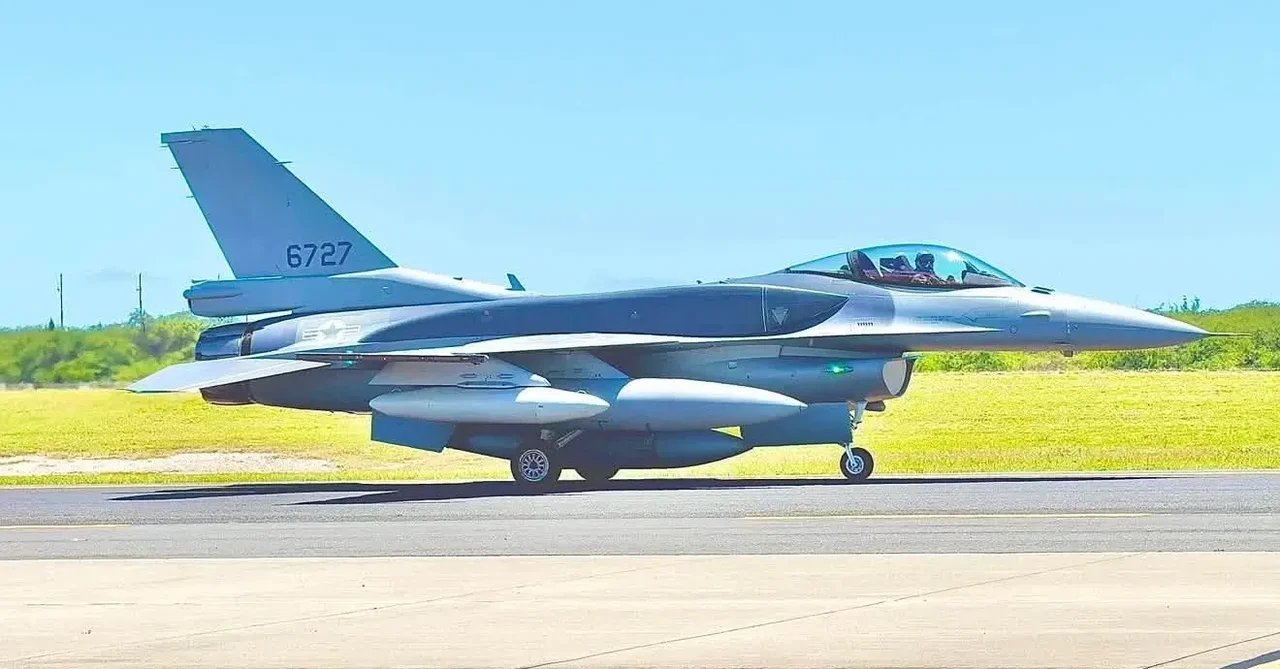
The junta retains air supremacy. Graceffo’s work includes photographing downed drones and other weaponry to send to the United Nations, the U.S. State Department, or other authorities, who have confirmed the bombs and drones used against civilians are of Chinese origin. The junta uses these to target churches, schools, hospitals, and establishments located near Chinese investments.
“They want the local people cleared out,” Graceffo said. The ethnic armies will come to the aid of civilians and fight to keep their territory, and displacing—or killing—civilians in places close to Chinese investments discourages those armies from staying too, he said.
The displacement has accelerated in many ways. A battle in February displaced 20,000 people in just 36 hours, but the sheer volume isn’t the only thing, Graceffo said. People used to move a mile or two away if their homes were lost to battle, but now the strikes are so deadly that those displaced tell him they have given up, and are trying to get as close as possible to the Thai border.
Chinese investments in Burma are substantial. The China–Myanmar Economic Corridor (CMEC) is a part of the CCP’s Belt and Road Initiative, running from Yunnan in China to a port that opens into the Bay of Bengal. Along the route are several energy infrastructure projects, including an oil pipeline that runs the length of the corridor, an industrial park, and a railway. China also mines and sources other materials such as jade and timber from Burma.
The average person may not be under the impression that Beijing is the one pulling the strings, but armed groups are intimately aware of the CCP’s involvement in local matters.
Here, “China is really easy to hate,” Graceffo said. “If you’re trading with China and you’re dependent on China, China is dictating what you do.”
“All these armies, their primary goal ... is they want to take back their ethnic state and they want to rule themselves instead of being ruled by the military junta,” Graceffo said. “When you take territory, the cost is lives. People are dying for you to take those. You’re watching 19-, 20-year-old guys get killed ... to retake this territory so people can be free. And then to have China call and tell you, ‘Oh by the way, give that land back.’”
This tension between ethnic groups economically dependent on China fighting the CCP-backed junta has resulted in some breaks for the ethnic groups this year.
The Kachin State of Burma covers the northern point of the nation, home to the thousands of leaching pits near the Chinese border. In October 2024, the Kachin Independent Army (KIA) seized territory from the junta that included the mines, and raised prices for Chinese wanting to import the minerals. Imports dropped as a result. Then in December 2024, the KIA began fighting the junta for Bhamo, a strategically advantageous city.
KIA is one of the groups “that hates China, but [KIA is] economically dependent on China,” Graceffo said. That’s why the Kachin State pitched the Trump administration on minerals, and would welcome a U.S. deal, according to Graceffo, who has authored white papers on the topic at the administration’s request.
In May, Reuters reported that the CCP demanded KIA abandon its bid for Bhamo, or it would stop buying minerals from the group altogether.
The same month, human rights activists discovered through satellite imagery that leaching pits were appearing along the Burma–Thai border, in the Shan State of Burma.
In that area, the United Wa State Army (UWSA)—a militia that mostly speaks and writes Chinese and has close ties to the CCP—and the junta control the territory around the mines, according to Hark Jet, a spokesperson for Shan Human Rights Foundation.
These mines have caused alarm on the Thai side, sparking worries that the toxins from the operations will poison the waters and farmland near the border. The situation has already reduced trade and tourism in the area, Jet told The Epoch Times. Local authorities have begun regular testing for toxins and are trying to engage relevant Burmese authorities. While people on the Thai side of the border can protest and raise awareness, people on the Burmese have no voice, he said.
Why the CCP Needs Burma
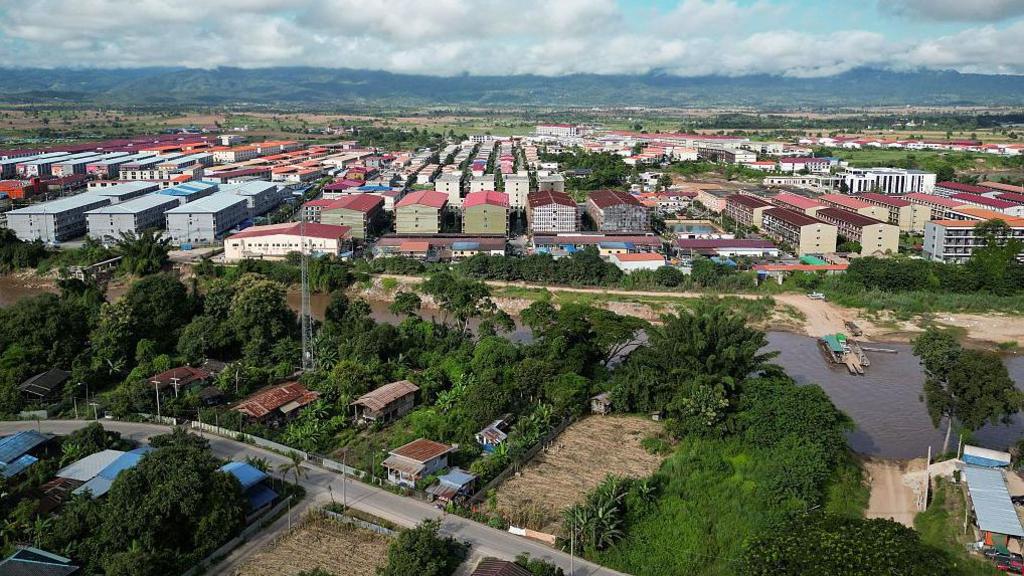
Burma has become known for “scam centers” in recent years, with high profile operations shutting down centers where Burmese, Chinese, and Thai individuals had been trafficked, enslaved, and forced to commit cybercrimes.These centers are a reminder that the CCP’s and the junta’s interests at times diverge.
Burma is critical to the Chinese regime for a number of reasons.
“China is trying to solve the Strait of Malacca problem,” Adam Lovinger, vice president of strategic affairs for the Gold Institute, told The Epoch Times.
The strait between Indonesia and Malaysia connects the Indian Ocean and the Pacific Ocean, making it one of the busiest shipping corridors in the world. It is also China’s only path into the Indian Ocean at present. In the event of a conflict with Taiwan, if the United States chooses to get involved, it could potentially choke off the Chinese forces at this point. The United States’ policy on Taiwan is one of “strategic ambiguity,” meaning there is no guarantee as to the extent of its involvement, and so the Chinese regime has to plan for all outcomes.
Maintaining the CMEC route into the Indian Ocean allows the Chinese regime to bypass the Strait of Malacca, encircle India, solve some of its energy problems, and project military power on land, Lovinger said.
The CCP has also promoted the junta’s legitimacy on the international stage, treating Min Aung Hlaing as a head of state and backing the junta’s upcoming election that will only allow military-approved parties on the ballot.
Lovinger said China has practically colonized Burma via the junta, but the junta should have concerns about its dependency on Beijing as well.
“They don’t want them to be too powerful, they don’t want them to be too weak, they want them to be somewhere in the middle so they can be manipulated. They’re a tool of Beijing. I think for the wealth, the weapons, the airpower, the economic aid the junta receives, the military leadership is happy to be in that position,” he said.
“Of course, they can be done away with, if Xi Jinping changes his mind,” he added. He pointed to Russia’s dwindling support for Syria as it turned its attention to war in Ukraine as a recent example. “[The junta] could face a similar fate if China gets distracted.”
The “Operation 1027” battles from 2023 are another reminder that the CCP can topple, or replace, the junta if it so wishes.
On Oct. 27, 2023, several resistance forces banded together to launch a coordinated offensive against the junta. Beijing was seen as tacitly approving the operation at a minimum, as it allowed the fighting to go on for months. The fighting took place in areas ridden with scam centers, whose dissolution would have been in the CCP’s interests.
What's Your Reaction?
 Like
0
Like
0
 Dislike
0
Dislike
0
 Love
0
Love
0
 Funny
0
Funny
0
 Wow
0
Wow
0
 Sad
0
Sad
0
 Angry
0
Angry
0













Comments (0)