

‘Acid Bugs’ Linked to Cases of Severe Skin Reactions in Northern China

.
Cases of severe skin reactions associated with rove beetles have emerged across Shandong Province in China, alarming both local authorities and the public.
The insects, commonly referred to as “flying sulfuric acid” in Chinese and known internationally as the “acid bug,” secrete a potent toxin called pederin, which can cause severe reactions when it comes into contact with human skin.
Rove beetles are not aggressive and do not bite or sting humans. However, when they crawl on the skin, people often instinctively crush them, releasing their toxic body fluid.
According to Qilu Evening News, a leading newspaper in Shandong Province, Mr. Li, a 50-year-old resident of Jinan, the capital of Shandong Province, discovered dozens of rove beetles in his home. In a panic, he crushed several with his bare hands.
Later, he touched his face and neck without washing his hands first. Within hours, the areas he had touched turned red, swollen, and began to develop blisters. He was diagnosed with rove beetle dermatitis at a local hospital. His symptoms subsided after a week of treatment.In another incident covered by Qilu Evening News, an 8-year-old boy was injured while sleeping. According to his family, they had seen rove beetles in their home the night before, but did not attempt to remove them. The next morning, the boy woke up with painful red streaks, blisters, and pustules on his neck, eyelids, and wrists. Doctors believe that he may have crushed one or more beetles while he was sleeping. Although the boy’s condition improved after treatment, dark pigmentation remains on the affected areas.
Wang Chuanzhen, a dermatologist at the Jinan Institute of Dermatology, told Qilu Evening News that her clinic has seen a notable rise in cases in recent weeks. On average, the hospital is now treating two to three patients per day for rove beetle-related dermatitis, with some experiencing more severe reactions.
In northern China, these insects are most active between August and September, particularly during warm, humid nights or after rainfall. Outbreaks tend to be more common in regions with high moisture levels and dense vegetation.
A number of Jinan residents posted photos on social media showing the affected areas of their skin. Some images revealed clusters of papules and blisters, while others showed large patches of brown pigmentation on the neck, highlighting the extent of skin damage beyond common insect bites.
“These beetles do not attack humans,” Wang said. “The harm comes when the insect is crushed and its toxin is released onto the skin.”
She advised that if a rove beetle is found on the body, it should not be swatted. Instead, it should be gently blown away or carefully removed using tissue or adhesive tape.
If contact does occur, she said, the affected area should be washed immediately with running water, and medical care should be sought if symptoms develop.
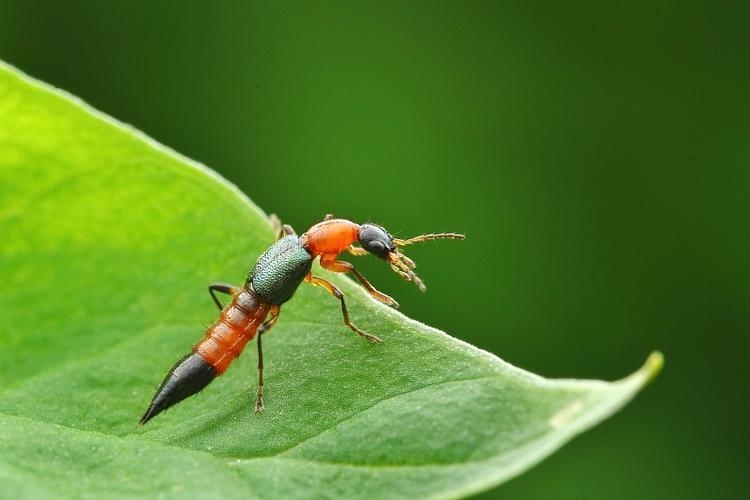
Rove beetles are small, typically measuring about 3 mm (0.12 in) in length, and easily identifiable by their distinctive coloration: a black head, yellow thorax, black wing covers, yellow front abdomen, and black tail end.
They inhabit damp, shaded areas such as grassy fields and vegetable gardens during the day. At night, they are drawn to artificial lights and often enter homes.
Though the bug can pose a health risk in parts of Asia, it is relatively uncommon in the United States. Though many species of rove beetles are found across North America, the vast majority do not produce pederin. The Paederus genus is present in Europe, but it is much less prevalent than in tropical and subtropical regions. The “acid bugs” are most prevalent in warmer climates, including parts of Asia, Africa, and South America, where they cause seasonal outbreaks of dermatitis.
.
What's Your Reaction?
 Like
0
Like
0
 Dislike
0
Dislike
0
 Love
0
Love
0
 Funny
0
Funny
0
 Wow
0
Wow
0
 Sad
0
Sad
0
 Angry
0
Angry
0













Comments (0)