

US Creates Critical Minerals Preferential Trade Zone


.
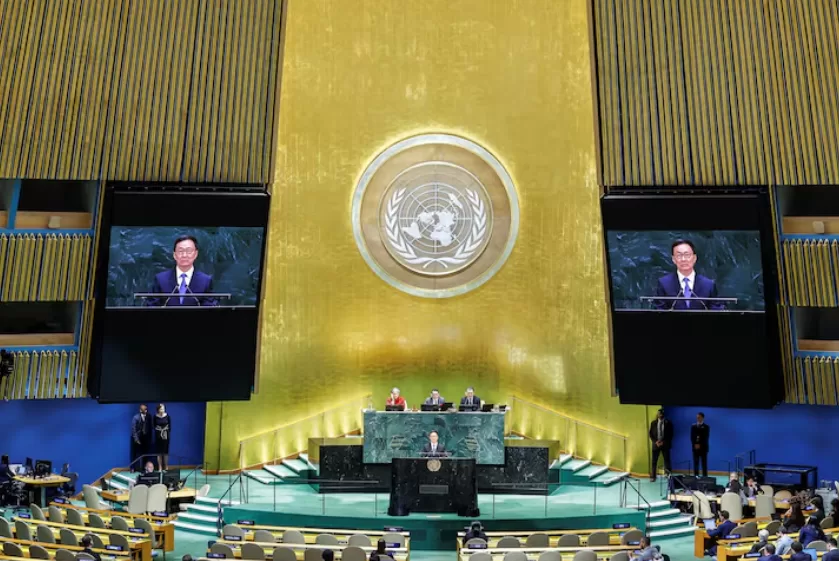
The United States hosted more than 55 countries at the first Critical Minerals Ministerial on Feb. 4, announcing the creation of a preferential trade zone meant to offer members predictable and stable conditions for reentering the industry.
During the opening speeches, much mention was made of the leverage Beijing wielded last year when it threatened to subject the world’s supply to Chinese regime approval on a case-by-case basis, but officials did not mention China by name.
Participants represented some two-thirds of the world’s GDP, according to Vice President JD Vance. Not all participants had joined as members. Interior Secretary Doug Burgum had said on Feb. 3 that 11 countries had signed on and 20 more expressed interest in joining. The State Department did not release a list of participants or members.
How Predatory Pricing Hollowed Out an Industry
Rubio described how the United States had, in parallel to many other countries, outsourced mining and manufacturing over the years, “and then one day we woke up and we realized we had outsourced our economic security and our future.”Vance said many countries had shared similar stories of trying to restart mining operations only to have them fail close to the finish line—because of predatory pricing.
After years of planning and permitting, right before mines and ventures are set to open, a competitor would flood the market with that mineral.
“Prices collapse, and investors pull out,” Vance said.
The project shutters, and sometimes, the mineral price skyrockets after the monopoly is maintained, he noted, adding, “We’ve all seen it first hand in all of our countries.”
After years of this pattern, investors have been driven away from the critical minerals market, Vance said.
To that end, the international critical minerals market is “failing,” he said.
“It’s failing to create domestic markets or dignified jobs for our labor forces, and it’s failing to keep our nation safe,” he said.
“Supply chains remain brittle, and exceptionally concentrated asset and commodity prices are consistently depressed, driven downward by forces beyond any individual country’s control.
“We see telltale signs of a market distorted beyond recognition, one that punishes strategic investment, one that punishes diversification, and one that punishes long-term planning. This is crazy.”
Enforced Through Tariffs
President Donald Trump, in his second term, has spearheaded support for public-private partnerships, private equity funding, and the first-ever civilian-use stockpile of critical minerals.The preferential trade zone the United States hopes to form with countries participating in the ministerial will enforce price floors through adjustable tariffs, officials said.
“The benefits will be immediate and durable ... regardless [of] how much material flows into the market,” Vance said.
The goal is to expand production of all stages across this new zone, he said, offering stable and predictable investment conditions and “an opportunity at self-reliance.”
Members have to commit to price floors that “reflects real world, fair market value,” Vance said.
“We’ve all spent many years describing this problem,” he said. “The framework before us is a change; it is a practical and enforceable approach to solving the problem, not just complaining about it.”
.
What's Your Reaction?
 Like
0
Like
0
 Dislike
0
Dislike
0
 Love
0
Love
0
 Funny
0
Funny
0
 Wow
0
Wow
0
 Sad
0
Sad
0
 Angry
0
Angry
0















Comments (0)