

U.S. and Iran Agree to End the War — The Strait of Hormuz Is About to Reopen
The United States and Iran have reached a landmark deal to end months of military conflict and reopen the Strait of Hormuz — one of the world's most critical shipping routes. The agreement, set to be signed Friday in Switzerland, brings relief to global markets, but key questions remain open: Lebanon is a major sticking point, and Iran's nuclear program has been left for later talks.

.
A Major Breakthrough After Months of War
On Sunday evening, U.S. President Donald Trump announced on his Truth Social platform that a deal with the Islamic Republic of Iran had been finalized. "The Deal with the Islamic Republic of Iran is now complete," he wrote. "Congratulations to all!"
The agreement, scheduled to be formally signed on Friday in Switzerland, marks a major breakthrough in a conflict that set the Middle East aflame and shook the global economy.
The war began on February 28, 2026, when the United States and Israel launched joint airstrikes on Iran, killing its supreme leader and many other senior officials, destroying a large number of military and government targets. Iran struck back with missiles and drones against Israel and U.S. bases across the region — and, crucially, by closing the Strait of Hormuz to international shipping.
What Exactly Did the Two Sides Agree To?
The agreement extends the current U.S.-Iran ceasefire for 60 days. The goal in upcoming talks will be a permanent end to the war. The fate of Iran's nuclear program will be negotiated, but remains unresolved for now.
Iran's deputy foreign minister Kazem Gharibabadi confirmed the agreement on state television but said Iran would not start implementing it until it was signed.
Trump also announced he had ordered an end to the U.S. naval blockade of Iranian ports. On Monday morning he declared: "Ships are starting to move, many loaded up with Oil, out of the Strait of Hormuz."
The Strait of Hormuz: Why It Matters So Much
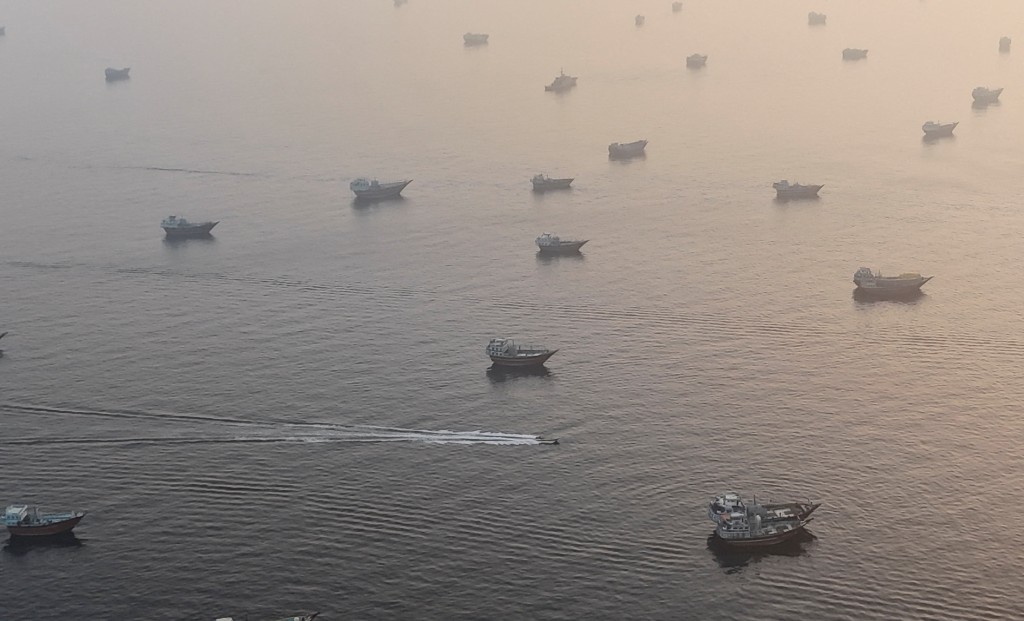
Early in the war, Iranian attacks on ships brought traffic in the crucial waterway — through which a fifth of the world's oil and natural gas passed before the conflict — to a near standstill. Trump implemented a blockade in response. The closure of the strait, Iranian attacks on Gulf energy infrastructure, and the blockade sent fuel prices skyrocketing, and the knock-on effects rippled through the world economy.
The war became a serious political liability for Trump at home, with American consumers bearing the brunt of surging energy prices ahead of November's midterm elections.
U.S. Vice President JD Vance told CNBC that the expectation is the Strait will be opened "in a toll-free way for the long-term," with technical details still to be worked out in ongoing negotiations.
France and Britain are ready to lead a mission in the strait, supported by the Netherlands and Italy, to help reopen the sea lane once the deal becomes a reality, French President Emmanuel Macron said.
Markets React With Relief
Oil prices fell sharply on the news. Brent crude futures dropped around 5 percent on Monday, while stock markets around the world jumped. It was a direct signal of how deeply the conflict had rattled investors and traders over recent months.
The drop in oil prices comes as welcome relief for consumers globally — and particularly for the Trump administration, which has been under enormous domestic pressure over high gas prices.
Lebanon: The Deal's Biggest Fault Line
The agreement's biggest unresolved issue is Lebanon. Iran insists that Lebanon must be included in any lasting ceasefire.
Iran's Foreign Minister Abbas Araqchi stated clearly that there must be a complete halt to Israeli attacks against Lebanon, adding that the U.S. bears responsibility for making the framework deal stick. Hezbollah, the Iran-backed militant group fighting Israel in Lebanon, welcomed the deal, calling its inclusion of Lebanon a "great achievement."
Hezbollah also cautioned that this deal should not resemble the 2024 ceasefire, during which Israel remained on Lebanese territory and continued airstrikes in Lebanon. Hezbollah said it "will not accept any aggression that violates its country's sovereignty."
Israel, however, is not a party to the U.S.-Iran negotiations — and has made its position clear. Israeli Defense Minister Israel Katz said Israel would remain "indefinitely" in areas it currently occupies in southern Lebanon to eliminate what it views as militant threats.
One senior Israeli official, speaking anonymously, described the agreement as "terrible for Israel," saying this assessment was shared throughout the government from Prime Minister Netanyahu on down.
Trump, for his part, warned both sides not to "blow it," saying there should be no more Israeli attacks in Lebanon and no more Hezbollah attacks on Israel.
The Nuclear Question: Deferred, Not Resolved
One of the most sensitive issues — Iran's nuclear program — was not resolved in this deal. It has been pushed into future negotiations. This is a significant concern for Israel and for members of Trump's own Republican party, who had demanded the program be completely shut down as a condition of any agreement.
The International Atomic Energy Agency has been unable to resume inspections inside Iran and has therefore not been able to verify the extent of any damage to the nuclear program since the initial strikes. The IAEA's head, Rafael Grossi, previously warned that any agreement without provisions for such inspections would be an "illusion of an agreement."
G7 leaders stated they are prepared to lift relevant sanctions in response to "clear, verifiable steps by Iran on its nuclear programme," stressing their readiness to work with the U.S., Iran, and the IAEA to ensure Tehran never acquires a nuclear weapon.
What Comes Next
The memorandum of understanding is due to be officially signed on Friday in Switzerland. That signing will mark the formal start of the deal — and the reopening of the Strait of Hormuz. But clearing the waterway fully, including sweeping for mines, could take weeks.
For now, the biggest test will be whether Israel and Hezbollah hold fire long enough for the broader agreement to take hold. The fate of the wider Middle East — and the next phase of global energy markets — may depend on it.
.
Sources:
- Reuters – U.S. and Iran agree to halt war and reopen Hormuz: https://www.reuters.com/world/asia-pacific/iran-us-agree-halt-war-reopen-hormuz-sending-oil-prices-tumbling-2026-06-15/
- NPR – U.S. and Iran announce a deal to end the war, reopen Strait of Hormuz: https://www.npr.org/2026/06/15/nx-s1-5858590/us-iran-deal-updates
- PBS NewsHour – Iran and U.S. reach an initial deal to extend the ceasefire and open the Strait of Hormuz: https://www.pbs.org/newshour/world/iran-and-u-s-reach-an-initial-deal-to-extend-the-ceasefire-and-open-the-strait-of-hormuz-but-challenges-remain
- CNN – US and Iran reach agreement that includes opening Strait of Hormuz: https://www.cnn.com/2026/06/14/world/live-news/iran-war-trump-israel
- ABC News – Israel won't leave Lebanon after US-Iran MOU, minister says: https://abcnews.com/International/live-updates/iran-live-updates-israel-withdraw-lebanon-katz-after/?id=133879236
- UK House of Commons Library – US-Iran ceasefire and nuclear talks in 2026: https://commonslibrary.parliament.uk/research-briefings/cbp-10637/
.
What's Your Reaction?
 Like
0
Like
0
 Dislike
0
Dislike
0
 Love
0
Love
0
 Funny
0
Funny
0
 Wow
0
Wow
0
 Sad
0
Sad
0
 Angry
0
Angry
0














Comments (0)