

Beijing's Secret Deal With the Houthis: China Buys Safe Passage While the West Pays the Price
China has opened direct back-channel talks with Yemen's Iran-backed Houthi militia to keep its own oil tankers moving safely through the Red Sea — even as the same group attacks vessels tied to Saudi Arabia and other nations. The arrangement, reported by Reuters and confirmed by multiple additional sources, highlights how Beijing is willing to strike unilateral deals with a militant group rather than support a broader international response to the crisis.

.
Beijing Talks Directly to a Militia Washington Calls a Terror Group
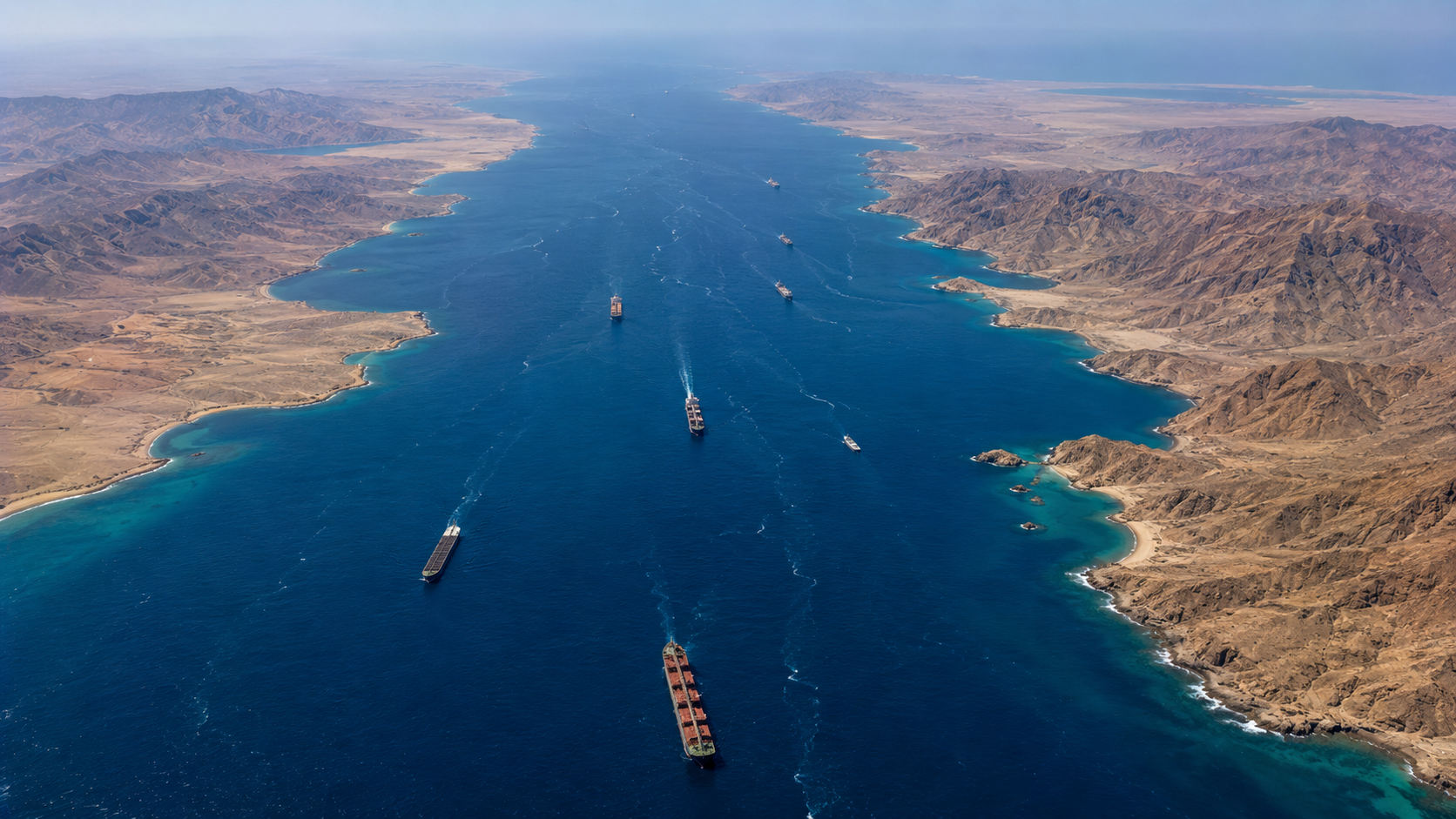
China has held direct talks with Yemen's Houthi movement to make sure its own tankers can pass safely through the southern Red Sea, according to six sources with knowledge of the matter, including a senior Iranian official, who told Reuters that Beijing asked the Houthis directly to promise safe passage for its tankers after the militia pledged to block access to Saudi ports. China was reportedly among the very first governments to reach out to the Houthis about transit through the Bab el-Mandeb strait (the narrow passage between Yemen and the Horn of Africa).
The Houthis, which the first Trump administration designated a terrorist organization due to their close alignment with Iran and their record of attacking commercial shipping, declared a blockade against Saudi ports on July 20. The move opened a new front against the United States and its allies in the ongoing Iran war, expanding attacks on tankers carrying energy and other cargo to markets well beyond the Middle East.
Rather than joining the international coalition trying to protect free navigation for all shipping, Beijing appears to have simply asked for an exemption for itself — a move that independent shipping analysts say reflects a much broader, pre-existing understanding between China, Iran and the Houthi movement.
.
Tankers Cleared One Ship at a Time
Chinese officials have reportedly cleared each of their tankers individually with the Houthis, and both Beijing and the militia have kept Tehran informed of the arrangement, according to regional officials briefed by Iran. At least four tankers carrying Saudi crude bound for China have already transited Bab el-Mandeb since the blockade was announced, based on ship-tracking and cargo-flow data.
Not every vessel has made it through unscathed. The supertankers New Champion and New Prime both turned back out of the Gulf of Aden into open water rather than risk the strait, according to Lloyd's List Intelligence and MarineTraffic tracking data. The New Champion had been due to load oil at the Saudi port of Yanbu, while the New Prime was already carrying a full cargo.
The stakes are real. The Houthis have warned international shipping firms by email that any vessel loading or unloading cargo at Saudi ports risks being attacked, and they claimed missile and drone strikes last week on two Saudi tankers, the Encelia and the Layla — a strike on the Encelia that maritime security sources have confirmed.
Analysis from the specialist trade press backs this up. According to reporting reviewed independently, Chinese vessels appear to keep only partial and conditional safe passage: clearances are granted ship by ship rather than as a blanket guarantee, and it remains unclear whether the exemption will extend to Chinese-bound cargo loaded elsewhere, or to inbound vessels.
.
Why the Detour Matters — and Why Beijing Wants Out of It
Bab el-Mandeb is one of the world's most important chokepoints for oil and goods moving between Asia, Europe and the Middle East. A tanker sailing from Yanbu to Asia through the strait takes about 16 days on average; rerouting north through the Suez Canal and then around Africa instead takes roughly 50 days.
That difference explains why China is so eager to keep the shorter route open. Beijing is trying to keep oil flowing from Saudi Arabia's Red Sea terminals, above all Yanbu, to offset supply lost when Iran effectively shut the Strait of Hormuz at the mouth of the Gulf. In other words, China needs Saudi oil to replace Iranian-blocked oil — while Iran and the Houthis, its own allies, are simultaneously making sure Beijing suffers no consequences for it.
Sources close to the Houthis describe the relationship as one of long-standing, close coordination with China, especially around oil shipments from Saudi Arabia. That pattern fits a familiar playbook: Beijing routinely presents itself internationally as a neutral, stabilizing power, while in practice cutting private, transactional deals with armed groups and sanctioned regimes whenever its own economic interests are at stake.
.
Free-Riding on a Security Order It Refuses to Help Defend
For years, it has been Western navies — chiefly the US Navy and allied European forces — that have shouldered the cost and risk of protecting international shipping lanes through the Red Sea and the Gulf of Aden against Houthi attacks. China has largely stayed on the sidelines of that military effort, despite depending heavily on the same sea lanes for its own energy imports.
The Reuters revelations suggest Beijing's actual strategy is simpler and more self-interested: rather than contributing meaningfully to freedom-of-navigation efforts, China negotiates its own private exemption with the very group threatening that freedom for everyone else. Critics argue this is consistent with a broader pattern under the Chinese Communist Party — presenting itself as a champion of "multilateralism" and "non-interference" abroad, while quietly pursuing narrow national advantage whenever it can be secured through back-channel deals with authoritarian or militant partners.
.
Outlook: A Fragile Arrangement With Wider Consequences
The Chinese transport ministry, the Houthis' media office and Iran's foreign ministry all declined to comment when contacted, leaving the exact scope of the arrangement unconfirmed. Industry sources caution the exemption could be reversed or narrowed at any time, since it rests on Houthi goodwill rather than any formal agreement.
For the wider international community, the episode raises an uncomfortable question: if China can simply negotiate its own safe passage, what incentive does Beijing have to support a real diplomatic or military solution to the Red Sea crisis? As the Trump administration and its allies continue to pressure Iran and its proxies over the wider regional conflict, China's quiet dealings with the Houthis suggest Beijing sees more value in short-term self-interest than in helping restore genuine freedom of navigation for all nations.
.
Sources
- Reuters — "China in touch with Yemen's Houthis to allow ships to sail through Red Sea, sources say" (July 28, 2026): https://www.reuters.com/world/china/china-touch-with-yemens-houthis-allow-ships-sail-through-red-sea-sources-say-2026-07-28/
- South China Morning Post — "Iran war: Chinese tanker passes Red Sea choke point despite Houthi blockade": https://www.scmp.com/news/world/middle-east/article/3361646/iran-war-chinese-tanker-passes-red-sea-choke-point-despite-houthi-blockade
- Newsweek — "Houthis Are Attacking Red Sea Ships But Letting China's Through": https://www.newsweek.com/houthis-attacking-red-sea-ships-but-letting-chinas-through-12233601
.
What's Your Reaction?
 Like
0
Like
0
 Dislike
0
Dislike
0
 Love
0
Love
0
 Funny
0
Funny
0
 Wow
0
Wow
0
 Sad
0
Sad
0
 Angry
0
Angry
0












Comments (0)