

Your Brain on Autopilot: What Outsourcing Your Thinking to AI Is Doing to Your Mind
Millions of people now let artificial intelligence write their emails, solve their problems, and even think through their decisions. New research suggests this convenience comes with a hidden cost: weaker memory, less critical thinking, and a fading sense of ownership over our own work.

.
A Tool That Thinks Faster Than You Do
Artificial intelligence chatbots can now draft a report, summarize a research paper, or answer a tricky question in seconds. For busy professionals and students alike, that speed feels like a gift.
But scientists studying the brain are raising a quiet warning. When a machine does the thinking, the human mind may quietly stop practicing the skills it needs to think well on its own.
This is not a fringe concern. It is being studied at some of the world's leading research institutions, and the early results are consistent enough to take seriously.
.
What Happens Inside the Brain
Researchers at the Massachusetts Institute of Technology (MIT) Media Lab ran one of the first detailed studies on this question. They divided 54 participants into three groups: one wrote essays using ChatGPT, one used a regular search engine, and one wrote with no digital help at all.
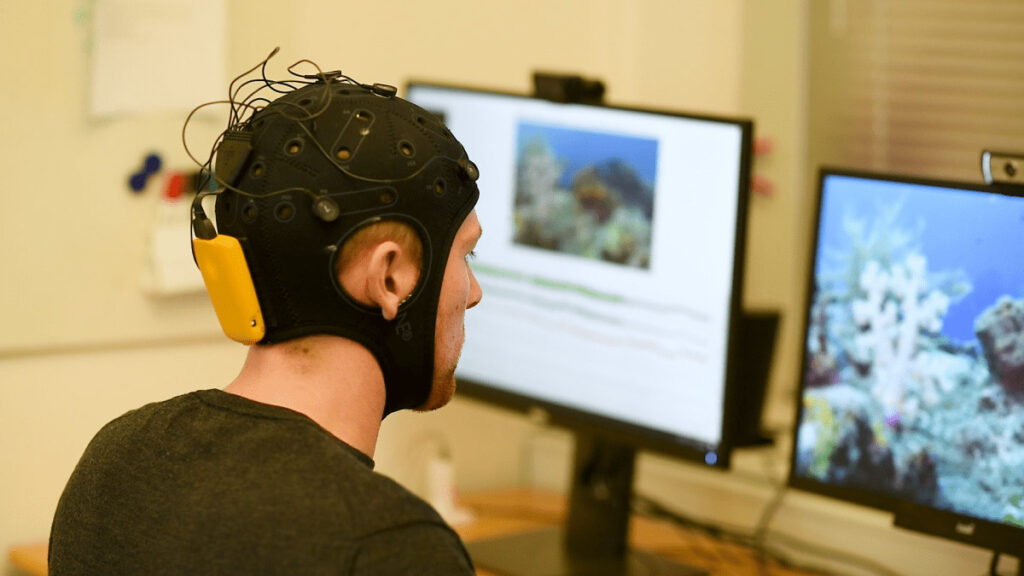
Each participant wore an EEG (electroencephalogram, a cap that measures electrical brain activity) while writing. The results were striking. The group using ChatGPT showed the weakest connectivity between brain regions involved in memory and attention, while the group writing without any tool showed the strongest.
The effects did not disappear once the essay was done. When ChatGPT users were later asked to write without any AI help, many still struggled to quote their own earlier work from memory. Human teachers who graded the essays, without knowing which group wrote them, described the AI-assisted essays as noticeably more generic.
The researchers gave this pattern a name: cognitive debt. Like financial debt, it offers an easy short-term gain, that comes with a cost that is paid back later, in this case, in weaker memory and shallower engagement with one's own work.
.
Less Effort, Less Critical Thinking
A separate study by Microsoft Research and Carnegie Mellon University looked at the problem from a different angle: the workplace. Researchers surveyed 319 professionals who used AI tools such as ChatGPT or Copilot at least once a week, and analyzed hundreds of real examples of how they used them on the job.
The pattern was clear. The more confident workers felt in an AI tool, the less they scrutinized its answers. Conversely, workers with strong confidence in their own expertise were more likely to catch mistakes and push back on flawed AI output.
The researchers described this as a kind of automation bias: a natural human tendency to trust a fluent, confident-sounding answer without checking whether it's actually correct. This matters because AI systems are known to occasionally generate false information that sounds entirely plausible.
The study also found that workers using the same AI tools tended to produce noticeably similar results for the same tasks, a narrowing of variety that researchers linked to declining critical thinking.
.
Why the Struggle Matters
It might seem obvious that skipping hard mental work would save effort. But according to psychologists, that "hard work" is often exactly what builds understanding in the first place.
The American Psychological Association describes this pattern as cognitive offloading: using an outside tool to reduce the mental effort a task requires. People have always done this, whether by writing a note or using a calculator. What's different with AI is the scale and the depth of what gets offloaded, from spelling and math to entire chains of reasoning and judgment.
Psychologists who study this note that skills we don't use tend to fade. Just as reliance on GPS navigation has been linked to a weaker natural sense of direction over time, heavy reliance on AI for thinking tasks may leave people less able to reason independently when the tool isn't available.
This is not only a workplace or classroom issue. It touches something more personal: how much people trust their own judgment, and how much satisfaction they take in work they've done themselves.
.
Not All Bad News
None of this means AI tools are inherently harmful, and researchers are careful to avoid overstating the findings. The MIT Media Lab study is still an early, non-peer-reviewed preprint, based on a relatively small sample of participants from university campuses near Boston. Larger and more diverse studies are needed before firm conclusions can be drawn.
Researchers also point to a possible middle path. In the Microsoft-Carnegie Mellon study, professionals with strong subject-matter confidence used AI tools without losing their critical edge; they used AI to check and refine their own thinking, rather than replace it entirely.
The emerging advice from scientists in this field is not to avoid AI altogether, but to be deliberate: draft an idea before asking AI for help, verify AI-generated answers against reliable sources, and reserve some tasks, especially ones tied to learning, for the brain alone.
.
What Comes Next
As AI tools become part of daily life for students, employees, and everyday internet users, this research is likely to grow rather than fade. Universities, employers, and health researchers are already discussing whether "digital literacy" training should include guidance on healthy AI use, much like earlier generations were taught media literacy.
For now, the clearest takeaway from the science is a simple one: convenience and understanding are not always the same thing. The mental effort that AI removes may be exactly the effort that helps the brain grow.
.
Sources
- MIT Media Lab – "Your Brain on ChatGPT: Accumulation of Cognitive Debt when Using an AI Assistant for Essay Writing Task": https://www.media.mit.edu/publications/your-brain-on-chatgpt/
- Microsoft Research (with Carnegie Mellon University) – "The Impact of Generative AI on Critical Thinking: Self-Reported Reductions in Cognitive Effort and Confidence Effects From a Survey of Knowledge Workers": https://www.microsoft.com/en-us/research/publication/the-impact-of-generative-ai-on-critical-thinking-self-reported-reductions-in-cognitive-effort-and-confidence-effects-from-a-survey-of-knowledge-workers/
- American Psychological Association, Monitor on Psychology – "How AI is reshaping human skills and thinking": https://www.apa.org/monitor/2026/07-08/ai-job-skills-thinking
.
What's Your Reaction?
 Like
0
Like
0
 Dislike
0
Dislike
0
 Love
0
Love
0
 Funny
0
Funny
0
 Wow
0
Wow
0
 Sad
0
Sad
0
 Angry
0
Angry
0















Comments (0)