

Trump Slaps New Forced-Labor Tariffs on 60 Countries, Reigniting Global Trade Tensions
The Trump administration has imposed fresh tariffs of 10% to 12.5% on goods from 60 trading partners, arguing that these countries fail to stop products made with forced labor from entering their supply chains. The move fills the gap left by an expiring emergency tariff and keeps pressure on China over its treatment of Uyghur workers in Xinjiang. Reactions from allies ranged from cautious acceptance to open anger.

.
A New Tariff Wall Rises From an Old One's Ashes
Just after midnight on Friday, a temporary 10% tariff that the White House had placed on nearly all imports quietly expired. In its place, an even broader set of duties snapped into effect within the same minute. The timing was no accident.
The new tariffs, ranging from 10% to 12.5%, apply to goods from 60 countries and territories, covering roughly 99.4% of everything the United States imports. Only a handful of product categories escape the levy, including oil and gas, fertilizer, aircraft parts, and certain food items.
This time, the administration reached for a different legal tool than before. Rather than relying on the emergency powers law that the Supreme Court struck down in February, officials invoked Section 301 of the Trade Act of 1974 — a statute that has survived legal challenges in the past and gives the president wide authority to respond to what Washington considers unfair trade practices.
.
Forced Labor as the New Justification
U.S. Trade Representative Jamieson Greer framed the tariffs as a human rights measure as much as a trade one. His office argued that Washington has enforced a ban on forced-labor imports for nearly a century, while dozens of trading partners have failed to adopt or enforce similar rules of their own.
Seventeen countries — among them Canada, Mexico, India, and the United Kingdom — received the lower 10% rate. The European Union, Japan, South Korea, Switzerland, and Taiwan were assigned combined rates landing at 10% or 12.5% once existing duties were factored in. The remaining 38 countries, including Vietnam and China, face the full 12.5% rate.
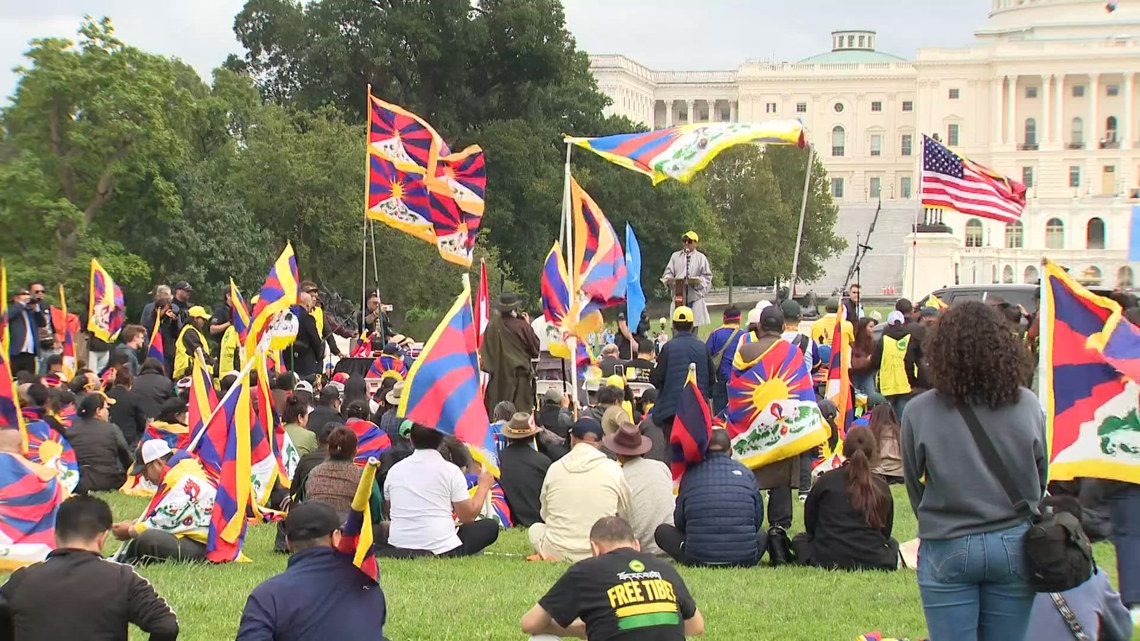
China's inclusion carries particular weight. For years, Washington has accused Beijing of forcing Uyghur and other Turkic Muslim minorities into labor camps across the Xinjiang region — allegations backed by independent human rights researchers and consistently denied by the Chinese government. A 2021 U.S. law, the Uyghur Forced Labor Prevention Act, already presumes that goods from Xinjiang are tainted by forced labor unless proven otherwise. Trump administration officials have separately signaled they intend to raise tariffs on Chinese goods back toward the 20% level agreed with Beijing in a November 2025 trade truce, without exceeding it.
.
Allies Push Back, Others Shrug
The reaction from trading partners split sharply along a spectrum from irritation to indifference.
European Union foreign policy chief Kaja Kallas rejected the reasoning behind the tariffs outright, pointing out that European labor protections — including paid vacation and strong workplace conditions — are far more robust than the forced-labor concerns Washington cited. She called the move a "negative surprise," arguing that Brussels had upheld its side of a prior trade arrangement.
The European Commission itself struck a more measured tone. A spokesperson said the outcome broadly matched commitments made under last year's EU-U.S. Joint Statement, negotiated at Trump's Turnberry golf resort in Scotland, and even welcomed the preservation of earlier tariff exemptions for products such as cork, diamonds, and generic medicines.
Australia and Brazil were far less diplomatic. Brazil's government accused the U.S. Trade Representative of using human rights language as cover for protectionism, calling the tariffs arbitrary, and said it would invoke its domestic "Reciprocity Law" while pursuing a case at the World Trade Organization. Australian Trade Minister Don Farrell labeled the move "completely unjustified."
Mexico, by contrast, barely blinked. Economy Minister Marcelo Ebrard noted that the new tariff simply replaces the expiring one, leaving Mexico's effective rate unchanged. Canada, already facing separate tariffs on billions of dollars in goods, offered a subdued response, saying it would keep engaging with Washington "to the mutual benefit" of both countries.
In Asia, Malaysian Prime Minister Anwar Ibrahim expressed relief that his country landed in the lower 10% bracket, while the Philippines emphasized its existing anti-forced-labor commitments and its economic importance to U.S. supply chains in electronics and semiconductors.
.
Legal Ground That May Hold This Time
Trade lawyers say the administration picked its legal footing carefully. Unlike the emergency-powers tariffs the Supreme Court invalidated in February, Section 301 measures have a track record of surviving judicial review. Ryan Majerus, a former Commerce Department official now practicing trade law, described the approach as "a sledgehammer" built specifically to preserve the administration's 10% tariff floor even if challenged in court.
Kelly Ann Shaw, who advised on trade policy during Trump's first term, said the substance of the tariffs closely matched what had already been signaled in recent weeks, with only modest adjustments — including roughly 471 additional products added to the exemption list.
.
What Comes Next
The White House insists this is not simply a rebranded version of the expired tariff, despite near-identical rates and timing. Officials point to bipartisan pressure in Congress to root out forced labor from global supply chains as the real driver behind the action.
Still, unresolved questions remain. Brazil has already signaled it will escalate the dispute to the WTO, and the EU says it expects Washington to keep honoring last year's negotiated caps. Whether Section 301 tariffs prove more durable than their predecessor in court — and whether they meaningfully reduce forced labor abroad — will likely take months, if not years, to become clear.
.
Sources
- NPR – "Trump to impose double-digit tariffs on dozens of countries": https://www.npr.org/2026/07/23/g-s1-135388/trump-tariffs-trade-country
- ABC News – "Trump set to impose sweeping tariffs on 60 trade partners": https://abcnews.com/Business/trump-set-impose-sweeping-tariffs-60-trade-partners/story?id=135020049
- France 24 (AFP) – "Trump announces double digit tariffs on 60 countries over forced labour concerns": https://www.france24.com/en/americas/20260723-trump-announces-double-digit-tariffs-on-60-countries-over-forced-labour-concerns
- Office of the United States Trade Representative – Official Fact Sheet: https://ustr.gov/about/policy-offices/press-office/fact-sheets/2026/july/fact-sheet-ustr-section-301-action-response-failure-60-economies-ban-imports-produced-forced-labor
- Lawfare – "What Is the U.S. Government Doing About Uyghur Forced Labor?" (Hintergrund zu Xinjiang/UFLPA): https://www.lawfaremedia.org/article/what-us-government-doing-about-uyghur-forced-labor
.
What's Your Reaction?
 Like
0
Like
0
 Dislike
0
Dislike
0
 Love
0
Love
0
 Funny
0
Funny
0
 Wow
0
Wow
0
 Sad
0
Sad
0
 Angry
0
Angry
0










Comments (0)