

Cucumbers Are Mostly Water — So Why Do Doctors Keep Recommending Them?
Cucumbers are made up of roughly 95 to 96 percent water, making them one of the most hydrating foods available. But beyond hydration, they carry a surprising mix of vitamins, fiber, and plant compounds tied to skin, digestive, and heart health — most of it concentrated in the peel.

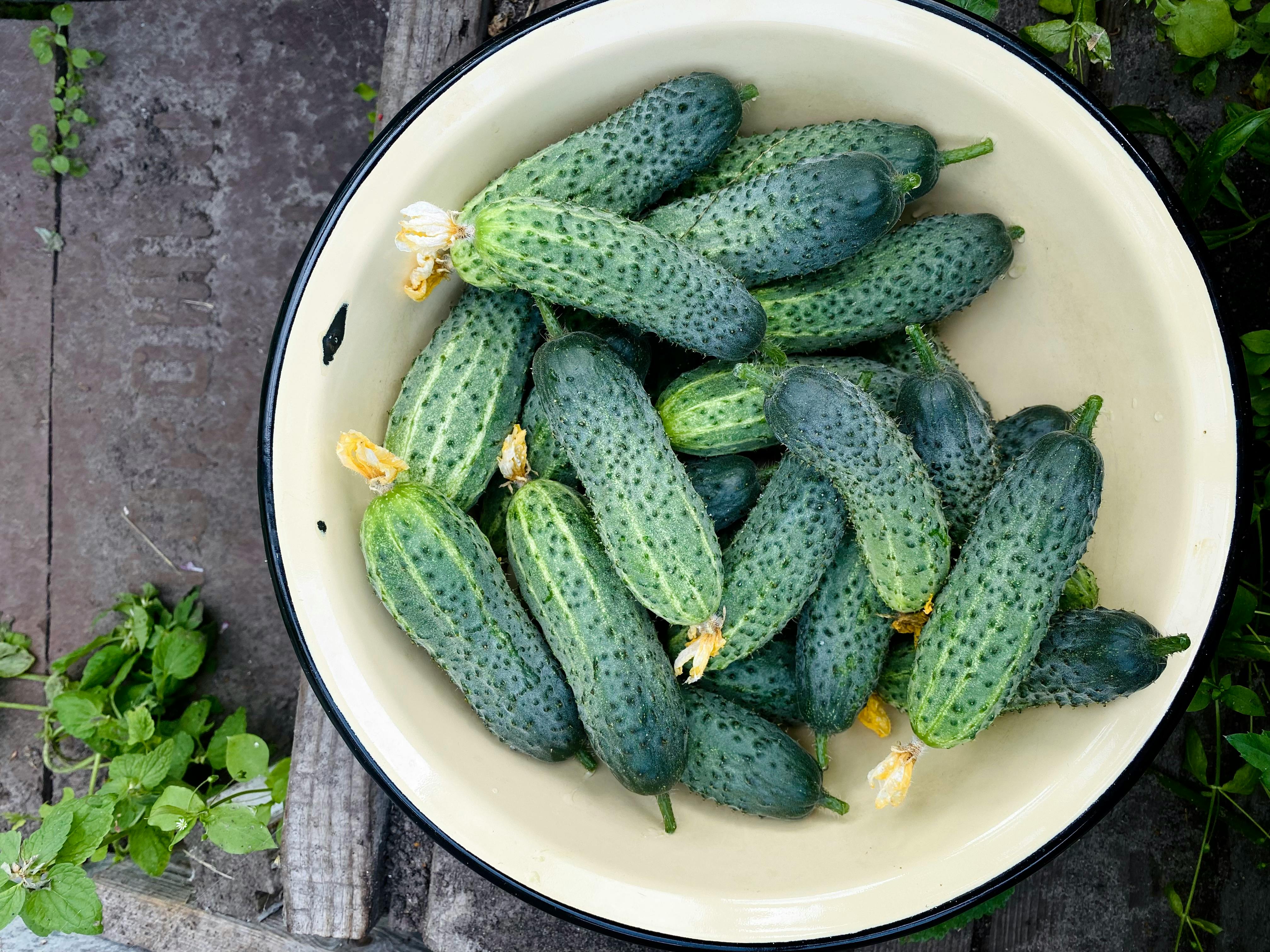
.
A Simple Vegetable With a Dense Nutrient Profile
A cucumber's water content is its most obvious feature, but it is far from its only one. According to the Cleveland Clinic, a single serving of raw cucumber with the peel provides meaningful amounts of vitamin K, vitamin C, potassium, and calcium, alongside fiber and antioxidant compoundsincluding fiber, vitamins A, K and C, potassium and calcium.
Vitamin K stands out in particular. The Cleveland Clinic notes that getting enough dietary vitamin K reduces the risk of bone fractures and promotes healthy bone mass, which matters especially for people managing low bone density or osteoporosis risk. WebMD adds that the small amounts of vitamin A found in cucumbers support vision, the immune system, and reproduction, while also helping organs such as the heart, lungs, and kidneys function properly.
Most of these nutrients cluster in the skin. North Carolina State University's Cooperative Extension confirms that cucumber skin is rich in beta-carotene, a pigment the body converts into vitamin A. The extension office also states plainly that cucumbers should be eaten unpeeled to maximize their nutrient content — peeling strips away a large share of the fiber and micronutrients.
Hydration, Digestion, and Beyond
The headline number remains water content. Healthline reports that cucumbers are about 96 percent water and contain beneficial nutrients like vitamin C, vitamin K, potassium, and fiber, a combination the outlet ties directly to hydration support.
That water is not just filler — it works alongside fiber to support digestion. The Cleveland Clinic explains that the water in cucumbers naturally aids digestion by helping the body break down food and absorb nutrients, while the fiber keeps things running smoothly and helps prevent constipation.
Cucumbers also carry a class of plant compounds called lignans. WebMD notes that these compounds may help prevent osteoporosis, heart disease, and some cancers — though this research remains preliminary and should not be read as a guarantee of protection.
Blood sugar management is another area under study, though the evidence so far is limited mostly to animal research. WebMD points out that in rat studies, cucumbers reduced the production of harmful reactive compounds linked to high blood sugar, but human studies are still needed to confirm the effect.
What This Means for Everyday Eating
None of this makes cucumbers a miracle food, and no serious nutrition body claims cucumbers "detox" the body or burn fat, despite popular wellness trends suggesting otherwise. What the evidence does support is more modest but still valuable: cucumbers are a low-calorie, low-sodium way to add hydration, vitamin K, potassium, and mild digestive support to a daily diet.
Simple habits can help maximize the benefit. Eating the cucumber unpeeled preserves the fiber and antioxidants concentrated in the skin. Storing cucumbers properly also matters — the Missouri University Extension advises keeping them unwashed and stored in a moisture-proof bag in the refrigerator for up to a week to maintain freshness and nutrient quality.
.
Outlook
As interest in whole-food, low-processed diets continues to grow, expect cucumbers to keep showing up in wellness routines and clinical nutrition guidance alike. The current science supports treating them as a smart, low-risk addition to a balanced diet — not as a cure-all, but as one more simple way to stay hydrated and get a modest nutritional boost.
.
Sources
- Cleveland Clinic — "Are Cucumbers Good for You?" — https://health.clevelandclinic.org/benefits-of-cucumbers
- WebMD — "Health Benefits of Cucumber" — https://www.webmd.com/food-recipes/cucumber-health-benefits
- WebMD — "Why Cucumbers Are Good for You" (slideshow) — https://www.webmd.com/diet/ss/slideshow-why-cucumbers-are-good-for-you
- Healthline — "6 Health Benefits of Eating Cucumber" — https://www.healthline.com/nutrition/health-benefits-of-cucumber
- NC State University Cooperative Extension, Franklin County Center — "Cucumber Nutrition Facts and Benefits" — https://franklin.ces.ncsu.edu/news/cucumber-nutrition-facts-and-benefits/
- University of Missouri Extension — Cucumber nutrition guide (PDF) — https://extension.missouri.edu/media/wysiwyg/Extensiondata/Pub/pdf/hesguide/foodnut/n1160.pdf
.
What's Your Reaction?
 Like
0
Like
0
 Dislike
0
Dislike
0
 Love
0
Love
0
 Funny
0
Funny
0
 Wow
0
Wow
0
 Sad
0
Sad
0
 Angry
0
Angry
0













Comments (0)