

UK Expands Hong Kong Visa Scheme After Jimmy Lai Sentencing


.
The UK on Feb. 9 announced it was expanding a visa scheme to allow tens of thousands more people to move from Hong Kong to the UK, following the sentencing of pro-democracy activist and British citizen Jimmy Lai in Hong Kong.
The UK Home Office said in a statement that adult children of British National (Overseas), or BN(O), status holders who were under 18 at the time of Hong Kong’s 1997 handover from Britain to China can now apply for the visa independently of their parents.
Their partners and children will also be allowed to come to the UK, with the government estimating the number to arrive over the next five years under the scheme to be in the region of 26,000.
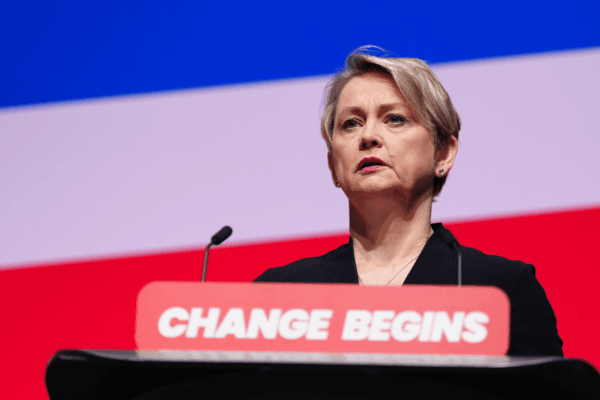
British Foreign Secretary Yvette Cooper said the UK government’s support for Hong Kong’s people “remains steadfast.”
“That’s why we are ensuring that young people who missed out on resettlement protection because of their age will now be covered,” Cooper said.
The Home Office said that since the visa pathway for BN(O) status holders was introduced, more than 230,000 people in Hong Kong have been granted a visa, and 170,000 have moved to the UK.
BN(O) visa holders are eligible for a five-year pathway to permanent settlement in the UK, half the permanent settlement qualifying period for most other immigrants.
Sentencing of Lai
The Home Office said in the statement that the visa expansion “honours the UK’s historic commitment to the people of Hong Kong and comes amid continuing deterioration of rights and freedoms in the territory.”The sentencing of Lai “shows how the Beijing-imposed National Security Law has criminalised dissent, prompting many to leave the territory,” the department said.
“Now that the sentencing has happened, the government will rapidly engage further on Mr Lai’s case,” the Home Office said.
The sentence drew condemnation from rights groups.
“This should serve as a warning to all governments, private sector organisations, and individuals who wish to do business in Hong Kong,” Rogers said. “When the law has been twisted to persecute one individual, it will almost certainly be twisted again. The fate of Mr Lai should be a warning to us all.”
Following the sentencing, the British foreign secretary expressed concern for Lai’s health and called on Hong Kong authorities to release him on humanitarian grounds.
“British National Jimmy Lai was today sentenced to 20 years in prison in Hong Kong for exercising his right to freedom of expression, following a politically motivated prosecution. Beijing’s National Security Law was imposed on Hong Kong to silence China’s critics,” Copper said.
“We stand with the people of Hong Kong, and will always honour the historical commitments made under the legally binding Sino-British Joint Declaration. China must do the same.”
What's Your Reaction?
 Like
0
Like
0
 Dislike
0
Dislike
0
 Love
0
Love
0
 Funny
0
Funny
0
 Wow
0
Wow
0
 Sad
0
Sad
0
 Angry
0
Angry
0















Comments (0)