

Trump–Xi Meeting Back on Track, Trade War Deescalating: Bessent


.
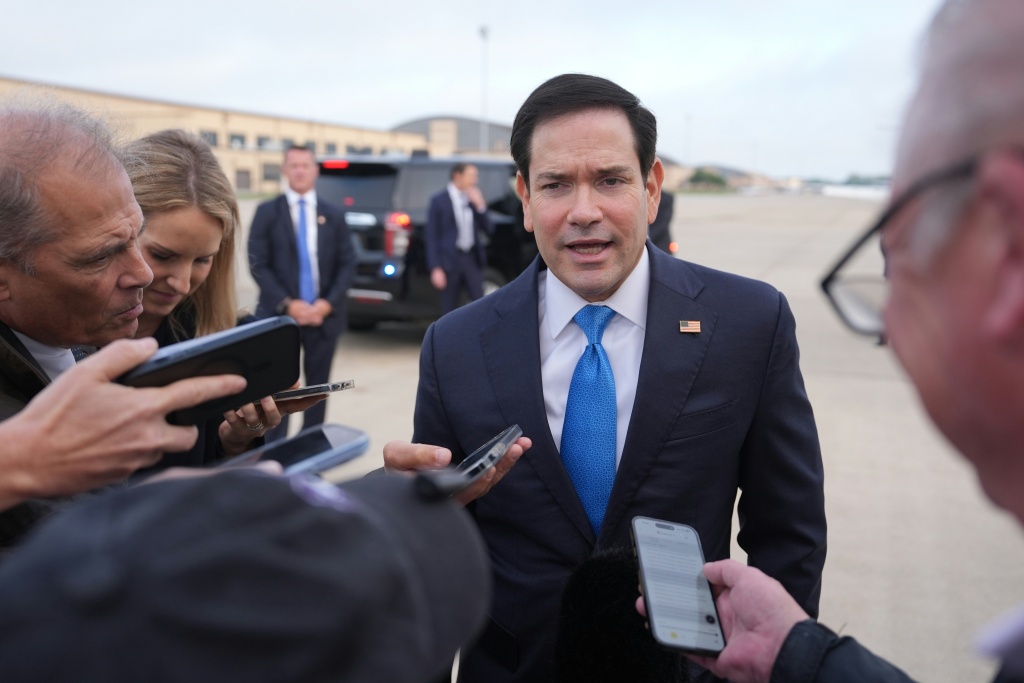
U.S. President Donald Trump signaled he will meet with Chinese Communist Party (CCP) leader Xi Jinping at the upcoming APEC summit in South Korea after Chinese authorities seemed to walk back last week’s decision to tighten critical minerals export controls, U.S. Treasury Secretary Scott Bessent said on Oct. 13.
The APEC summit is scheduled to run from Oct. 31 to Nov. 1 in South Korea.
Bessent said the lines of communication have since reopened and that the United States would firmly reject the new restrictions.
Bessent said on Oct. 13 that the CCP might have done it to distract from its dire economic situation or its purchase of Iranian and Russian oil, but that the move was a “miscalculation.”
“I can tell you, trying to get leverage in front of a meeting with Donald Trump is a bad idea,” Bessent said, adding that Trump had “turned the tables” with two social media posts.
He also echoed the president in saying the United States has many more cards it has not played, such as restrictions on software, financial services, sanctions, and others.
“It was a miscalculation, but we are communicating now. I am confident that we can move forward,” the Treasury secretary said.
He added that Trump believes there may be dissent among the ranks of the CCP.
“The president thinks that this may have been from a lower-level official,” he said.
“The Chinese system is quite brittle, so this may not have come from Xi Jinping himself.
“This may have come from a Chinese hardliner. They have hardliners on their side, too, who are always trying to undermine the relationship.”
Bessent said trade tensions had deescalated and that U.S.–China talks are already scheduled for this week.
“The 100 percent tariff does not have to happen,” he said.
“There will be working-level talks this week, and I imagine that I will have some contact with my counterpart, and then the two leaders will meet.”
“Despite this announcement, last week [was] good; lines of communication have reopened. We are going to stand firm and reject these licensing requirements, because this is for the whole world.
“A group of bureaucrats in China cannot tell us and our allies how to run our supply system.”
Bessent also echoed Trump’s rebuke of Beijing for announcing the export restrictions at the same time a historic peace deal in the Middle East was underway.
Derisking the Critical Minerals Supply Chain
China has a chokehold on the global critical minerals supply chain because it extracts a majority of the world’s supply and processes about 90 percent of it. Still, experts have told The Epoch Times that Beijing’s attempt to exert more leverage on this issue will only accelerate global efforts to diversify away from China.Bessent said on Oct. 13 that the Pentagon’s investment in MP Minerals-owned Mountain Pass Rare Earth Mine—the United States’ only rare earths processing facility—marked the beginning of a fast-track effort to bring the supply chain back to the United States.
Bessent said that China has proven itself to be an “unreliable supplier” not just of critical minerals but also of other supplies, as seen during the COVID-19 pandemic.
He added that the Chinese regime has never been a market player in this sector.
“What’s happened over the past two decades is anytime a refining or processing facility has been set up, either in the U.S. or in a free market country, the Chinese come in and undercut the price,” he said.
Mike Sun, a U.S.-based businessman with decades of experience advising foreign investors and traders doing business in China, told The Epoch Times that Beijing currently exerts both direct and indirect control over rare earth pricing through production quotas, export licenses, and increased environmental regulations. He noted that most international rare earths transactions also use Chinese currency.
Sun said the U.S. tariffs and export controls were short-term measures to counter Beijing, while long-term measures such as those the Trump administration has previewed to support a domestic supply chain were “critical.”
Bessent said U.S. government investments during this fast-track period will help shield the domestic industry from the CCP’s influence.
“We are going to guarantee prices for the processing, for the refining, because you can’t market when there is a non-free market state actor destroying capacity,” he said.
What's Your Reaction?
 Like
0
Like
0
 Dislike
0
Dislike
0
 Love
0
Love
0
 Funny
0
Funny
0
 Wow
0
Wow
0
 Sad
0
Sad
0
 Angry
0
Angry
0














Comments (0)