

Trump Calls USMCA Trade Deal ‘Irrelevant’ as Carney Courts Beijing


.
U.S. President Donald Trump struck a familiar note this week by dismissing the importance of trade with Canada, but the comments came as Prime Minister Mark Carney was about to land in China.
Carney has looked toward Asia and elsewhere to expand trade amid trade tensions with the United States.
The Carney government’s main pitch about the need to deepen relations with China, ruled by a one-party dictatorship, is premised on economic conditions brought by Washington.
Meanwhile, Beijing knows full well why Ottawa has come knocking after years of suspended relations over domestic and international security concerns spurred by China’s aggressive posturing.
Trump was touring a Ford Motor Company plant in Michigan on Jan. 13 when he made his comments about trade with Canada. After linking his tariffs to increased activity at U.S. auto manufacturing plants, a reporter asked Trump about the upcoming renegotiations of the United States-Mexico-Canada Agreement (USMCA) on free trade.
“I don’t even think about USMCA, you know?” answered Trump. He said he wants to see Canada and Mexico “do well,” while adding the United States doesn’t “need their product.”
This is something Trump has said several times before, whether in relation to finished products or raw material, like oil and timber.
“We don’t need cars made in Canada. We don’t need cars made in Mexico,” he said. “We want to make them here, and that’s what’s happening. Everybody’s moving here from Canada. They’re coming here from Mexico, from Japan, from Germany, from all over the world.”
Pressed by reporters on whether or not he intended to renegotiate USMCA, Trump said: “Well, I can. It expires very shortly, and we could have it or not. It wouldn’t matter. I think they want it. I don’t really care. No real advantage. It’s irrelevant to me.”
Timing
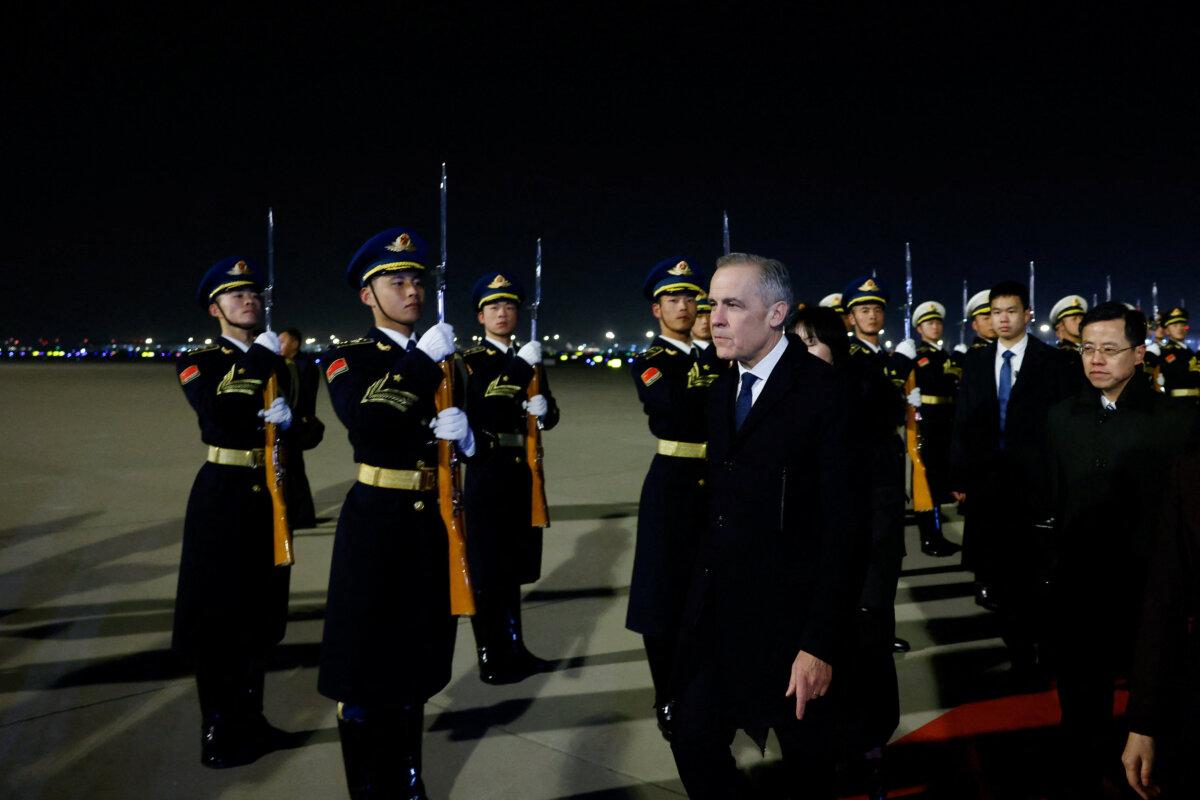
While Trump’s messaging wasn’t entirely new, the timing was noteworthy, as Ottawa seeks to get closer to the top adversary of the United States. The Trump administration’s recently released National Security Strategy focuses on countering China and removing its influence from the Western Hemisphere.As he landed in China, Carney stated that the relationship between Canada and China has “created opportunities and prosperity on both sides of the Pacific.”
Foreign Affairs Minister Anita Anand struck a similar tone when she spoke with reporters on Jan. 14.
“I want to take a moment right off the top to stress the magnitude of this visit, the first visit to China by a Canadian prime minister since 2017,” she said.
Anand said the Canadian delegation will discuss with Chinese officials the trade relationship and “other opportunities for collaboration between our two countries, given the strong people-to-people ties between Canada and China.”
She declined to directly answer questions from reporters about whether Ottawa still considers China a “disruptive” global power, as stated in the current Indo-Pacific Strategy released in 2022.
“This is a new government with a new prime minister, a new foreign policy in a new geopolitical environment,” Anand said. “In this moment of economic stress for our country, it is necessary for us to diversify our trading partners and to grow non-U.S. trade by at least 50 percent over the next 10 years.”
.
Warning
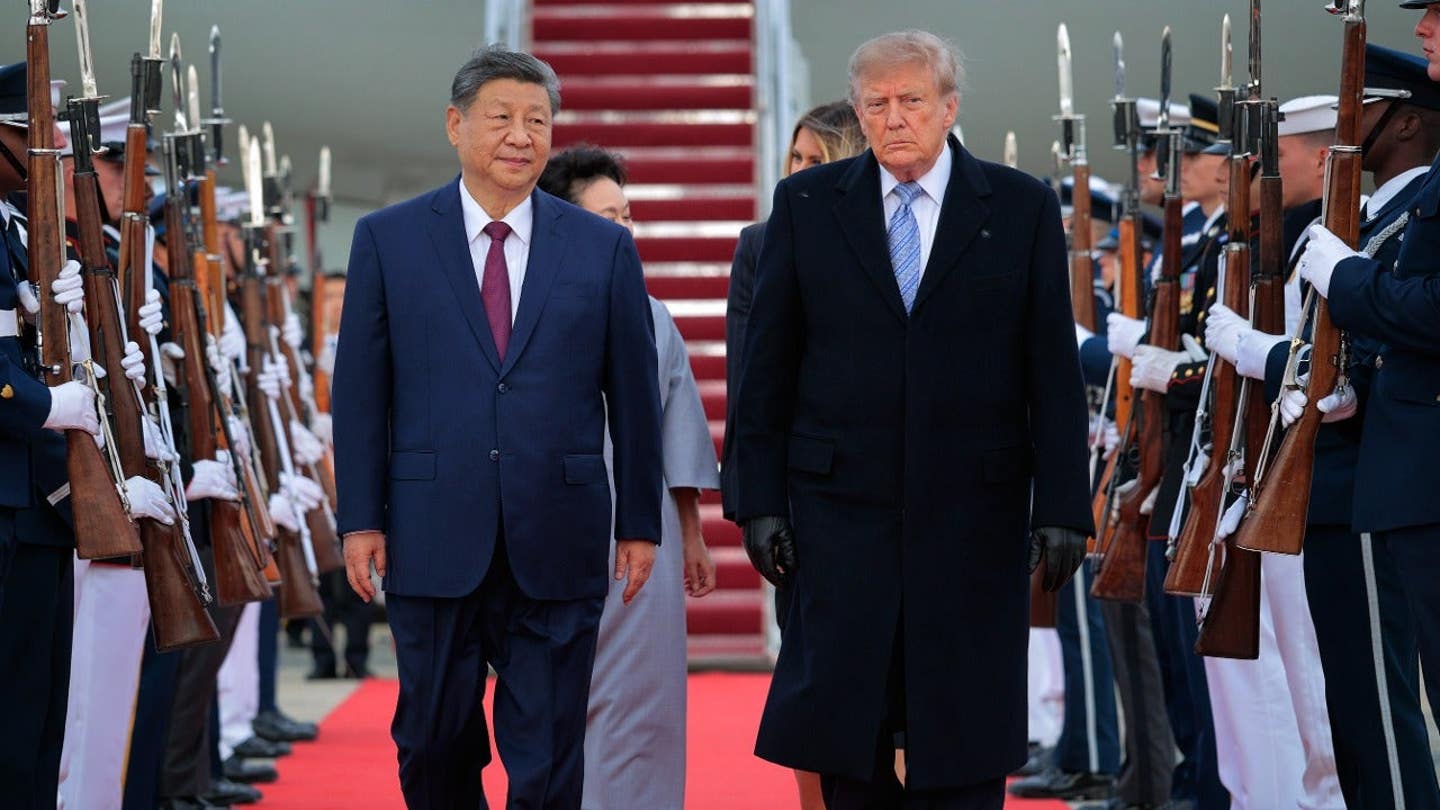
The Chinese Communist Party (CCP) appeared to issue a warning before Carney arrived in China that any progress in the relationship would depend on Canada breaking with the United States on China policies.“The Carney government needs to demonstrate that its willingness to strengthen cooperation with China is not just a makeshift move to reduce the bill being charged by the US,” says a Jan. 12 editorial published by the China Daily, a Chinese state-controlled newspaper.
“If Ottawa still chooses to subject its China policy to the will of Washington again in the future, it will only render its previous efforts to mend ties with Beijing in vain.”
Meanwhile, Washington is likely closely following Carney’s visit to China and taking note of what deals or concessions are made. Carney has been under pressure by some industry groups for potential breakthroughs in the trade conflict. But such a move would further distance Canada from the United States on foreign policy.
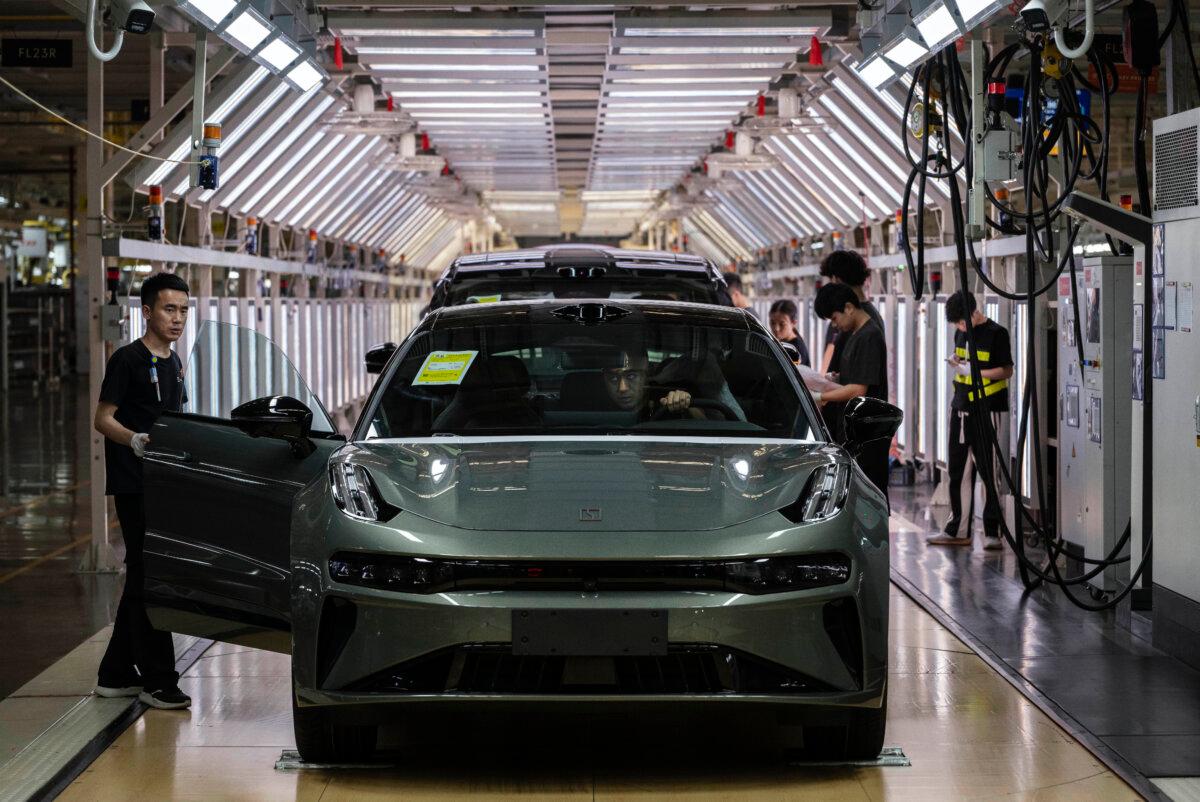
China slapped tariffs on Canadian agricultural and seafood products last year in response to Canada putting a surtax on Chinese steel, aluminum, and electric vehicles (EVs). The Trudeau government placed these tariffs on China in late 2024, following in the Biden administration’s footsteps.
Trump was asked on Jan. 13 whether he would ever allow Chinese autos in the United States. He said China is “taking over” the auto sector in Europe, and meanwhile there’s a 100 percent tariff on Chinese cars in the United States. This allows U.S. manufacturers to do “very nicely against China,” Trump said.
The European Union has lower duties on Chinese EVs and Chinese manufacturers are rapidly gaining market share, nearly doubling their sales between 2024 and 2025.
Poilievre said Ottawa should instead use the $1 billion loan it had provided to B.C. Ferries to purchase Chinese-made ships as leverage to push Beijing to drop its retaliatory tariffs on Canadian products.
.
What's Your Reaction?
 Like
0
Like
0
 Dislike
0
Dislike
0
 Love
0
Love
0
 Funny
0
Funny
0
 Wow
0
Wow
0
 Sad
0
Sad
0
 Angry
0
Angry
0
















Comments (0)