

The Big Choice: Western Europe Must Decide Between US Tariffs and Chinese Theft at Scale


.
Western countries are in a tough spot, especially those in Western Europe. For years, the European Union has tried to balance trade, military, and diplomatic relations with both Washington and Beijing. They welcomed Chinese investment and exports while relying on the United States for defense, finance, and high-tech leadership.
US Tariffs Versus China’s Manufacturing Dominance
On one side are U.S. tariffs and the Trump administration’s pressure to align with American trade and security policy. On the other side is the reality of China’s manufacturing dominance that, at the moment, much of the developed world can’t do without. This includes strategic rare-earth elements and supply-chain monopolies or near-monopolies that play crucial roles in the EU economy.Of course, there’s also the vast temptation of China’s mythical “open” market that many Western companies say isn’t really open at all. European companies have often gone along with Beijing’s rules—joint ventures, forced tech transfers, subsidized competition, and other adversarial policies—because China is huge and profitable.
Economic Dependence and Supply Chain Realities
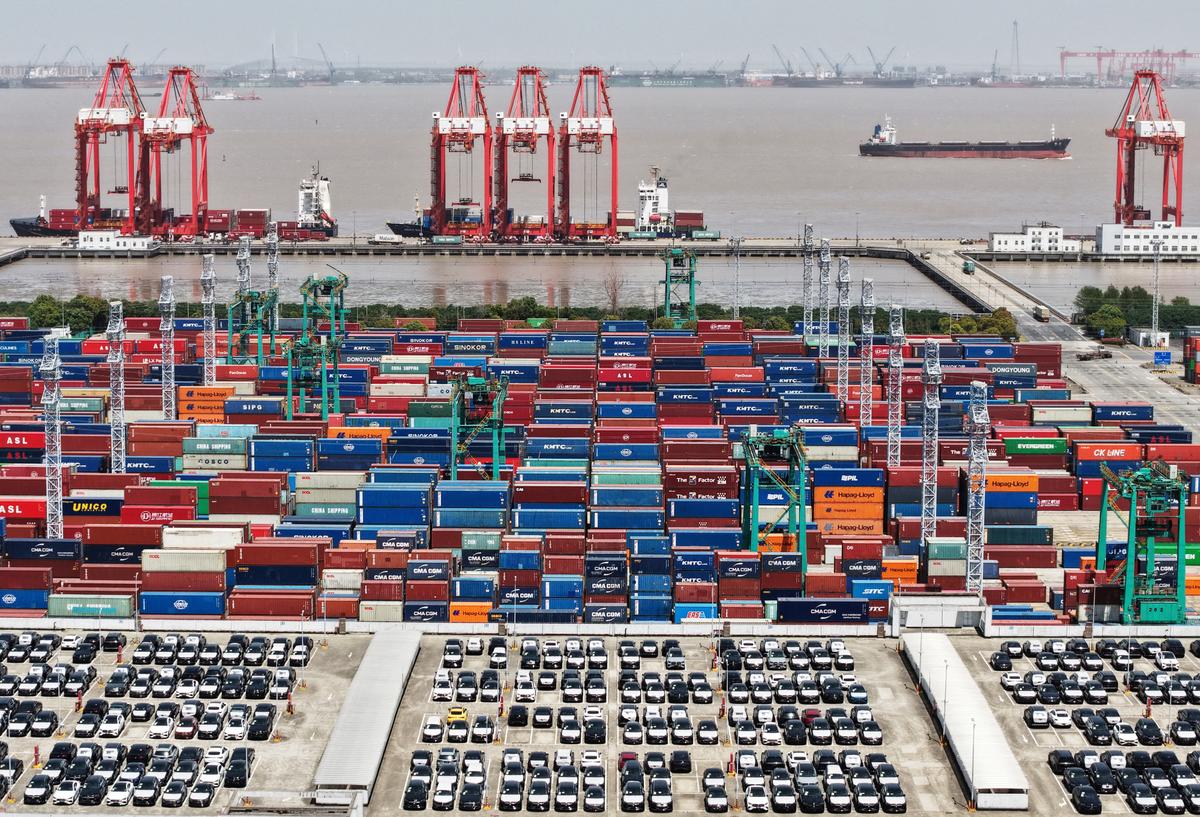
Even though decoupling rumblings and policies are present, Europe’s economies remain deeply entangled with China as both a destination for exports and a supplier of critical components. In many sectors, the EU’s import dependence on China is substantial, particularly in electronics and machinery categories. This has made “de-risking” difficult because China’s role in manufacturing is central to European economies.Europe’s ‘Strategic Autonomy’ Delusion
This is why European leaders talk about “strategic autonomy.” It reflects the EU’s fear of being crushed between the United States and China. The delusion is that the Eurozone has, or will, somehow achieve the autonomy to act independently without being adversely affected by China, the United States, or both. However, the EU’s economic ties to both superpowers are too integrated to be severed quickly.Because tech standards, supply chains, and data rules are increasingly being set elsewhere, mainly in the United States and China, European leaders worry that decoupling from either the United States or China could damage the EU’s industrial base and economic viability. European companies are often significantly affected by U.S. sanctions and tariffs due to their integration into U.S.-centered financial and trade systems.
.
Industrial and Tech Dependence as a Security Risk
Recent events, such as COVID-19 and the Russia–Ukraine war, have exposed Europe’s vulnerabilities in energy dependence, particularly compared with the United States, which is largely energy self-sufficient. They also revealed how uncompetitive Europe’s renewable energy manufacturing sector is relative to Chinese suppliers.US Tariffs and Transatlantic Alignment
Even when the United States imposes tariffs on Chinese products to confront trade imbalances and security risks, Europe does not escape the fallout. EU trade officials monitor these tariffs closely because of the downstream supply-chain effects of higher-priced Chinese inputs. Meanwhile, China’s trade surplus with the EU has grown significantly in recent years.Transatlantic Strains Worsening?
At the same time, the Trump administration’s tariffs, NATO skepticism, and statements about taking over Greenland from Denmark may have damaged European public sentiment toward the United States. The rift between the United States and Europe is among the most serious strains in NATO’s history, and could play a significant role in where Western Europe seeks its economic and security remedies.Europe’s Strategic Reckoning
Europe now faces a choice between absorbing U.S. tariffs or tolerating a strategically leveraged Chinese market. The belief in a transparent, fair Chinese market is fading among Western companies, as unpredictable Chinese export controls and retaliation pose real financial risks to European companies.On the plus side, coordination between the EU and the United States increasingly centers on reciprocal, fair, and balanced trade agreements involving tariffs, technology standards, and export controls. This includes semiconductors and other advanced technologies.
Today, Western Europe’s choice is not just about trade but about its future geopolitical role—and that calculation is accelerating.
What's Your Reaction?
 Like
0
Like
0
 Dislike
0
Dislike
0
 Love
0
Love
0
 Funny
0
Funny
0
 Wow
0
Wow
0
 Sad
0
Sad
0
 Angry
0
Angry
0










Comments (0)