

Taiwan's Military Alarm: Nearly 100 Chinese Warships Deployed as Beijing Preaches Peace
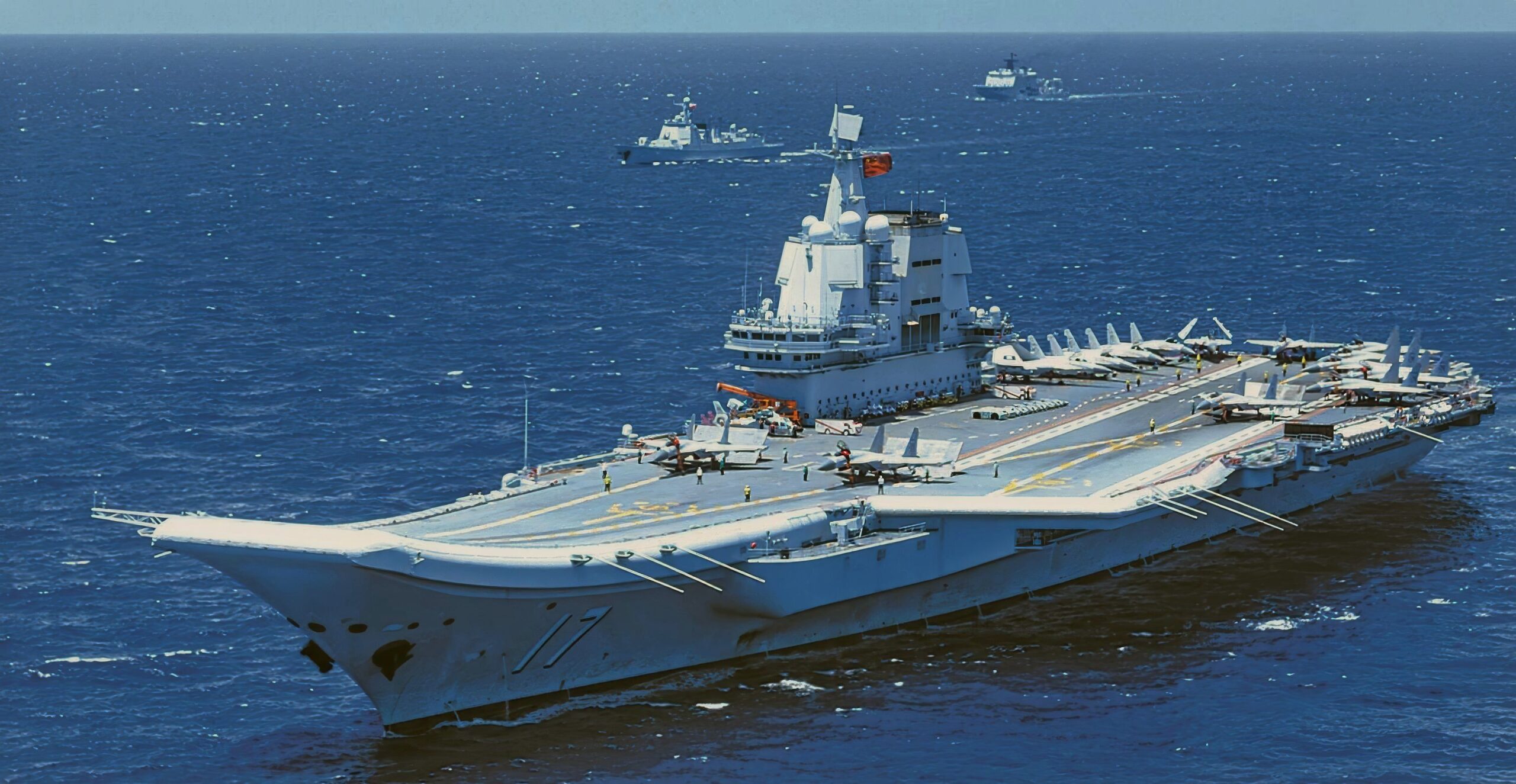
While China's President Xi Jinping met with Taiwan's opposition leader in Beijing on Friday and spoke of peace and cooperation across the Taiwan Strait, Taiwanese security officials were tracking something very different: a sharp and unusual surge in Chinese naval power in the waters around the island. Two Taiwanese security officials told Reuters that China has deployed nearly 100 naval and coast guard vessels in and around the South and East China Seas this week. Under normal circumstances, that number sits at around 50 to 60 ships — making the current buildup, in the words of one official, "very rare," particularly because this time of year is not typically associated with major Chinese naval exercises.

.
A Dangerous Contradiction — Diplomacy Up Front, Military Pressure in the Background
While China's President Xi Jinping met with Taiwan's opposition leader in Beijing on Friday and spoke of peace and cooperation across the Taiwan Strait, Taiwanese security officials were tracking something very different: a sharp and unusual surge in Chinese naval power in the waters around the island.
Two Taiwanese security officials told Reuters that China has deployed nearly 100 naval and coast guard vessels in and around the South and East China Seas this week. Under normal circumstances, that number sits at around 50 to 60 ships — making the current buildup, in the words of one official, "very rare," particularly because this time of year is not typically associated with major Chinese naval exercises.
.
"The Threat Is Becoming Increasingly Severe"
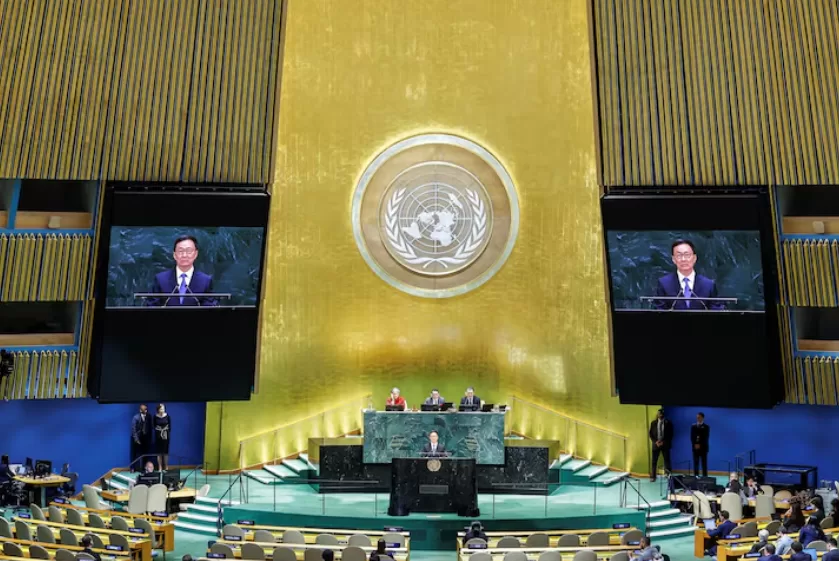
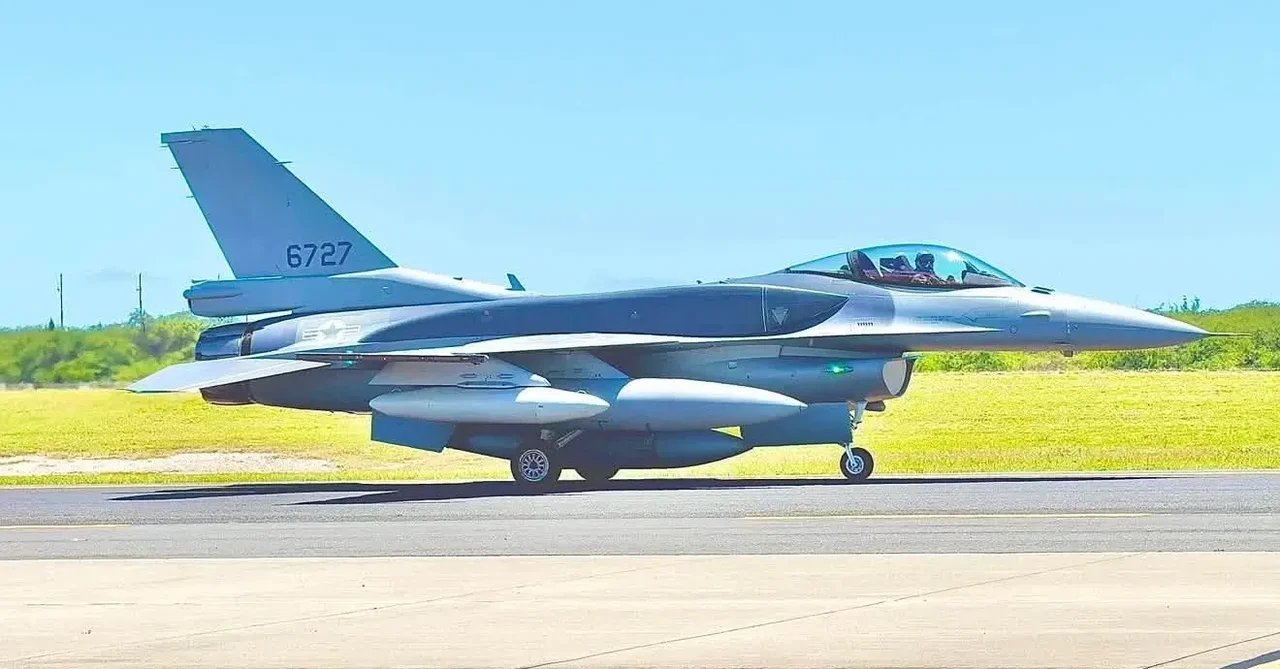
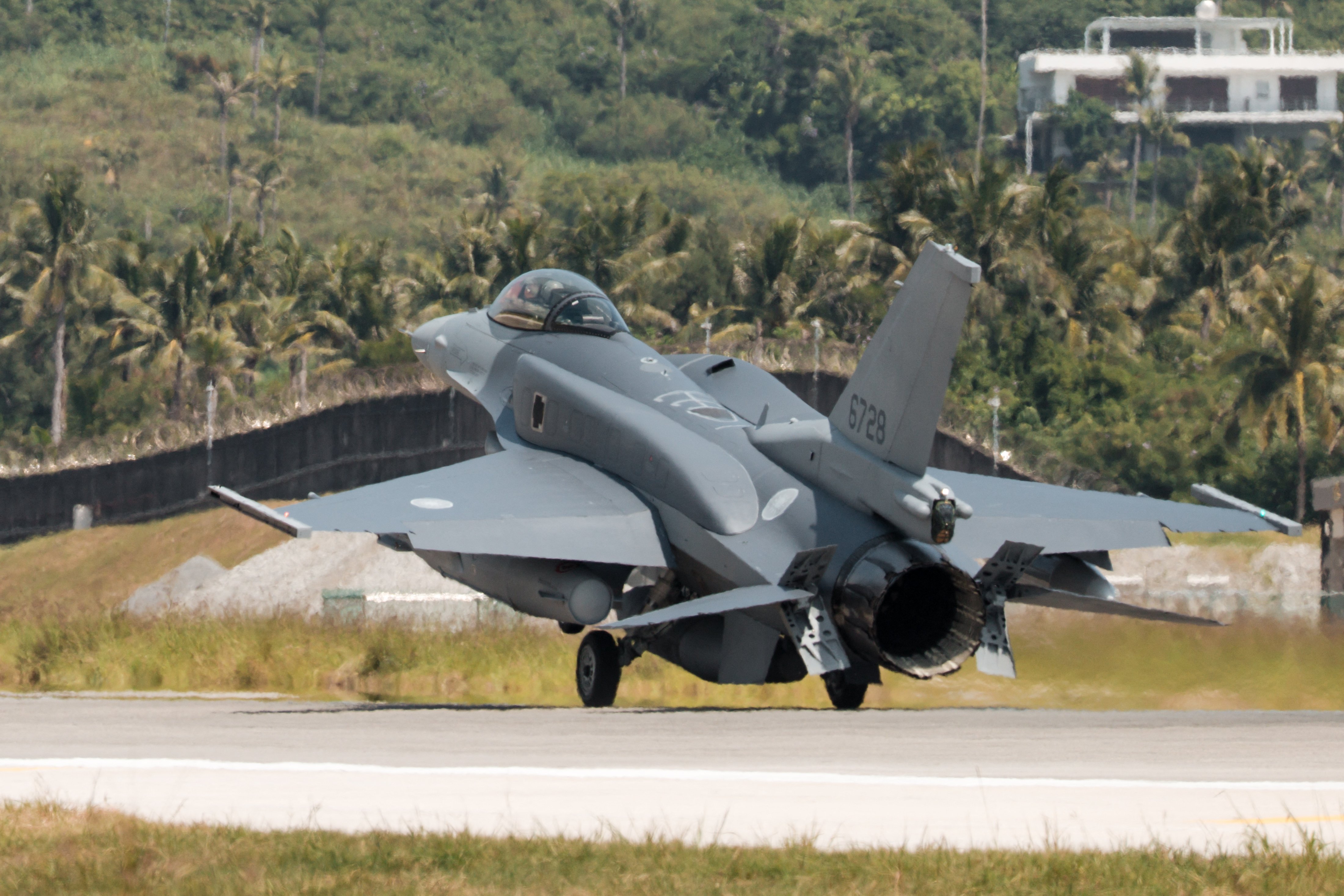
Taiwan's Defence Minister Wellington Koo addressed lawmakers in Taipei on Thursday, and his message was stark. "China is continuously and persistently expanding its military capabilities, and the military threat it poses to us is becoming increasingly severe," he said — speaking at a moment when members of the opposition Kuomintang party (KMT) had skipped crucial parliamentary talks on a stalled $40 billion defence budget.
Koo went further, warning of the consequences if Taiwan's allies began to doubt the island's resolve. "The most frightening scenario is — if all of our international allies were to question whether we have such resolve, what would we face? I cannot imagine it." His message was direct: Taiwan must demonstrate its will to defend itself, not just to its own people, but to the United States and other partners.
.
Xi Meets the Opposition — and Draws a Red Line
On Friday in Beijing, Xi Jinping met with Cheng Li-wun, chairwoman of Taiwan's main opposition party, the KMT, who has been on a self-described "historic journey for peace" in China since April 7. Xi struck a conciliatory tone — saying that people on both sides of the Taiwan Strait want peace and cooperation — but paired it with an unmistakable warning: China will "absolutely not tolerate" independence for Taiwan.
The visit is the first by a KMT leader to China in a decade, and it comes at an exceptionally sensitive moment: just weeks before a scheduled summit between Xi and U.S. President Donald Trump in May, where Taiwan is expected to be a central issue on the agenda.
.
"New Normal" or Alarming Anomaly?
The sharp rise in Chinese vessel deployments was corroborated by separate intelligence reports reviewed by Reuters, which showed a steady increase from nearly 70 ships at the end of March to nearly 100 this week. Two additional non-Taiwanese security sources confirmed the numbers — though they characterised the buildup as more of a "new normal" from Beijing rather than an immediate crisis signal.
What makes the timing particularly notable, according to one Taiwanese official, is the convergence of three factors: Washington's attention is currently focused on the conflict in the Middle East, Taiwan's opposition is blocking defence spending at home, and Beijing is hosting Taiwan's opposition leader for high-profile talks.
Taiwan's coast guard chief, Kuan Bi-ling, took the unusual step of publicly posting the names and locations of Chinese warships operating in Taiwan's surrounding waters. Her explanation was clear: with the KMT leader meeting Chinese leadership, the public and the international community needed to understand the full picture of what Beijing was doing militarily at the same time.
.
Reserved Airspace — A Signal Before Trump Arrives
Beyond the naval buildup, China has also declared a block of "reserved" airspace off its eastern coast, in effect from March 27 through May 5 — roughly one week before Trump's scheduled visit to China. Beijing has provided no official explanation.
Taiwan's National Security Bureau chief, Tsai Ming-yen, told reporters in Taipei that he believes China is using the airspace restriction to monitor how frequently U.S. aircraft operate in the region. "This may also be politically intended to demonstrate the state of U.S. air activity in the Indo-Pacific region prior to the Trump-Xi meeting," he said.
Such airspace notifications have historically preceded Chinese military exercises — making the current declaration, in the context of the naval buildup and the diplomatic calendar, a significant signal.
.
Defence Budget Blocked — Opposition Under Fire
Back in Taipei, the political fallout from the KMT's China visit continued to grow. Taiwan's ruling Democratic Progressive Party (DPP) condemned the opposition for skipping parliamentary sessions on the government's proposed $40 billion special defence budget — a package backed by Washington and designed to fund U.S. arms purchases and Taiwan's domestic defence industry.
The KMT has insisted there is "no connection whatsoever" between Cheng's peace trip and the party's obstruction of defence spending plans. Critics — and the facts on the ground — suggest otherwise.
Taiwan's President Lai Ching-te has repeatedly offered direct dialogue with Beijing. The CCP has refused every time, dismissing him as a separatist. The message from Beijing is consistent: it will talk to those who accept its framing, and pressure everyone else.
.
Sources
- Reuters – "Taiwan sees only warships and warplanes as China talks peace with opposition" (April 10, 2026): https://www.reuters.com/world/china/taiwan-sees-only-warships-warplanes-china-talks-peace-with-opposition-2026-04-10/
- Euronews – Taiwan opposition leader makes rare visit to China in 'journey for peace' (April 8, 2026): https://www.euronews.com/2026/04/08/taiwan-opposition-leader-makes-rare-visit-to-china-in-journey-for-peace
- NBC News / AP – Taiwan opposition leader heads to China in what she calls a 'journey for peace' (April 7, 2026): https://www.nbcnews.com/world/asia/taiwan-opposition-leader-heads-china-calls-journey-peace-rcna267042
- Modern Diplomacy – Taiwan Opposition Leader Urges Peace in China as Party Skips Defence Talks (April 9, 2026): https://moderndiplomacy.eu/2026/04/09/taiwan-opposition-leader-urges-peace-in-china-as-party-skips-defence-talks/
- Gulf Times – Taiwan opposition leader talks peace with China as her party skips defence talks (April 10, 2026): https://www.gulf-times.com/article/723689/international/taiwan-opposition-leader-talks-peace-with-china-as-her-party-skips-defence-talks-in-taipei
.
What's Your Reaction?
 Like
1
Like
1
 Dislike
0
Dislike
0
 Love
0
Love
0
 Funny
0
Funny
0
 Wow
1
Wow
1
 Sad
0
Sad
0
 Angry
0
Angry
0













Comments (0)