Stop the Invisible Commerce—How State-Backed Chinese Finance Is Neutralizing Sanctions

Stop the Invisible Commerce—How State-Backed Chinese Finance Is Neutralizing Sanctions

.

Commentary

When infrastructure replaces payment, sanctions cease to bite, and strategic leverage becomes durable.

A ship doesn’t need to vanish to disappear. Sometimes it just needs to “blink” at the right moment. Automatic Identification System (AIS) gaps can create that moment—especially where the sea is crowded, and the questions are few.

In sanctions-avoidance cases, those gaps often precede ship-to-ship transfers that never show up cleanly in the paperwork. A cargo then becomes a “blend”: physically mixed or relabeled on paper, making the sanctioned product harder to trace. That’s why U.S. maritime sanctions guidance keeps returning to the same behaviors.

AIS manipulation, falsified documents, opaque ownership, unusual routing, and ship-to-ship transfers have become the operating system for evasion, not a one-off.

But the bigger change is not only how sanctioned commodities move—it is how value settles.

Sanctions were built to choke off access to financial systems and markets. What’s emerging instead is a practice of settling value without the kinds of payments that sanctions are structured to stop. Without wires or correspondent banks, value moves as projects, insurance coverage, logistics access, and long-dated contracts.

Payment Is the Wrong Word Now

A sanctioned country still sells oil or other goods because someone is willing to buy, usually at a discount. But instead of paying through normal banks where regulators can see the money, the deal is structured so the risky part is handled elsewhere.

A state-backed Chinese insurer or state-backed finance program promises to cover losses if things go sideways. That safety net makes it easier for Chinese banks and companies to keep doing business, even when sanctions are supposed to scare them off.

Sinosure describes this, in corporate-speak, as insurance intended to encourage overseas investment by assuming losses on equity or debt claims tied to overseas projects. That’s not sanctions evasion by itself—but it is the kind of risk-absorption that helps keep transactions viable when conventional finance gets dangerous.
.
Then the revenue isn’t simply earned. It is converted into infrastructure, long-term service relationships, or physical footholds that outlast the sanctions episode that triggered the workaround. This quiet trade establishes lifelines for sanctioned producers—and leverage for the actor building the alternative system.

Iran: Reported Barter-by-Infrastructure

Iran remains the clearest illustration because the logic is straightforward.
A Wall Street Journal–reported arrangement, summarized by IranWatch, describes a covert conduit (“Chuxin”) in which Chinese buyers deposit funds that are then routed to Chinese contractors building infrastructure in Iran—projects allegedly insured through a Chinese state-backed export credit insurer such as Sinosure.
.
Regional reporting describes similar mechanics: monthly deposits into the conduit, disbursements to Chinese contractors, and Sinosure as the insurance glue holding the chain together. Think-tank analysis frames the same system as a deliberate upgrade to Iran’s evasion capacity, linking the conduit to infrastructure delivery and avoiding direct cash payments.

Even if specific deal structures shift over time, the outcome is consistent: a revenue stream survives, and the counter-value becomes concrete and contractual. It is harder to freeze and easier to anchor into long-lived influence.

.
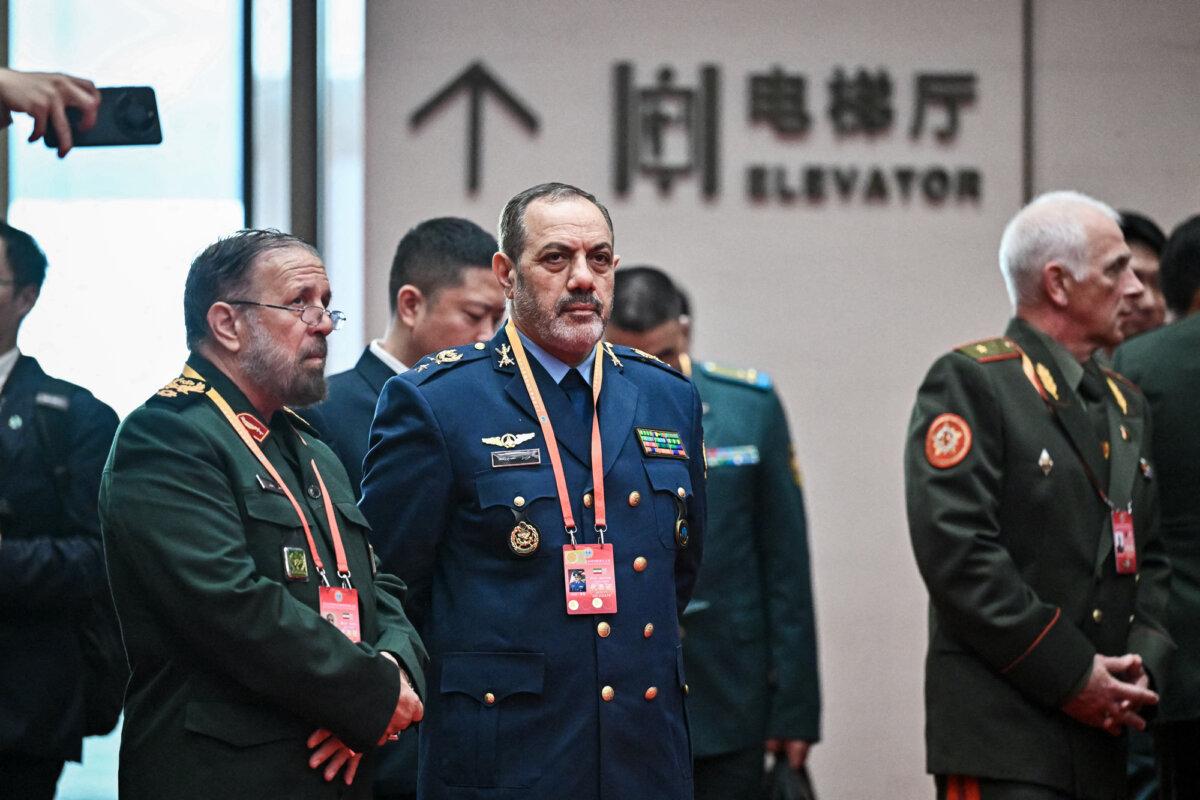
Iranian Defense Minister Aziz Nasirzadeh (C) attends the Shanghai Cooperation Organization defense ministers’ meeting in Qingdao, China, on June 26, 2025. The SCO’s nine official members include China, India, and Russia. China’s support has helped Iran sustain its economy and nuclear program despite decades of U.S. and UN sanctions. Pedro Pardo/AFP via Getty Images
.
Washington’s posture last month reflects how critical officials view this lifeline. On Dec. 18, the Treasury announced actions targeting 29 shadow-fleet vessels and their management firms, explicitly tying the network to deceptive shipping practices used to move Iranian petroleum.

Venezuela: Hard Interdiction Meets Improvisation

Venezuela is where the argument stops being theoretical, because the enforcement posture changed sharply. That shift created a clear window into adaptation in near real time.

On Dec. 24, Reuters reported that the White House ordered U.S. forces to focus on enforcing a “quarantine” of Venezuelan oil for at least two months—language chosen, in part, to avoid the legal and political freight of “blockade.”

Days earlier, Reuters reported the seizure of an oil tanker in international waters off Venezuela, with Homeland Security Secretary Kristi Noem confirming the action as part of the crackdown.

Caracas responded with lawfare. Venezuela’s National Assembly passed a measure allowing penalties of up to 20 years for anyone who “promotes or finances” what it describes as piracy or blockades. Foreign outlets described the same step as an effort to criminalize support for blockade-like actions and deter cooperation with U.S. seizures.
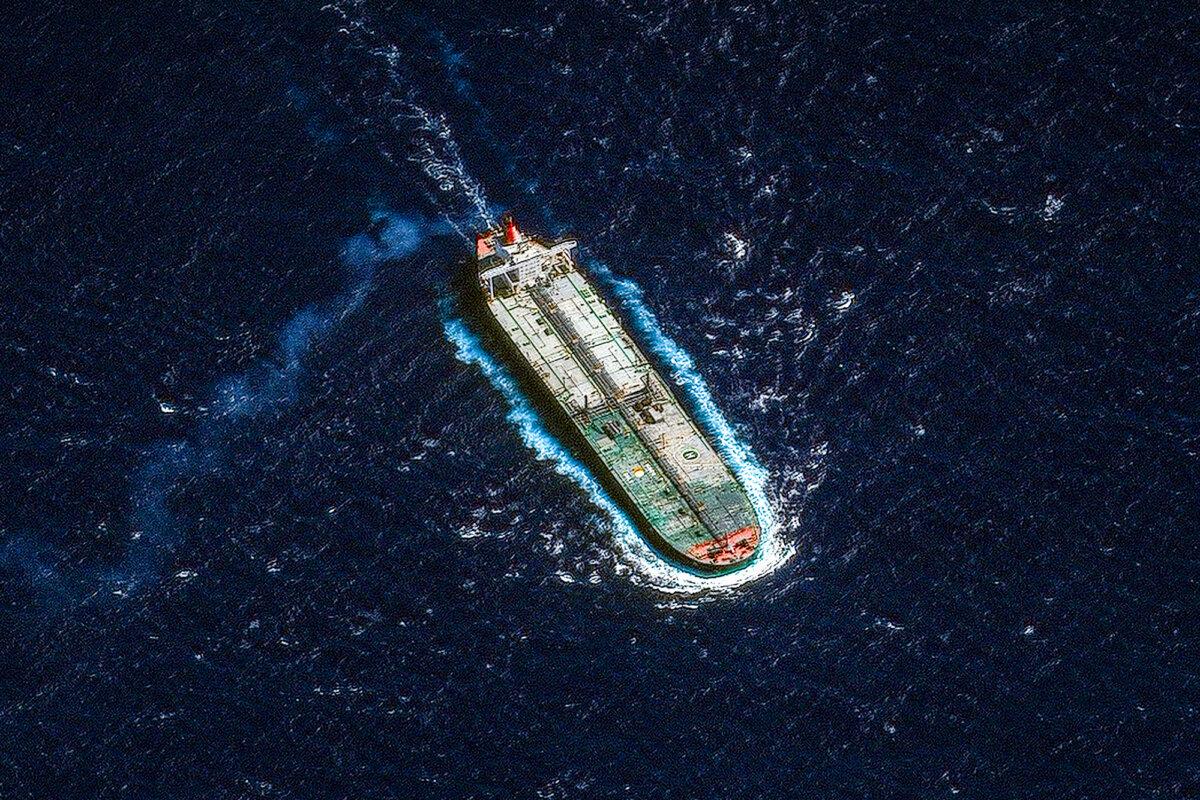
The most revealing datapoint came on Dec. 30. Reuters reported that despite the blockade posture, oil tankers were still arriving. PDVSA, Venezuela’s state-owned oil company, was leaning on floating storage and oil-for-goods/services arrangements, including vessels tied to oil-for-debt deals with China.
.
The crude oil tanker Skipper, recently seized by the United States off the coast of Venezuela, is seen traveling in a southwesterly direction and positioned approximately 20 miles north of Guadeloupe, in the southern Caribbean Sea on Dec. 12, 2025. ©2025 Vantor via AP
.
That sequence matters. Interdiction raises costs. It slows flows and scares mainstream operators who need reputable insurance and predictable port services. In the near term, the system won’t simply stop; it will shift into floating storage, new intermediaries, altered contracts, and settlement structures that look more like barter than banking.

Russia: When Temporary Becomes Default

Russia’s adaptation is often narrated as a pivot to Asia. What looks temporary is hardening into default infrastructure.

Reuters reported on Dec. 25 that Gazprom supplied 38.8 billion cubic meters of gas to China via the Power of Siberia pipeline in 2025—above the 38 bcm target—reinforcing how fast the corridor is becoming a structural fact rather than a stopgap.

The services and logistics side keeps finding seams, too. The outlet reported on Dec. 22 that the LNG tanker Kunpeng loaded at Russia’s Portovaya LNG terminal, a facility under Western sanctions—ship-tracking evidence that a non-sanctioned carrier can still move sanctioned LNG when routes, documentation, and destination tolerance line up.
.
And the incentive to “wash” origin doesn’t stop at the waterline. Reuters reporting shows sanctioned Russian LNG is still reaching China through identifiable delivery corridors, while other sanctioned commodities—especially Iranian crude—are relabeled in paperwork to obscure origin as scrutiny intensifies.

Chinese Port Developments: Not Omnipotence, But Real Latitude

CFR’s tracker documents the scale and geographic spread of Chinese investment and involvement in overseas ports. For strategic leverage, China does not need to “control” every port it touches—and often it doesn’t. War on the Rocks argues the reality is frequently a patchwork of deals shaped by host-nation politics and commercial constraints, not a single master plan, meaning leverage is uneven and contingent.

But “uneven” is not the same as “irrelevant,” especially under sanctions pressure.

CSIS assessments of Chinese port involvement emphasize risks that map cleanly onto sanctions enforcement: access to logistics data, operational influence, and the ability to deny or delay access in crisis conditions. In a world where sanctions enforcement lives or dies on terminal handling, transshipment pathways, and documentation integrity, port involvement can provide latitude—not immunity—especially when it comes to local operators’ compliance choices. It lowers friction in the places where friction is the policy tool.

What the Interdiction Test Is Really Testing

December became an unusually clear stress test for “hard” interdiction. Reuters’ “quarantine” reporting signaled an intent to make movement itself risky, not merely financially inconvenient. But the late-December reporting also points to a likely limit: a determined target can keep lifelines partially alive through storage, rerouting, and oil-for-goods/services arrangements—especially when major buyers or intermediaries tolerate risk and when settlement is displaced away from clean banking.
.
Interdiction can be quick and costly: it slows exports and raises the price of doing business for companies that need legit insurers, stable registries, and reliable ports. The problem is sustainability. By itself, interdiction is a visible engagement that adaptive networks can route around. The sustaining play is to hit the plumbing—maritime services, insurers, ship managers, and port operators—while imposing documentation and verification standards that make origin auditable and deception costly.

Closing Imperative

Sanctions don’t fail because the idea is wrong. They fail when a parallel and highly adaptive countermeasure outpaces the enforcement architecture.

When infrastructure replaces payment, pressure becomes leverage—because the underwriter and builder become the lifeline. And lifelines don’t come free.

Democracies don’t need to use every tool in the bag to respond. They need precision: make underwriting legible, make provenance auditable, and make concealment costly for the actors who still care about access to global services. Otherwise, “invisible commerce” won’t just blunt sanctions; it will quietly rewrite who gets durable leverage from them.

Views expressed in this article are opinions of the author and do not necessarily reflect the views of The Epoch Times.
.