

Silicon Shield 2.0: Taiwan and the U.S. Are Building an AI Alliance — and China Is the Reason Why
Silicon Shield 2.0: Taiwan and the U.S. Are Building an AI Alliance — and China Is the Reason Why - Taiwan's Vice President tells Washington that her island sits at the heart of America's AI future. U.S. senators warn the race against China is not just technological — it is moral. And a new legislative push aims to make sure Beijing never gets its hands on America's most powerful chips.


.
Taiwan's Vice President tells Washington that her island sits at the heart of America's AI future. U.S. senators warn the race against China is not just technological — it is moral. And a new legislative push aims to make sure Beijing never gets its hands on America's most powerful chips.
.
In a packed conference room in Washington on March 24, 2026, Silicon Valley met Capitol Hill. The annual Hill and Valley Forum — which brings together technology executives and policymakers for a frank discussion about America's technological future — this year carried a theme that ran through every session: China.
And joining the conversation, via recorded video from Taipei, was Taiwan's Vice President Hsiao Bi-khim — one of the most influential figures in the free world's effort to keep advanced technology out of Beijing's reach.
Taiwan: More Than Just Chips
.
Taiwan has long been known as the world's semiconductor powerhouse — home to TSMC, which manufactures the vast majority of the world's most advanced computer chips. But Vice President Hsiao made clear that Taiwan's role in the U.S. technology ecosystem is evolving well beyond chip fabrication.
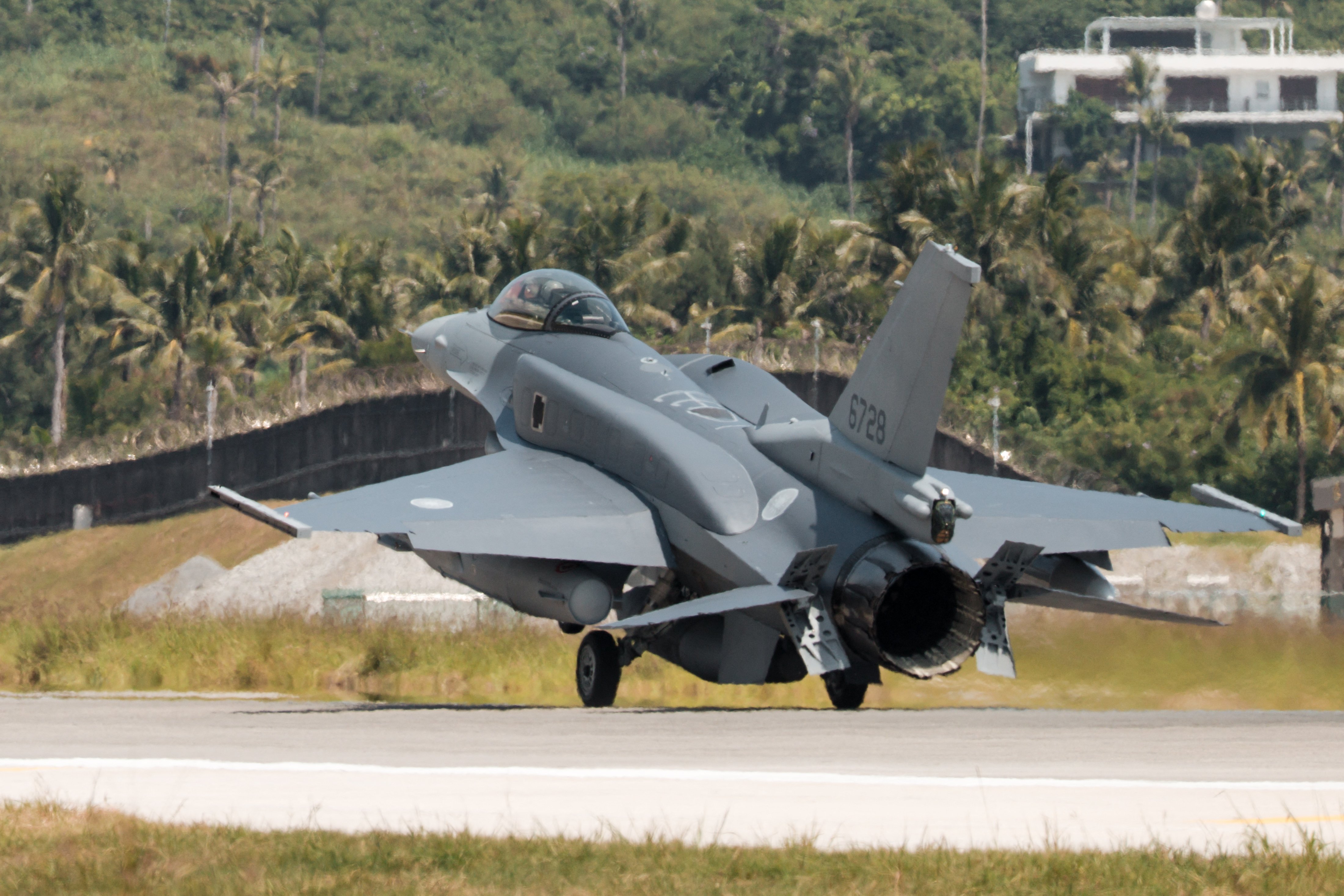
Hsiao highlighted cooperation between Taiwan and the United States on AI and called for Taiwan's inclusion in the U.S.-led Pax Silica initiative, which aims to build secure, democratic supply chains for advanced technology. She said the Taiwanese government has launched ten new AI infrastructure projects covering AI robotics and next-generation unmanned systems — efforts that seamlessly align with the growing demand from U.S. industry for secure components and systems at scale.
Those ten projects — unveiled in 2025 under President Lai Ching-te's vision of turning Taiwan into an "AI island" — span a national computer center, silicon photonics, quantum computing, and robotics, and are targeted at generating more than NT$15 trillion (around US$500 billion) in economic value by 2040, along with 500,000 new jobs in the AI sector.
Taiwan has also committed to US$250 billion in private investments to build and expand advanced semiconductor and AI production capacity in the United States, backed by another US$250 billion in government credit guarantees to facilitate further investment.
"Taiwan contributes to every layer of the U.S. AI hardware stack," Hsiao said. "We are more than just essential. We are a trustworthy partner."
She also addressed China's ongoing pressure on Taiwan — from the air and sea, in the economic arena, and in cyberspace — saying it had motivated Taiwan's government to build whole-of-society resilience and asymmetric defense systems. This focus has deepened Taiwan-U.S. defense collaboration, including provisions in the 2026 National Defense Authorization Act supporting the joint development of drone and counter-drone capabilities — representing, in her words, "a shift from a buyer-seller relationship toward a true defense-industry partnership."
"This Is a Moral Fight"
.
The senators who took the stage at the Hill and Valley Forum were equally blunt — and equally focused on the threat from Beijing.
Senator Jim Banks (R-Indiana), one of Congress's most prominent China hawks, warned that the AI race is about far more than technological supremacy.
"This isn't just a technological race — this is a moral fight," Banks told the forum. He warned of China's potential to dominate future technology sectors and stressed that U.S. innovation must not be compromised by aiding adversarial nations through technology exports. "We can't let China win it," he said. "That's the big picture on Capitol Hill."
Banks pointed to his GAIN AI Act — the Guaranteeing Access and Innovation for National Artificial Intelligence Act — as the legislative solution. The legislation would ensure that American companies get first access to advanced AI chips before they are sold to China or other foreign adversaries, by requiring chip manufacturers to fulfill all outstanding U.S.-based orders before exporting to competing countries, and prohibiting them from offering lower prices abroad than at home.
The Senate included the GAIN AI Act in its version of the Fiscal Year 2026 National Defense Authorization Act when it passed the bill in October 2025. The bill has since drawn high-profile support, including from Senator Tom Cotton, the third-ranking Senate Republican.
No Chinese AI in the U.S. Government
.
Senator Rick Scott (R-Florida) came to the forum with a complementary piece of legislation — one aimed not at what America exports, but at what it imports.
Scott's No Adversarial AI Act, introduced on a bipartisan basis with Senator Gary Peters (D-Michigan), would prohibit federal agencies from using artificial intelligence technologies controlled by foreign adversaries — a category that currently includes China, Russia, Iran, and North Korea.
Scott said the bill was motivated in part by the rise of Chinese AI tools like DeepSeek, which have been shown to store U.S. user data in China. "With clear evidence that China can have access to U.S. user data on AI systems, it's absolutely insane for our own federal agencies to be using these dangerous platforms," Scott said.
Under the legislation, the Federal Acquisition Security Council would be required to publish and regularly update a list of AI technologies developed by foreign adversaries, and government agencies would be prohibited from using any AI tools on that list — with narrow exceptions for research, counterterrorism, or other mission-critical functions.
At the forum, Scott was direct about his view of Beijing's intentions: "The government of China wants to destroy our way of life. When they wake up every day, they think: how can the American way of life be destroyed?"
The Bigger Picture: A Democratic Technology Alliance
.
What the Hill and Valley Forum made clear is that Washington's approach to the AI race with China is shifting from reaction to strategy — and that Taiwan sits at the center of that strategy.
Taiwan hopes to work with like-minded partners to promote global AI infrastructure and protect global prosperity and freedom through advanced technology. Energy, information, and communications resilience are now considered vital pillars of national defense under Taiwan's Whole-of-Society Defense Resilience concept.
The U.S.-led Pax Silica initiative — which Taiwan has formally asked to join — reflects the same logic: that advanced technology supply chains must be anchored in democracies, built on trust, and shielded from authoritarian exploitation.
The Trump administration's AI Action Plan recommends establishing a "full-stack" AI export strategy that provides hardware, models, software, applications, and standards to allies — while restricting the flow of AI computing power to rivals, particularly China, through new export controls on chips and semiconductor manufacturing systems.
The message from both Taipei and Washington is the same: the AI race is not just a competition for market share. It is a contest over who will define the rules of the digital world — free societies, or the Chinese Communist Party.
.
Sources:
- Focus Taiwan / Central News Agency – VP Hsiao Highlights Taiwan-U.S. AI Collaboration: https://focustaiwan.tw/sci-tech/202603250020
- Taipei Times / Liberty Times – AIT Head Touts Benefits of Strong Taiwan-US Trade Ties: https://news.ltn.com.tw/news/focus/breakingnews/5382750
- Quiver Quantitative / Senator Banks Press Release – Banks Addresses AI Competition with China at Hill and Valley Forum: https://www.quiverquant.com/news/Press+Release:+Senator+Jim+Banks+Addresses+AI+Competition+with+China+at+Hill+and+Valley+Forum
- Senator Banks Official Website – GAIN AI Act (ICYMI): https://www.banks.senate.gov/news/press-releases/icymi-jim-banks-ai-chip-legislation-opens-rift-between-china-hawks-industry-leaders/
- Nextgov/FCW – AI Export Control Bill Passes Senate as NDAA Amendment: https://www.nextgov.com/artificial-intelligence/2025/10/ai-export-control-bill-passes-senate-ndaa-amendment/408762/
- Senator Rick Scott Official Website – No Adversarial AI Act: https://www.rickscott.senate.gov/2025/6/sen-rick-scott-leads-legislation-to-stop-u-s-government-agencies-from-using-adversarial-ai-technology
- Akin Gump – U.S. Lawmakers Introduce No Adversarial AI Act: https://www.akingump.com/en/insights/ai-law-and-regulation-tracker/us-lawmakers-introduce-no-adversarial-ai-act
- Free Malaysia Today – Taiwan Aims to Be Strategic AI Partner in U.S. Tariff Deal: https://www.freemalaysiatoday.com/category/business/2026/01/16/taiwan-aims-to-be-strategic-ai-partner-in-us-tariff-deal
- IEEE Spectrum – AI in Taiwan: Nation's Goals Will Need More Tech Talent: https://spectrum.ieee.org/ai-in-taiwan
- Ropes & Gray – Winning the Race: America's AI Action Plan: https://www.ropesgray.com/en/insights/alerts/2025/07/winning-the-race-americas-ai-action-plan-key-pillars-policy-actions-and-future-implications
.
What's Your Reaction?
 Like
1
Like
1
 Dislike
0
Dislike
0
 Love
1
Love
1
 Funny
0
Funny
0
 Wow
1
Wow
1
 Sad
0
Sad
0
 Angry
0
Angry
0
















Comments (0)