

Senator Calls on Federal Health Authorities to Review China’s Role in US Drug Trials

.
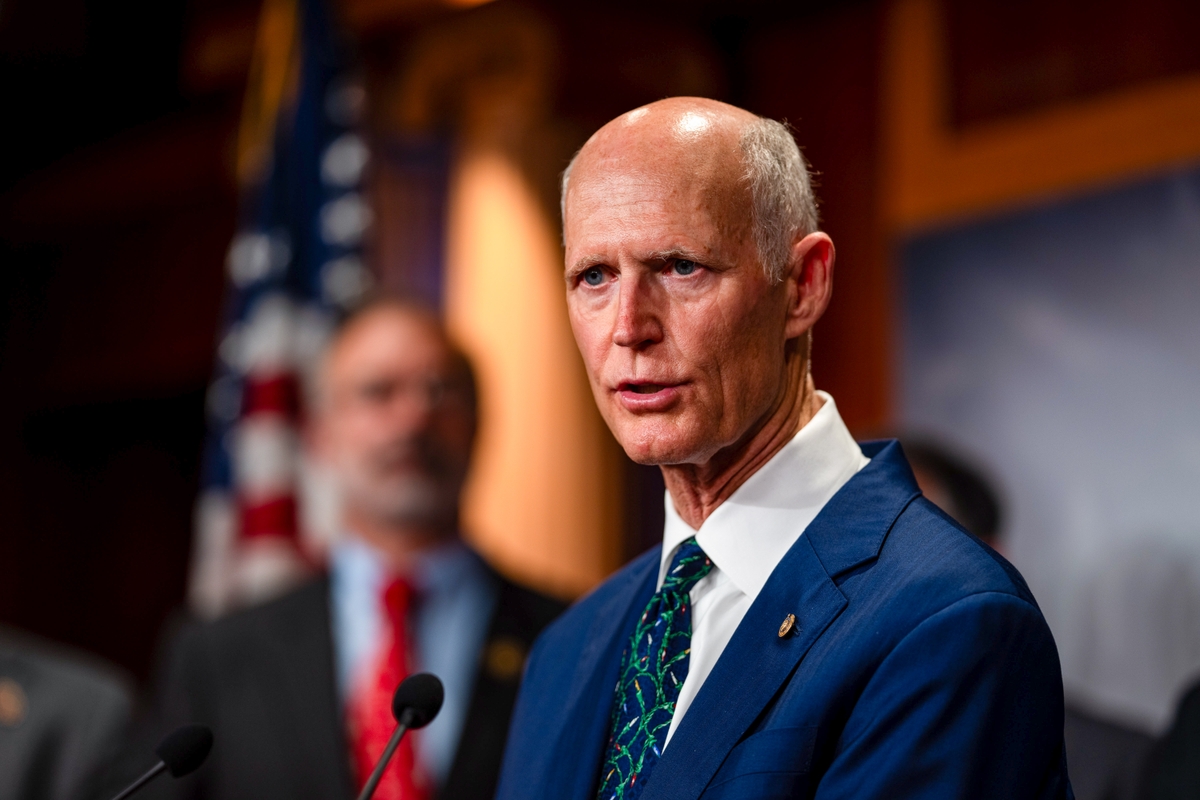
Senate Committee on Aging Chairman Sen. Rick Scott (R-Fla.) is raising concerns over Chinese entities participating in U.S. clinical trials and drug approval processes and calling for immediate action from federal health agencies.
In a March 19 letter to federal health authorities, shared with The Epoch Times beforehand, Scott pointed to Bioheng, a China-based clinical-stage company also known as Imviva, as being “reportedly financed by CCP-linked sources,” referring to the acronym for the Chinese Communist Party.
Citing public information, Scott said Bioheng has proposed a model of collecting donor cells in China, engineering the cells to fight certain cancers through what is called chimeric antigen receptor T-cell (CAR-T) therapy, and administering the modified cells to American patients through U.S.-based clinical trials.
“In the context of cell and gene therapies, this model raises not only data security concerns, but also patient safety risks related to chain-of-identity, chain-of-custody, manufacturing quality control, and the ability of U.S. regulators to conduct effective oversight and enforcement when critical processing occurs outside U.S. jurisdiction,” the letter reads.
The letter is addressed to the heads of the Department of Health and Human Services (HHS), the Food and Drug Administration (FDA), and the National Institutes of Health (NIH).
Given that China’s laws compel Chinese companies to hand over data, coupled with its state-sponsored economic espionage, Scott said that Bioheng’s model “presents significant risks that must be addressed.”
In February last year, Bioheng announced on its website that an experimental type of CAR-T therapy had been cleared by the FDA to begin clinical trials for treating T-cell cancers, including certain leukemias and lymphomas, after the agency approved its Investigational New Drug (IND) application.
Eight months later, Bioheng announced that the therapy had been granted the Regenerative Medicine Advanced Therapy (RMAT) designation by the FDA, a status intended to expedite the development of treatments showing early clinical promise.
According to the NIH clinical trial database, the study of the experimental therapy is being conducted at multiple universities and cancer centers across several U.S. states, including Stanford University in California, Memorial Sloan Kettering Cancer Center in New York, and MD Anderson Cancer Center in Texas.
Scott said this case appears to illustrate “broader vulnerabilities in the current oversight framework,” pointing to cases of Chinese trade secret theft and NIH-funded researchers failing to disclose their China ties.
Despite U.S. efforts to bring cases to justice and strengthen disclosure requirements, Scott said that it “remains unclear whether national security risks are being consistently and rigorously evaluated in connection with IND approvals, expedited designations, and clinical trial authorizations involving entities linked to foreign adversaries.”
Scott, who serves on the Committee on Homeland Security and Governmental Affairs, asked HHS Secretary Robert Kennedy Jr., FDA Commissioner Martin Makary, and NIH Director Jay Bhattacharya to take several actions to mitigate the national security concerns.
The requested actions include reviewing “all pending and recently approved clinical trial applications involving entities” with ties to the CCP or the Chinese military; reevaluating Bioheng’s RMAT designation; establishing a national security protocol for IND applications; prohibiting the transmission of U.S. patient data “to entities based in or controlled by countries designated as foreign adversaries”; and coordinating with the Department of Justice and the Federal Bureau of Investigation “to identify researchers, institutions, and companies with undisclosed ties to Chinese state entities.”
Scott also recommended the three agencies to “conduct a comprehensive audit of all active clinical trials involving Chinese entities or researchers with potential CCP ties to assess national security and patient safety risks.”
The senator also requested a written response within 60 days, including the steps taken regarding the Bioheng approval, a timeline for the requested audit, and the implementation of any policies to address similar risks.
The Epoch Times contacted Bioheng for comment but did not receive a response by publication time.
.
What's Your Reaction?
 Like
0
Like
0
 Dislike
0
Dislike
0
 Love
0
Love
0
 Funny
0
Funny
0
 Wow
0
Wow
0
 Sad
0
Sad
0
 Angry
0
Angry
0











Comments (0)