

Sen. Mike Lee Sounds Alarm on China’s Critical Minerals Control


.
WASHINGTON—Sen. Mike Lee (R-Utah) raised concerns about American access to critical minerals at an Oct. 21 event questioning a recent major assessment of those resources.
Like the National Center for Energy Analytics (NCEA), which authored the Oct. 20 report scrutinizing an International Energy Agency (IEA) assessment of critical minerals, the chairman of the Senate’s energy committee warned of China’s sophisticated control over those materials.
“China today has a chokehold grip on this marketplace,” Lee said at an NCEA meeting presenting the report.
“China is something that makes OPEC look like a Sunday picnic list by comparison.”
He cited reports that China, which is ruled by the Chinese Communist Party, dominates both the production and manufacturing of critical minerals, which range from rare earth metals to nickel.
“If they were a commercial operator operating in the United States, they would be well into the territory of criminal-scale cartel behavior,” Lee said.
The NCEA’s analysis questions a May assessment of critical minerals from the IEA.
Headquartered in Paris, the IEA was founded in 1974 by the Organization for Economic Cooperation and Development when an international oil crisis threatened the energy security of the industrialized world.
Although the IEA addresses China’s domination of critical mineral refining and production and concerns about mineral security, the NCEA states that it “neglects to sufficiently analyze the market-shaping activities by countries such as China.”
Peter Bryant, a mining and energy consultant who serves on the NCEA’s advisory board, told listeners that “you can’t understate China.”
The NCEA’s report describes how China invested heavily in Indonesian nickel, driving a surge in production that upended world markets. Nickel mining in Australia and New Caledonia subsequently cratered.
.
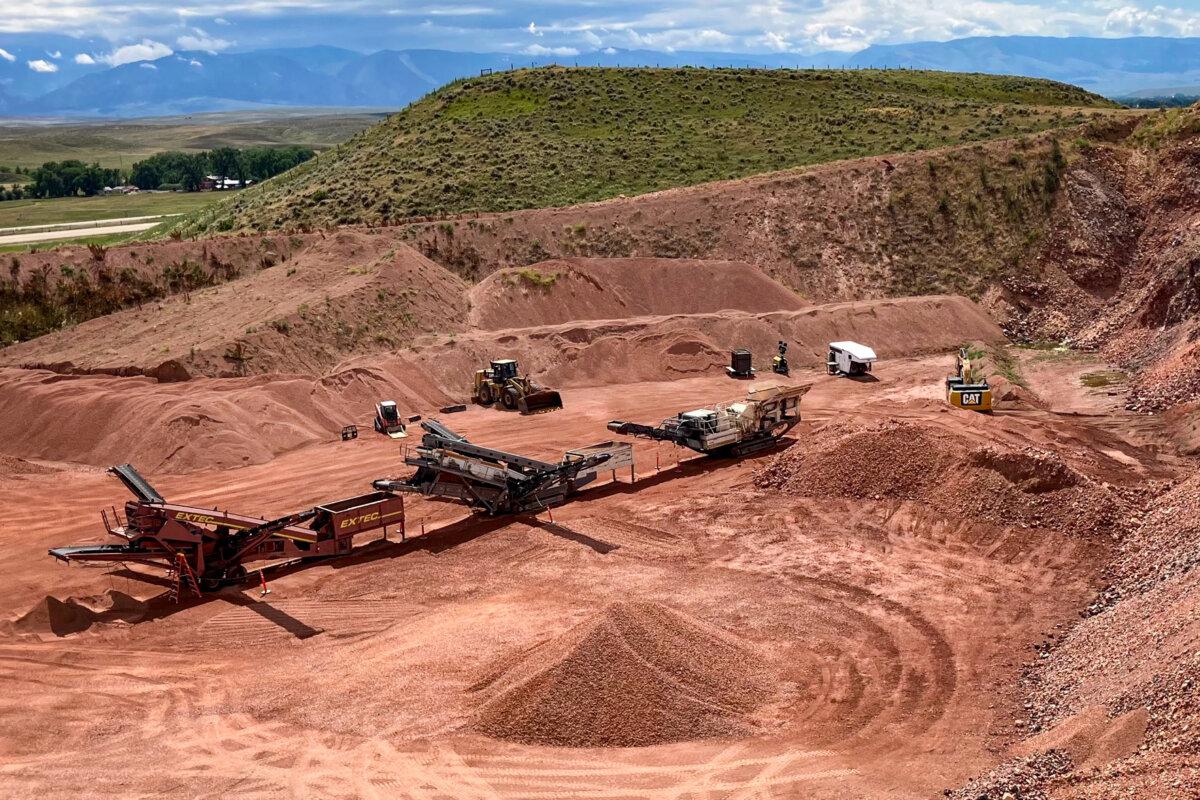
In a discussion with Lee, Bryant said the trajectory of the nickel sector showed how China “has a very complex playbook where they have a choke point on each mineral in a different way.”
When asked how the United States might respond to China’s multi-faceted strategy to dominate critical minerals, Lee called for partnerships with allies abroad and permitting reform at home.
The NCEA’s Oct. 21 report recommends that the United States develop a more fine-grained approach to assessing critical mineral risks, suggesting it could create or empower an agency to do so.
It also calls for a new coordinating mechanism on critical minerals as well as a government-supported initiative to spur mining innovations.
“The goal,” the report states, “is to out-innovate China.”
In addition to raising concerns about China, the IEA’s report projects deficits in the supply of several important materials by 2035—including a possible 30 percent shortfall in copper and a 40 percent shortfall in lithium.
It states that “the prospects for developing new lithium projects are stronger than for copper,” warning that future copper supplies could be more seriously limited by a combination of depleted reserves, fewer discoveries, and increased costs.
The NCEA’s report states that the IEA “does not fully explore the implications of projected minerals deficits,” warning that “the world, and thus the United States, is on the cusp of a minerals famine.”
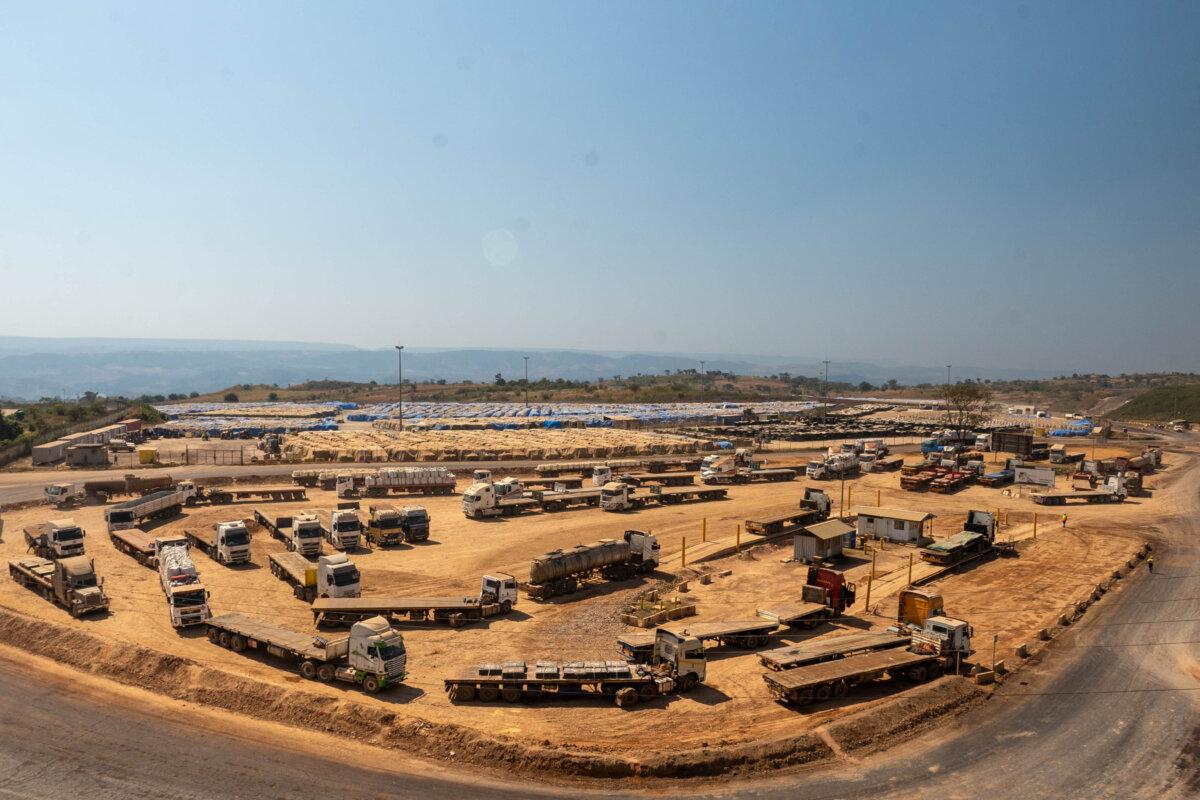
When it comes to copper, a key element in electronics manufacturing, those ramifications could include price volatility, supply chain disruptions, and significant constraints on the growth of alternative energy sources, according to the NCEA.
.
Emmet Livingstone/AFP via Getty Images
The U.S. Geological Survey’s draft of its 2025 critical minerals list proposes the addition of copper.
BHP Americas President Brandon Craig, whose firm is a top global copper producer, stressed the need for innovation to access more copper in the future.
“Mines are getting deeper, and when you get deeper, the technical complexity goes up significantly in terms of how you mine and how you operate those facilities,” he told Bryant at the Oct. 21 event.
The NCEA’s report also raises concerns about a broader decline in ore quality and hurdles to innovations that could make better use of the tailings left behind by mining.
“The IEA, in general, presents an optimistic view of technological progress in mining while ignoring the structural factors that limit progress in this challenging industry,” it states.
.
What's Your Reaction?
 Like
0
Like
0
 Dislike
0
Dislike
0
 Love
0
Love
0
 Funny
0
Funny
0
 Wow
0
Wow
0
 Sad
0
Sad
0
 Angry
0
Angry
0













Comments (0)