

Rubio Heads to India to Salvage a Strained Partnership
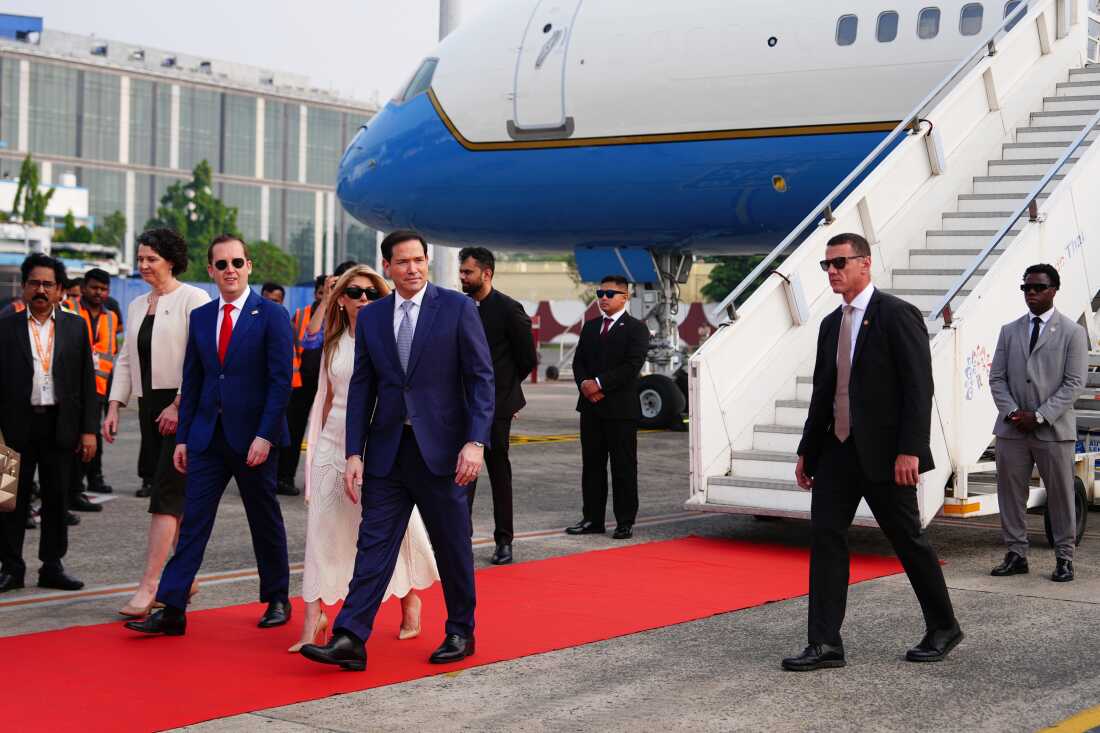
U.S. Secretary of State Marco Rubio has arrived in India on a four-day diplomatic mission aimed at stabilizing a relationship shaken by trade disputes, Washington's warmer ties with Pakistan and China, and unresolved tariff negotiations. The trip signals growing urgency in Washington to keep New Delhi firmly in its strategic camp.

.
A Relationship Under Pressure
The U.S.-India partnership, long considered one of Washington's most valuable strategic assets in Asia, is facing a rough patch. Secretary of State Marco Rubio touched down in Kolkata on Saturday, May 23, 2026 — his first-ever visit to India — with a clear mandate: stabilize ties that have been rattled by a series of setbacks in recent months.
His first stop was symbolic. Before heading to the capital, Rubio visited the headquarters of the Missionaries of Charity, the humanitarian organization founded by Mother Teresa, in Kolkata. It was a gesture that underscored both personal and diplomatic goodwill.
Later on Saturday, Rubio was scheduled to meet Indian Prime Minister Narendra Modi in New Delhi. The agenda: trade, energy, and defense cooperation — the three pillars the two governments hope can anchor the relationship going forward.
How Things Got Complicated
The friction began with tariffs. Early in his second term, President Trump imposed steep duties on Indian goods — among the highest levied on any country. An interim framework reached in February 2026 brought the rate down from a punishing 50% to 18%, but that deal was never finalized.
The picture became murkier when the U.S. Supreme Court struck down the tariff structure in late February, automatically lowering the effective rate on Indian goods to 10%. While that sounds like relief, it created new uncertainty: Washington is now pursuing trade investigations under unfair practices legislation that analysts expect will restore much of the original burden.
New Delhi has been cautiously watching its options. According to people familiar with the negotiations, American officials have grown frustrated with what they perceive as Indian foot-dragging — a belief in New Delhi that it can secure a favorable deal without significant concessions. That mood is expected to complicate Rubio's efforts on the ground.
"The lack of a trade agreement — more than three months after the announcement of the interim deal — clouds other areas of engagement," noted Richard Rossow of the Center for Strategic and International Studies (CSIS).
The China and Pakistan Factor
Beyond trade, two geopolitical developments have added tension to the relationship.
First, the Trump administration's decision to deepen engagement with Pakistan — India's historic rival — has unsettled New Delhi. Islamabad emerged as an important intermediary in U.S. efforts to end the conflict with Iran, giving it unexpected diplomatic leverage and visibility in Washington.
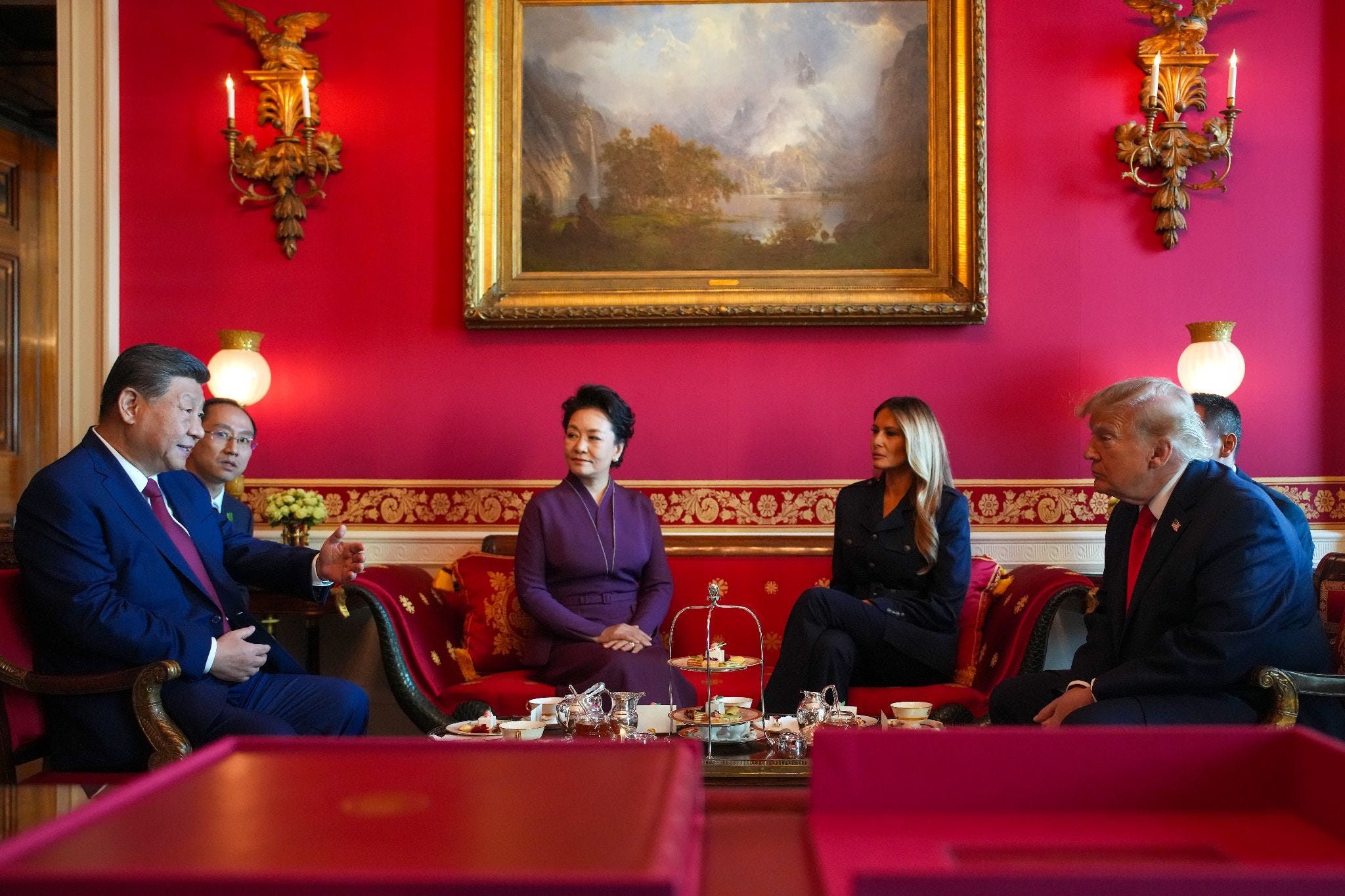
Second, Trump's visit to Beijing earlier this month sent ripples through Indian strategic circles. For a country that has spent years positioning itself as America's preferred alternative to China in the Indo-Pacific, closer U.S.-China engagement raises uncomfortable questions about priorities.
"Trump's approach created a perfect storm of anxiety in India," said Basant Sanghera, a former State Department South Asia policy expert now at The Asia Group. "But ties have stabilized, and both sides are trying to build momentum where there is convergence."
Energy: A Key Lever
One area where Washington sees clear opportunity is energy. Rubio said ahead of the trip that the U.S. is actively in talks to expand its share of India's energy imports. The goal is straightforward: reduce India's heavy dependence on Russian oil — a dependence that deepened after the Ukraine war and that Washington views as a strategic liability.
The ongoing U.S.-Israel conflict with Iran has complicated that picture, driving up regional energy costs and making the transition harder. Still, Rubio was direct: "We want to sell them as much energy as they'll buy."
The Quad Question
One of the most closely watched aspects of Rubio's visit is a meeting with foreign ministers of the Quad — the strategic grouping of the United States, India, Japan, and Australia, formed as a counterweight to China's growing regional ambitions.
India has repeatedly pressed Washington to schedule a leader-level Quad summit, ideally tied to a Trump visit to New Delhi. So far, those requests have gone unanswered. This will be the third consecutive Quad foreign ministers' meeting without a corresponding heads-of-state gathering — a trend some analysts describe as a quiet downgrade of the grouping's importance.
Rossow called it an "unannounced downgrade," adding that he does not expect Rubio's visit to fundamentally reverse the negative trajectory in the bilateral relationship.
The Man in the Middle
One figure who has worked hard to prevent a full rupture is U.S. Ambassador to India Sergio Gor, a Trump confidant and former White House adviser who arrived in New Delhi in January 2026. Observers have credited him with helping steady the relationship during turbulent months. Michael Kugelman of the Atlantic Council has described Gor as "the India whisperer" — a diplomat who understands both New Delhi's sensitivities and Trump's priorities.
Despite the tensions, the U.S. Embassy in New Delhi struck an upbeat public tone, emphasizing Quad unity and shared goals around Indo-Pacific security and critical minerals supply chains.
Whether Rubio's visit results in concrete progress — or merely steadies the ship — remains to be seen. What is clear is that Washington recognizes the stakes: losing India's goodwill would be a significant strategic cost in an era of intensifying great-power competition.
.
Sources
- Reuters – "Rubio's trip to India signals US need to repair ties" (May 23, 2026): https://www.reuters.com/world/china/rubios-trip-india-signals-us-need-repair-ties-2026-05-23/
- Center for Strategic and International Studies (CSIS) – U.S.-India Relations Analysis: https://www.csis.org/programs/india-chair
- Atlantic Council – South Asia Center / Michael Kugelman commentary: https://www.atlanticcouncil.org/programs/south-asia-center/
- U.S. Department of State – Secretary Rubio's India Trip (official travel statements): https://www.state.gov/secretary-rubio/
.
What's Your Reaction?
 Like
0
Like
0
 Dislike
0
Dislike
0
 Love
0
Love
0
 Funny
0
Funny
0
 Wow
0
Wow
0
 Sad
0
Sad
0
 Angry
0
Angry
0













Comments (0)