

China's Killing Machine: How the CCP Built a Billion-Dollar Industry on the Bodies of Its Own People
A new book by journalist Jan Jekielek compiles two decades of evidence on China's state-sanctioned forced organ harvesting — a practice targeting prisoners of conscience at industrial scale. With a key event coming to Toronto on May 27, the timing could not be more urgent: Canada is deepening ties with Beijing just as global scrutiny of the Chinese Communist Party's most extreme crimes intensifies.


.
A Hot Mic and a Chill Down the Spine
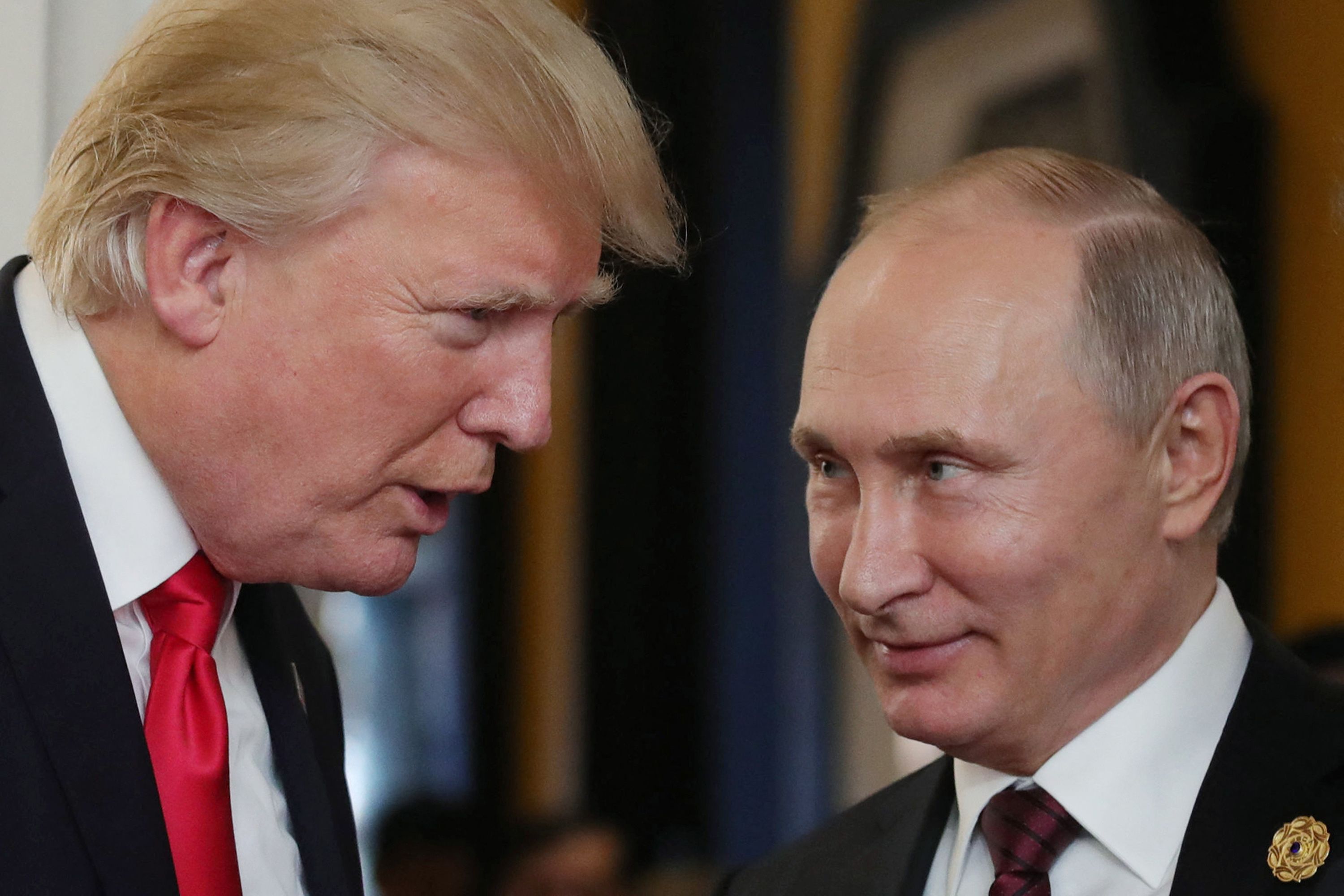
It was meant to be a moment of pomp and ceremony. On September 3, 2025, China's President Xi Jinping and Russian President Vladimir Putin walked side by side toward the viewing platform at Tiananmen Square in Beijing — a military parade marking the 80th anniversary of the end of World War II unfolding before them. North Korea's Kim Jong Un walked alongside.
What nobody planned for was the hot mic.
Captured on a live state media feed watched by hundreds of millions, Putin's interpreter could be heard discussing organ transplants and the possibility of dramatically extending human life. Xi responded that in this century, humans might live to 150 years old. Putin later confirmed the exchange to reporters.
For human rights researchers and China watchers, the conversation landed like a thunderbolt — not because of the science, but because of the context. China has been under sustained international investigation for forcibly harvesting organs from living prisoners of conscience for over two decades. And here were two of the world's most powerful men, casually musing about the possibilities.
Two Decades of Evidence, Compiled
Journalist Jan Jekielek spent years documenting this very issue. His book Killed to Order: China's Organ Harvesting Industry and the True Nature of America's Biggest Adversary, released in March 2026, synthesizes twenty years of independent investigation into what he describes as one of the most underreported atrocities of our time.
On May 27, Jekielek will present the book's findings at a public event at the Legislative Assembly of Ontario in Toronto — one of Canada's most prominent political venues. The evening begins at 5 p.m. EST with a screening of the documentary State Organs: Unmasking Transplant Abuse in China, followed by a book talk and Q&A session from 6:30 to 7:30 p.m. EST. The event will also be livestreamed for those unable to attend in person.
The book's central argument is stark: understanding China's forced organ harvesting system is not just a matter of human rights awareness — it is essential for understanding the Chinese Communist Party itself, and how the free world should respond to it.
"Beyond Reasonable Doubt": What the Evidence Shows
The practice of forced organ harvesting in China first became publicly documented in 2006, when a whistleblower revealed that her former husband — a surgeon — had admitted to removing corneas from living prisoners. What followed was years of painstaking investigation by researchers, legal experts, and human rights advocates.
The most authoritative independent assessment came in 2019. The China Tribunal — an independent panel chaired by Sir Geoffrey Nice QC, the former lead prosecutor at the International Criminal Tribunal for the former Yugoslavia — concluded after twelve months of hearings that forced organ harvesting had been carried out across China on a significant scale, and that practitioners of Falun Gong were the primary source of victims. The tribunal examined more than fifty witnesses and a substantial body of written evidence.
Its conclusion was unambiguous: the crimes had occurred over many years, and there was no evidence that the infrastructure enabling them had been dismantled. The tribunal found the practice was continuing at the time of its final judgment.
In 2021, United Nations human rights experts described the tribunal's findings as deeply alarming. The U.S. Congress has held dedicated hearings on the issue, and U.S. legislators introduced the Block Organ Transplant Purchases from China Act in 2025.
Who Is Falun Gong — and Why Were Practitioners Targeted?
Falun Gong, also known as Falun Dafa, is a traditional Chinese spiritual discipline rooted in meditation and moral teachings centered on truthfulness, compassion, and forbearance. By the late 1990s, Chinese government statistics indicated that between 70 and 100 million people had taken up the practice — more than the membership of the Chinese Communist Party itself.
That popularity alarmed the CCP leadership. In 1999, then-leader Jiang Zemin launched a violent suppression campaign against Falun Gong, vowing to eliminate it. Practitioners were arrested en masse, subjected to torture, forced labor, and indoctrination. According to investigators, it was from this enormous pool of detained prisoners of conscience that the organ harvesting system was built.
One telling detail from the early investigation period: while patients in most countries wait years for a compatible donor organ, Chinese hospitals in the early 2000s were advertising wait times as short as two weeks — and patients were paying tens or hundreds of thousands of dollars for transplants. The arithmetic pointed to a supply that could not come from voluntary donors.
Today, Falun Gong is practiced in more than 100 countries. In China, the persecution continues.
An Expanding Target List
The tribunal and subsequent investigators noted that as the transplant industry grew, it appears to have expanded its reach. Evidence has mounted that China's Uyghur Muslim minority in Xinjiang has become an additional target. This is consistent with long-established patterns of mandatory blood testing and medical examinations conducted on detained Uyghurs — procedures consistent with organ-matching protocols, according to researchers who testified before the U.S. Congress.
Canada formally declared China's persecution of Uyghurs a genocide in 2021. The question being asked by investigators now is whether forced organ harvesting forms part of that broader campaign.
Jekielek has also raised concern about the trajectory of persecution against Christians in China, and the risk that the system could expand further. He draws a historical analogy: the Nazi regime began its extermination logic with eugenics targeting disabled individuals, then expanded to Jewish communities, and had planned further. When atrocities go unchecked for years, he argues, they tend to grow.
Canada's Uncomfortable Position
The Toronto event carries particular political weight. The Canadian government has been pursuing closer economic ties with China at a time when evidence of the CCP's human rights abuses continues to accumulate.
Jekielek, who has studied the Chinese Communist Party for years, argues that any engagement with Beijing must be grounded in a clear-eyed understanding of the regime's actual nature. The CCP, he contends, does not operate on the basis of mutual benefit — it operates on the basis of exploitation and subversion, applying the same logic to foreign partners that it applies to its own population.
That is not an argument against any form of contact with China, he clarifies. It is an argument against naive or financially motivated engagement that ignores the documented reality of what the party does.
A Crime the World Has Yet to Reckon With
The Hudson Institute, reviewing Jekielek's book, described it as a well-written account of a deeply disturbing subject — the claim that China kills prisoners on demand when their organs match a paying customer's needs. U.S. Congressman Neal Dunn, a board-certified surgeon and lead sponsor of the Block Organ Transplant Purchases from China Act, called the book long overdue, and said the free world has willfully ignored this issue too long.
For those who can attend the May 27 event in Toronto, registration is available online. For those further afield, the livestream offers access to the full book talk and Q&A session.
The evidence has been building for twenty years. The question now is whether the world will look at it.
.
Sources:
- China Tribunal — Final Judgment (June 2019): https://chinatribunal.com/final-judgment/
- Reuters: "Hot mic picks up Putin and Xi discussing organ transplants and immortality" (September 3, 2025): https://www.reuters.com/world/hot-mic-picks-up-putin-xi-discussing-organ-transplants-immortality-2025-09-03/
- BBC News: "Xi and Putin overheard discussing organ transplants and living to 150" (September 2025): https://www.bbc.com/news/articles/cr70rvrd41ko
- NBC News: "China forcefully harvests organs from detainees, tribunal concludes" (June 2019): https://www.nbcnews.com/news/world/china-forcefully-harvests-organs-detainees-tribunal-concludes-n1018646
- Tom Lantos Human Rights Commission — Hearing: "Forced Organ Harvesting in China: Examining the Evidence": https://humanrightscommission.house.gov/events/hearings/forced-organ-harvesting-china-examining-evidence
- Hudson Institute — Book review: "New Book Examines Claims of State-Directed Organ Harvesting in China" (April 2026): https://www.hudson.org/human-rights/new-book-examines-claims-state-directed-organ-harvesting-china-paul-marshall
.
What's Your Reaction?
 Like
0
Like
0
 Dislike
0
Dislike
0
 Love
0
Love
0
 Funny
0
Funny
0
 Wow
0
Wow
0
 Sad
0
Sad
0
 Angry
0
Angry
0














Comments (0)