

Taiwan's President Draws the Line: "Independence" Means Freedom From Beijing's Grip
Taiwan's President Lai Ching-te used the 40th anniversary of his ruling party to spell out what "Taiwan independence" actually means — and what it doesn't. His statement comes at a critical moment, just days after a high-stakes summit between Donald Trump and China's Xi Jinping raised fresh doubts about Washington's commitment to the island.


.
A Deliberate Message at a Symbolic Moment
Speaking at a major party event in Taipei on Sunday, Taiwan's President Lai Ching-te took to the podium with a pointed message — not just for his own supporters, but for Beijing, Washington, and the watching world.
The occasion was the 40th anniversary of the founding of his Democratic Progressive Party (DPP). The timing, however, could hardly have been more charged.
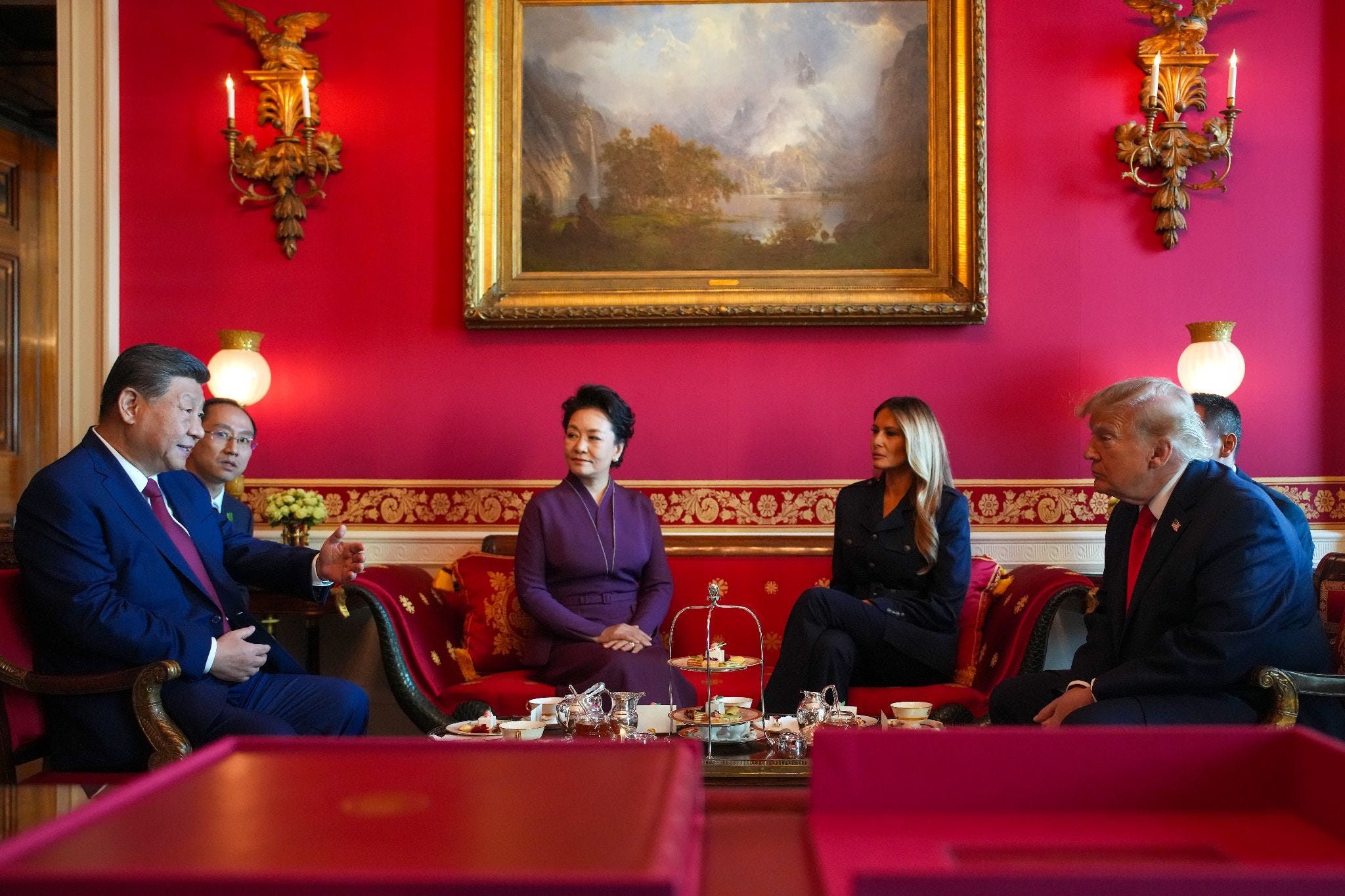
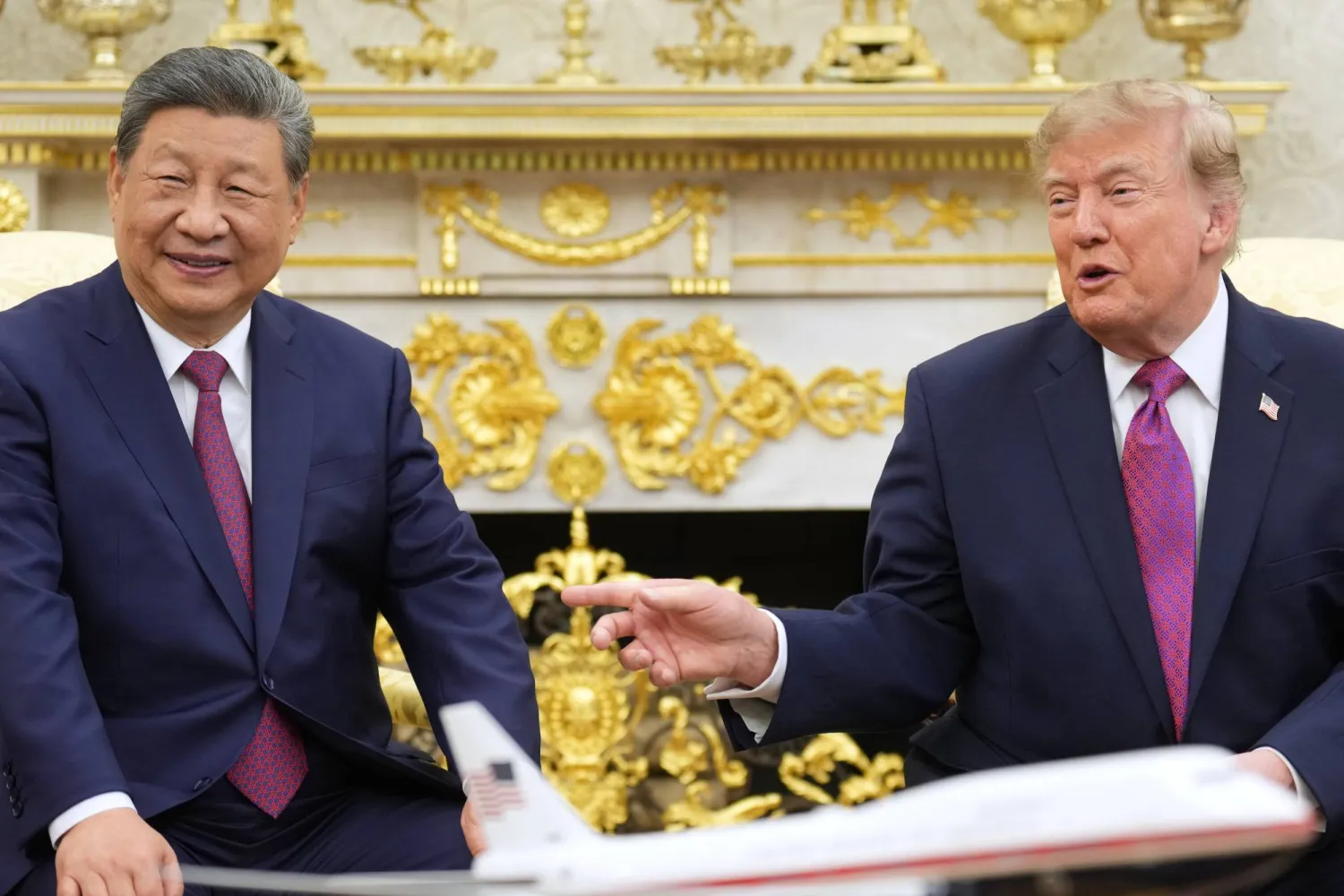
Just days earlier, U.S. President Donald Trump had concluded a two-day summit in Beijing with Chinese President Xi Jinping. The talks left Taiwan's political establishment visibly uneasy — and gave Lai every reason to reassert his government's position clearly and publicly.
What "Taiwan Independence" Actually Means — According to Lai
Lai's core message was a clarification, not a provocation. He stated that the phrase "Taiwan independence" simply means Taiwan is not part of the People's Republic of China (PRC) — and that the Republic of China (ROC, Taiwan's official name) and the PRC are not subordinate to one another.
Taiwan is already governed as a fully separate, democratic state with its own military, currency, laws, and elected leadership. Lai's DPP adopted a formal resolution to this effect back in 1999, declaring Taiwan to be a sovereign and independent country — a position that remains official party policy today.
"Whether we call it the Republic of China, the Republic of China Taiwan, or simply Taiwan — no matter what we are called internationally, it refers to us: the 23 million people of Taiwan, Penghu, Kinmen and Matsu," Lai said.
He also emphasized that this is not a fringe position. The government's stance — that Taiwan's sovereignty cannot be violated and that its future must be determined solely by its own people — has been consistent across administrations.
The Shadow of Trump's Beijing Trip
Lai's remarks did not happen in a vacuum. Just days before, Trump met Xi in Beijing for a summit that covered trade, Iran, and — crucially — Taiwan.
Xi reportedly warned Trump that disagreements over Taiwan could put bilateral relations on a "dangerous path." Trump, for his part, signaled a notably cautious tone on the issue. Speaking to reporters after leaving Beijing, he said he was "not looking to have somebody say, 'Let's go independent because the United States is backing us.'"
That statement rattled nerves in Taipei. The United States has long been Taiwan's most important international supporter, bound by the 1979 Taiwan Relations Act (a U.S. law that commits Washington to help Taiwan defend itself). But Trump's comments suggested he sees Taiwan's status less as a matter of principle and more as a bargaining chip in his broader negotiations with Beijing.
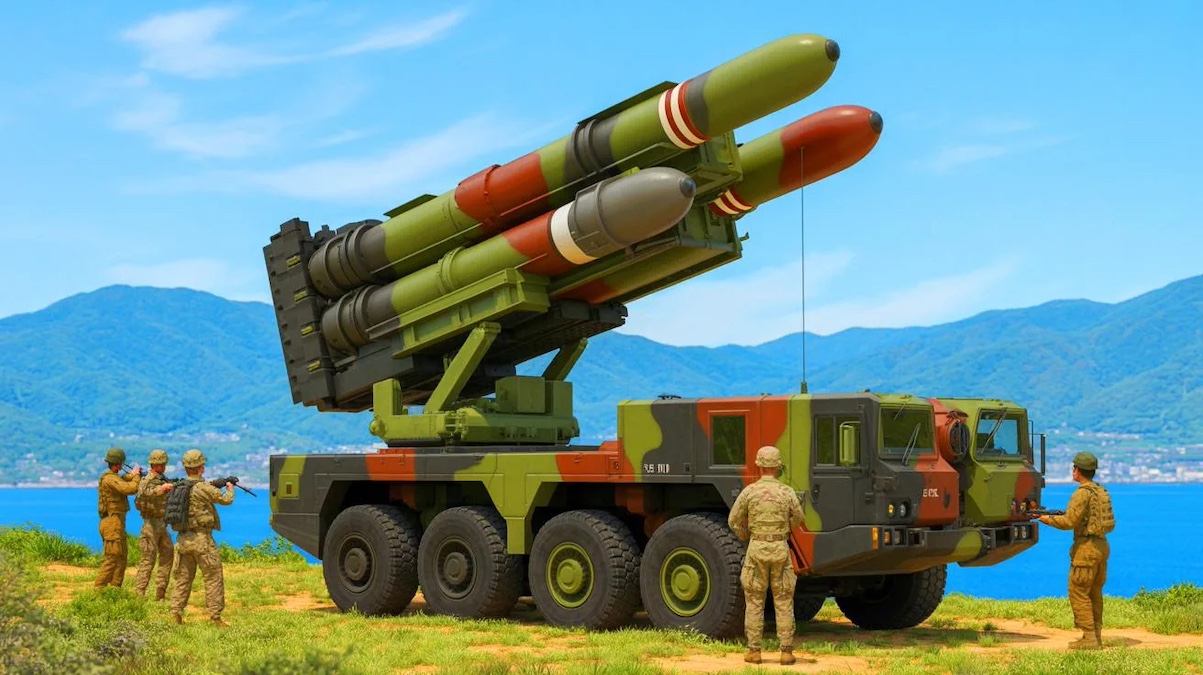
Adding to the tension: Trump also indicated he has yet to decide on a pending arms sales package for Taiwan — a deal worth somewhere between $11 billion and $14 billion, depending on the source, and one that had already been held up for months.
Beijing's Long-Standing Claim — and Its Leverage
China's Communist Party (CCP) has never recognized Taiwan as a separate state. Beijing views the island as a breakaway province that must eventually be reunited with the mainland — by force if necessary. That position was enshrined in China's 2005 "Anti-Secession Law," which explicitly authorizes military action if Taiwan moves toward formal independence.
The historical backdrop is rooted in the Chinese Civil War. When Mao Zedong's Communist forces won in 1949, the defeated government of the Republic of China fled to Taiwan. Since then, the two governments have existed in parallel — the PRC on the mainland, the ROC on Taiwan — without ever formally resolving the split.
The CCP has long labeled Lai a "separatist" and views his statements with deep suspicion. Beijing's Taiwan Affairs Office did not immediately respond to the latest remarks.
Lai's Position: Consistent, Not Radical
It is worth noting that Lai's statements are not new — and not as radical as Beijing portrays them. His formulation that "the ROC and PRC are not subordinate to each other" has been standard DPP language for years. His predecessor, Tsai Ing-wen, used the same phrasing in her 2021 National Day address.
What makes the current moment different is the geopolitical pressure surrounding it. With Trump signaling a more transactional approach to Taiwan and Xi pressing hard to peel away American support, Lai is walking a careful line: reaffirming Taiwan's position firmly enough for his domestic audience, while avoiding any language that could be read as a provocation — or an excuse for Beijing to escalate.
Notably, Lai did not mention Trump in his speech, and did not respond to reporters' questions shouted at him after the event.
What Comes Next
The coming weeks will be telling. Taiwan is closely watching whether Trump eventually approves the stalled arms package — a move that Beijing has called "aiding Taiwan independence" and that it has consistently lobbied against. Under U.S. law, arms sales to Taiwan are a cornerstone of the bilateral relationship and are meant to ensure the island can defend itself.
For now, Lai's government is projecting calm. Taiwan's Foreign Minister Lin Chia-lung said Taipei remains confident in its relationship with Washington and pointed to repeated U.S. assurances that Taiwan policy has not changed.
But in the Taiwan Strait, the gap between reassurances and reality is something the island has learned never to take for granted.
.
Sources:
- Reuters – Taiwan independence means we don't belong to Beijing, president says (May 17, 2026): https://www.reuters.com/world/china/taiwan-independence-means-we-dont-belong-beijing-president-says-2026-05-17/
- Reuters / US News – Explainer: What Is 'Taiwan Independence' and Is Taiwan Already Independent? (May 14, 2026): https://www.usnews.com/news/world/articles/2026-05-14/explainer-what-is-taiwan-independence-and-is-taiwan-already-independent
- Axios – Trump waffles on $14 billion arms sale to Taiwan after talking to China's Xi (May 15, 2026): https://www.axios.com/2026/05/15/trump-taiwan-arms-sale-xi-summit
- CNN Politics – Taiwan anxiously eyes Trump's summit in China (May 13, 2026): https://www.cnn.com/2026/05/13/politics/taiwan-anxiously-eyes-trumps-summit-in-china-with-usd14-billion-in-us-arms-sales-up-in-the-air
- Office of the President, Republic of China (Taiwan) – Press Conference Statement: https://english.president.gov.tw/News/6919
- Council on Foreign Relations – Reading Lai Ching-te's National Day Speech (October 2024): https://www.cfr.org/articles/reading-lai-ching-tes-national-day-speech-and-its-implications-cross-strait-relations
.
What's Your Reaction?
 Like
0
Like
0
 Dislike
0
Dislike
0
 Love
0
Love
0
 Funny
0
Funny
0
 Wow
0
Wow
0
 Sad
0
Sad
0
 Angry
0
Angry
0







Comments (0)