

Pentagon's China Blacklist Shakes Global Markets: Alibaba, BYD, Baidu Among 188 Firms Labeled Military Threats
The U.S. Department of Defense has dramatically expanded its list of companies it considers linked to China's military — now naming 188 firms, including some of China's best-known consumer brands. Beijing has reacted furiously, threatening retaliation and accusing Washington of undermining a recent diplomatic agreement between President Trump and Chinese leader Xi Jinping.


.
A Blacklist That Hit the Headlines
When most people think of Alibaba, they picture online shopping. When they think of BYD, they think electric cars. And Baidu? China's answer to Google. But as of this week, the U.S. Department of Defense officially considers all three companies to be linked to China's military — and the consequences could be far-reaching.
On Monday, June 9, the Pentagon published a significantly expanded version of its so-called "1260H list" — a legally mandated roster of Chinese companies the U.S. government believes contribute to China's military power. The updated list now names 188 Chinese entities, up from roughly 130 in the previous version published in early 2025.
Who's on the List — and What Does It Mean?
The new additions read like a who's who of Chinese industry. Alongside Alibaba, Baidu, and BYD, the list includes electric vehicle maker NIO, solar energy giants Trina Solar and JA Solar Technology, robotics firm Unitree Robotics, pharmaceutical company WuXi AppTec, and lidar sensor maker RoboSense.
Being placed on the list does not immediately freeze a company's operations or impose sanctions. However, it carries significant consequences. Starting this month, the Pentagon is prohibited from signing contracts directly with any listed company. By June 2027, the restrictions will extend further — barring the Defense Department from purchasing their products or services even through third parties or intermediaries.
Beyond direct government contracts, the designation can also complicate access to U.S. capital markets and may discourage American companies from doing business with the listed firms. The stock markets reacted swiftly: Baidu's American depositary receipts fell more than 2%, while Alibaba and BYD each slid around 0.8%.
The Logic Behind Washington's Move
The 1260H list was created in 2021 under a congressional mandate. Its purpose is to identify not only companies directly controlled by China's military, but also those that — in the Pentagon's assessment — contribute to China's broader defense and industrial base.
The Pentagon justified the inclusion of Alibaba, BYD, and Baidu by pointing to their affiliations with two powerful state bodies: China's Assets Supervision and Administration Commission and the Ministry of Industry and Information Technology. In essence, Washington argues that Beijing's strategy of "military-civil fusion" — the deliberate blurring of civilian and military technology development — means that even consumer-facing companies can serve strategic military purposes.
Republican Congressman John Moolenaar, chair of the House committee on strategic competition with China, had long pushed for these additions. He called the updated list a critical warning: "American companies must stop doing business with these threats to our national security, otherwise they are enabling China's military ascendance."
Companies Push Back Hard
All three major companies have firmly denied the accusations. Alibaba stated it is "not a Chinese military company nor part of any military-civil fusion strategy" and pledged legal action. Baidu called the designation "entirely baseless" and vowed to use "all options available" to have itself removed. BYD described the listing as something that "seriously contradicts the facts" and announced it would pursue all available legal and administrative remedies.
WuXi AppTec also called its placement "incorrect" and said it would immediately challenge the decision.
Diplomatic Fallout: Beijing Threatens Retaliation
China's response was swift and forceful. The Chinese Ministry of Commerce expressed that Beijing is "strongly dissatisfied" with the Pentagon's action and called on Washington to "immediately withdraw relevant measures." The statement warned that if Chinese firms are not treated fairly, Beijing "will inevitably retaliate resolutely and forcefully."
China's Foreign Ministry had already raised concerns earlier in the week, describing the move as an abuse of state power and an attempt to "generalize the concept of national security" to suppress Chinese businesses.
The Chinese Embassy in Washington condemned the designations as discriminatory.
A Fragile Truce — Already Under Strain?
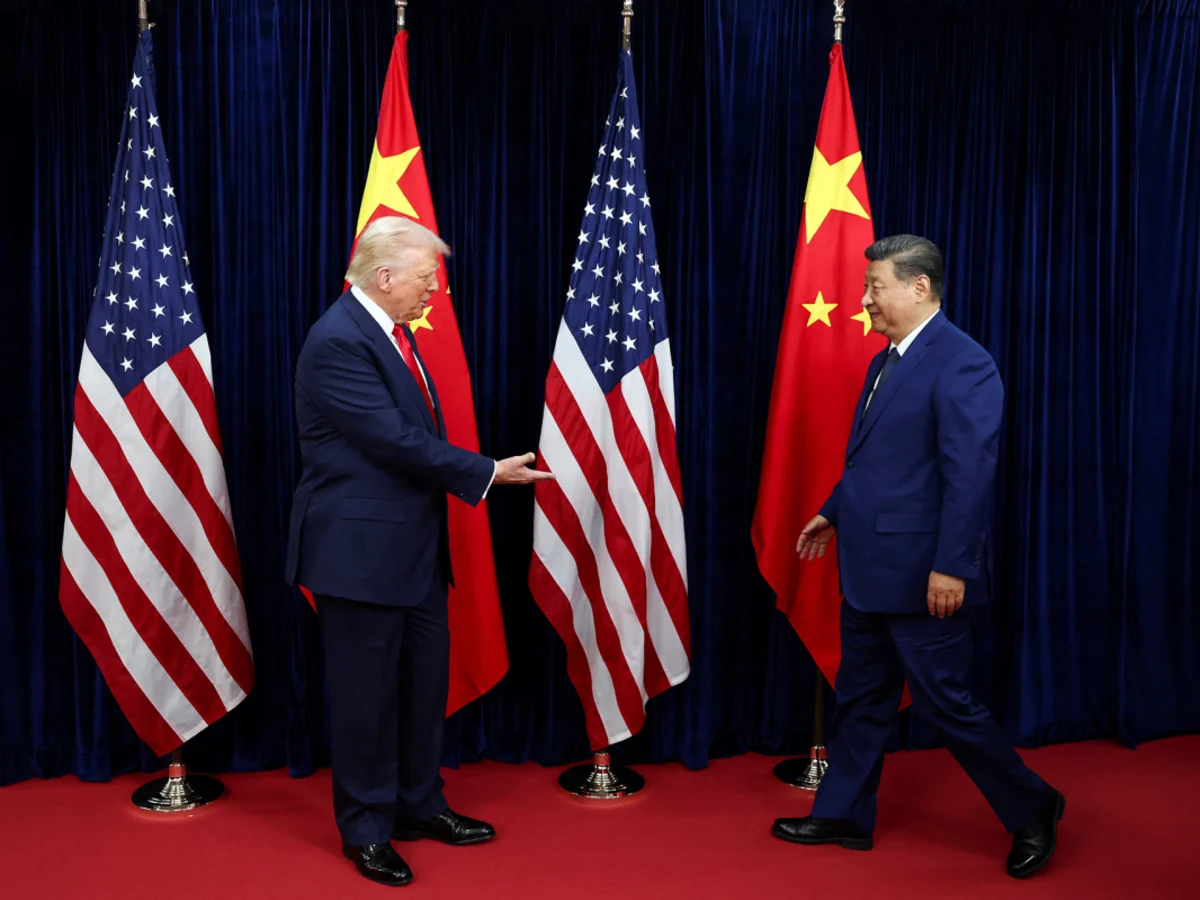
The timing of the Pentagon's announcement is diplomatically sensitive. Just weeks ago, in mid-May, President Donald Trump traveled to Beijing for a high-profile summit with Xi Jinping. The two leaders struck a cautious but significant agreement: China would purchase more American agricultural products and Boeing aircraft, and both sides would establish joint boards on trade and investment — a sign of easing tensions after years of trade conflict.
Beijing now argues that the Pentagon's blacklist directly contradicts the spirit of that meeting. The commerce ministry statement said the move "ignored the consensus" reached between the two heads of state.
Notably, the Pentagon had briefly published a similar expanded list back in February — only to quietly withdraw it within minutes, reportedly while Trump's China visit was still being planned. The timing of that withdrawal, and of this week's reintroduction, suggests a deliberate sequencing of diplomatic and security signals from Washington.
What Happens Next
The geopolitical implications are significant. With 188 Chinese companies now on the list — spanning electric vehicles, artificial intelligence, solar energy, robotics, pharmaceuticals, and more — the Pentagon is sending a clear message: Washington sees Chinese civilian technology as inseparable from Beijing's military ambitions.
For businesses in both countries, the stakes are rising. U.S. firms that have supply chain ties with any of the 188 listed companies will face pressure to reconsider those relationships before the broader restrictions kick in next year.
Whether Beijing's threatened retaliation materializes — and how it might affect the fragile trade truce struck just weeks ago — remains to be seen. What is clear is that the technology competition between the United States and China has entered a sharper, more consequential phase.
.
Sources:
- AP News – "China opposes US move to list top firms as military companies" (June 13, 2026): https://apnews.com/article/china-companies-military-pentagon-us-5adea55a203024477e7c5204f1f650aa
- CNBC – "Alibaba, Baidu, BYD named on Pentagon's China military list" (June 9, 2026): https://www.cnbc.com/2026/06/09/alibaba-baidu-byd-named-on-pentagons-china-military-list-.html
- South China Morning Post – "US adds Alibaba, BYD and other Chinese tech champions to military company blacklist" (June 2026): https://www.scmp.com/news/china/diplomacy/article/3356419/us-adds-alibaba-byd-and-other-chinese-tech-champions-military-company-list
- Al Jazeera – "US lists China's BYD, Alibaba, Baidu as 'Chinese military companies'" (June 9, 2026): https://www.aljazeera.com/economy/2026/6/9/us-lists-chinas-byd-alibaba-baidu-as-chinese-military-companies
- NPR – "Pentagon labels tech giant Alibaba and car maker BYD as aiding Chinese military" (June 9, 2026): https://www.npr.org/2026/06/09/g-s1-126961/pentagon-labels-alibaba-and-byd-as-aiding-chinese-military
.
What's Your Reaction?
 Like
0
Like
0
 Dislike
0
Dislike
0
 Love
0
Love
0
 Funny
0
Funny
0
 Wow
0
Wow
0
 Sad
0
Sad
0
 Angry
0
Angry
0









Comments (0)