

Taiwan's Opposition Leader Courts Washington — But Faces Skepticism Over China Ties
Kuomintang chairwoman Cheng Li-wun wrapped up a two-week U.S. visit this week, arguing that dialogue with Beijing is the path to peace in the Taiwan Strait. But her reception in Washington was mixed — with sharp questions about defense spending cuts and whether her party is drifting too close to China.


.
A Controversial Visit at a Critical Moment
The leader of Taiwan's main opposition party, Kuomintang (KMT) chairwoman Cheng Li-wun, completed a two-week trip to the United States on Friday, seeking to reassure American lawmakers and experts that her pro-engagement stance toward China does not come at Taiwan's expense.
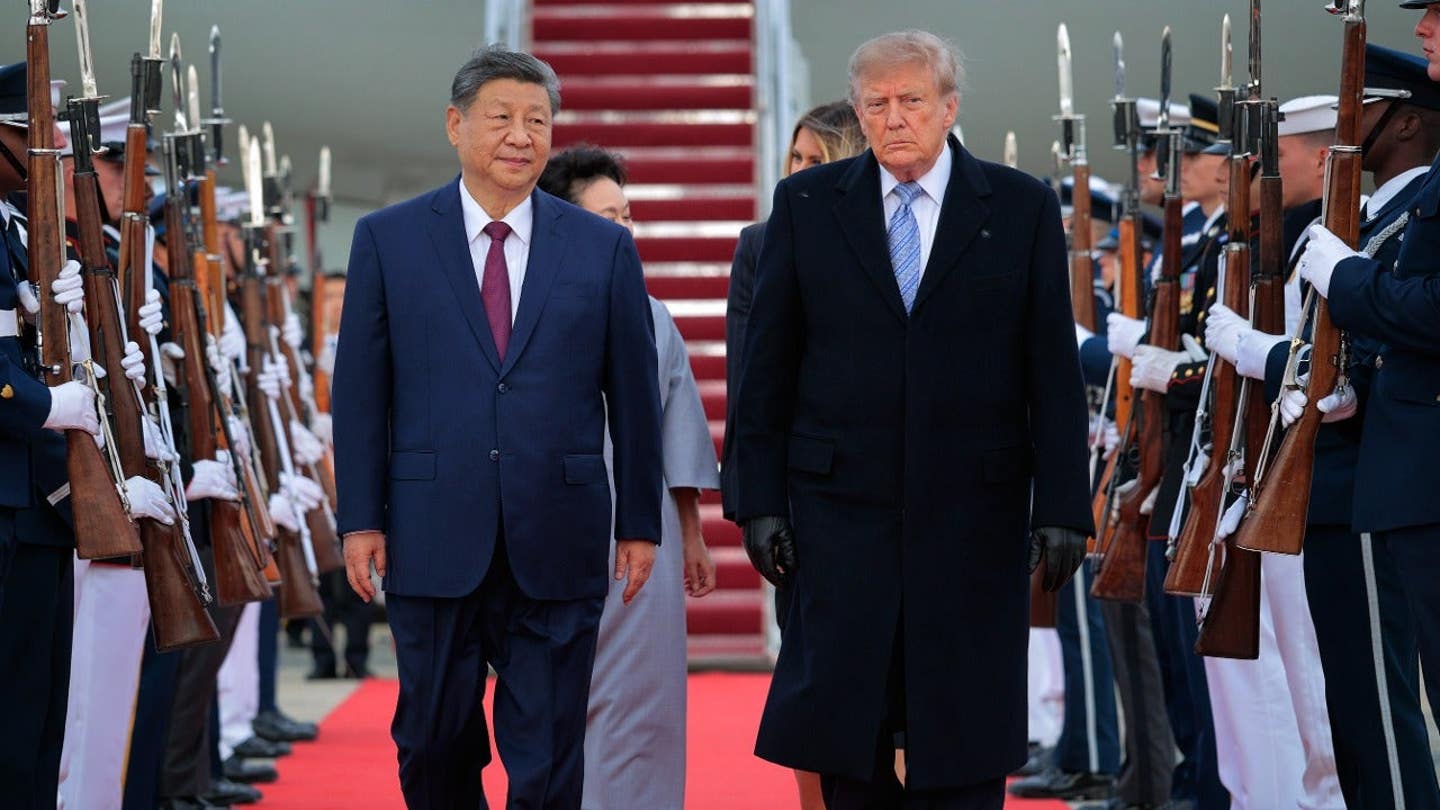
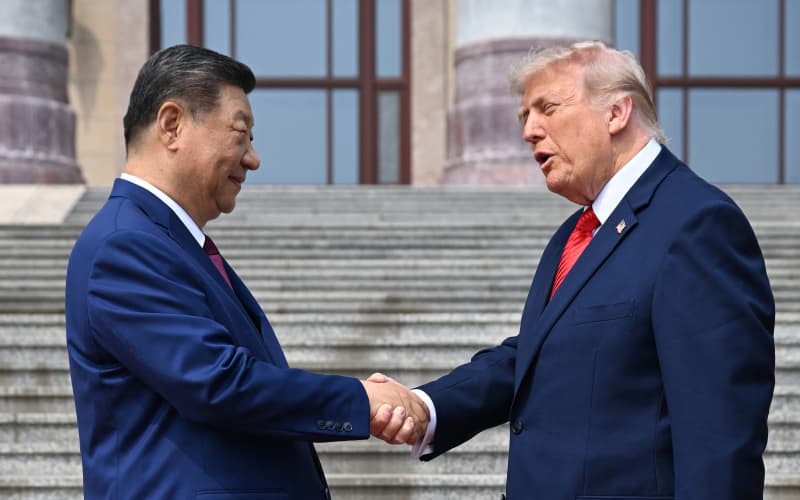
Her visit came at a tense time. Chinese leader Xi Jinping has openly warned of potential military conflict if Washington does not manage the Taiwan issue to Beijing's satisfaction. Meanwhile, the relationship between the U.S. and Taiwan is increasingly complicated — not least by remarks from President Donald Trump, who said after his May summit with Xi that he was not looking for Taiwan to go independent or for a war "thousands of miles away."
Cheng met with nine members of Congress from committees dealing with defense, finance, and foreign affairs, as well as academics and think-tank representatives. She also held talks with Trump administration officials, though she declined to identify them.
"Many Misunderstandings" — The KMT's Case
Cheng has long advocated for direct dialogue between Taipei and Beijing — a position that sets the KMT apart from Taiwan's ruling Democratic Progressive Party (DPP), which does not recognize the so-called "One China" principle. Beijing has used that refusal as grounds to cut off all official contact with Taipei for the past decade.
In April, Cheng made headlines when she traveled to Beijing and met Xi Jinping in person — a rare and politically loaded event. She described the Chinese president as "very gentle and very nice and very real," and expressed her belief that he genuinely seeks to resolve the Taiwan question through peaceful means.
That characterization raised eyebrows in Washington. Critics note that Beijing has simultaneously intensified its military presence around Taiwan, conducting regular exercises and provocative operations in the Taiwan Strait in recent years.
Cheng pushed back against the idea that engagement means capitulation. "Seeking peaceful dialogue across the Taiwan Strait does not mean we will give up Taiwan's national defense capabilities, still less that we will give up Taiwan's democracy and freedom," she told reporters.
The Defense Budget Controversy
The sharpest criticism of the KMT during Cheng's Washington visit centered on a defense spending dispute back home. Taiwan's President Lai Ching-te had proposed a special budget of $40 billion to accelerate major arms purchases — primarily from the United States. The KMT, which together with a smaller ally holds a majority in Taiwan's parliament, cut that figure by roughly a third, to $25 billion.
China hawks in Washington were not pleased. Republican Senator Dan Sullivan of Alaska, who met Cheng on Thursday, warned that the KMT was "playing with fire" and urged the party to join with the ruling DPP to finalize a robust defense budget. He also called on Cheng's party to support the Alaska LNG energy project, an initiative aligned with Trump administration priorities.
Democratic Representative Tom Suozzi of New York went further, saying the opposition's resistance to adequate defense spending raised concerns that the KMT was "drifting closer" to China's ruling Communist Party and "weakening deterrence."
Cheng defended the cut, arguing the KMT could not write a "blank check" for a proposal that lacked sufficient detail. She added that U.S. think-tank experts had encouraged the KMT to introduce its own defense legislation — and that the party was seriously considering doing so.
Common Ground With Trump?
Cheng suggested her party's positions align in important ways with the Trump administration's approach. Like Trump, the KMT does not push for formal independence for Taiwan — a position that would almost certainly trigger a military response from Beijing. Cheng argued that taking permanent secession off the table is itself a form of conflict prevention.
"I think our basic stances are the same — that is peace and stability in the Taiwan Strait and to avoid any unnecessary war," she said.
Trump, for his part, has sent mixed signals. His comment that a pending $14 billion U.S. arms sale to Taiwan could serve as a "negotiating chip" with China caused alarm in Taipei. Cheng declined to comment on that remark, saying the subject had not come up in her Washington meetings.
The Trump administration has not yet greenlit the $14 billion package, though it approved an earlier $11 billion arms sale to Taiwan in December.
The Bigger Picture: Taiwan's Uncertain Position
The U.S. does not formally recognize Taiwan as an independent state, acknowledging Beijing's position that Taiwan is part of China — while at the same time opposing any forcible change to the status quo. Under U.S. law, Washington is required to supply Taiwan with sufficient defensive hardware to deter an invasion.
That balancing act has grown more difficult as Beijing's military posture has become more assertive and as the Trump administration pursues a broader strategic deal with China. Against this backdrop, the KMT's push for cross-strait engagement is seen by some as a helpful pressure valve — and by others as a dangerous accommodation of authoritarian pressure.
Representative John Rose of Tennessee, who also met Cheng, said he was willing to engage with leaders across Taiwan's political spectrum and reaffirmed his commitment to "supporting Taiwan's sovereignty and expanding U.S.-Taiwan relations."
Whether Cheng's Washington tour has genuinely softened critics or simply clarified the divide remains to be seen. What is clear is that Taiwan's internal political divisions — over defense, deterrence, and dialogue — are now playing out on the world stage.
.
Sources:
- AP News – Taiwan's opposition leader touts talks with China as necessary for peace during US trip (June 13, 2026): https://apnews.com/article/taiwan-opposition-leader-china-trump-13c4c9c7f1bb0b358a4b3df1ceea0bf0
- Reuters – Taiwan opposition leader seeks to ease US concerns over China stance (June 12, 2026): https://www.reuters.com/world/china/taiwan-opposition-leader-seeks-ease-us-concerns-over-china-stance-2026-06-12/
- Reuters – China offers incentives to Taiwan following opposition leader's visit (April 12, 2026): https://www.reuters.com/world/china/china-offers-incentives-taiwan-following-opposition-leaders-visit-2026-04-12/
- Reuters – Taiwan must pass defence spending to avoid giving wrong impression, president says (February 4, 2026): https://www.reuters.com/world/china/taiwan-must-pass-defence-spending-avoid-giving-wrong-impression-president-says-2026-02-04/
.
What's Your Reaction?
 Like
0
Like
0
 Dislike
0
Dislike
0
 Love
0
Love
0
 Funny
0
Funny
0
 Wow
0
Wow
0
 Sad
0
Sad
0
 Angry
0
Angry
0













Comments (0)