

Vietnam Busts Chinese-Led Online Scam Networks — Over 80 Suspects Caught Preparing Fraud Centers
Vietnamese authorities have disrupted two separate attempts to establish major online scam operations on their soil — both tied to Chinese nationals who had previously worked out of Cambodia. The busts are part of a rapidly expanding regional pattern as international crackdowns push criminal cyber-fraud networks into new territory.

.
Two Busts, One Alarming Pattern
Vietnamese police have dismantled two suspected online fraud operations in the space of days — and in both cases, Chinese nationals are at the center of the story.
In the northern province of Phu Tho, authorities arrested four people on suspicion of planning to launch a large-scale scam center. Among those detained was a Chinese national identified as Zhao Wei Zhong, along with three Vietnamese accomplices. Investigators say the group had rented a string of resorts, farmstays, and villas across Hanoi, Lao Cai, and Phu Tho — remote enough to avoid scrutiny, large enough to house dozens of operatives.
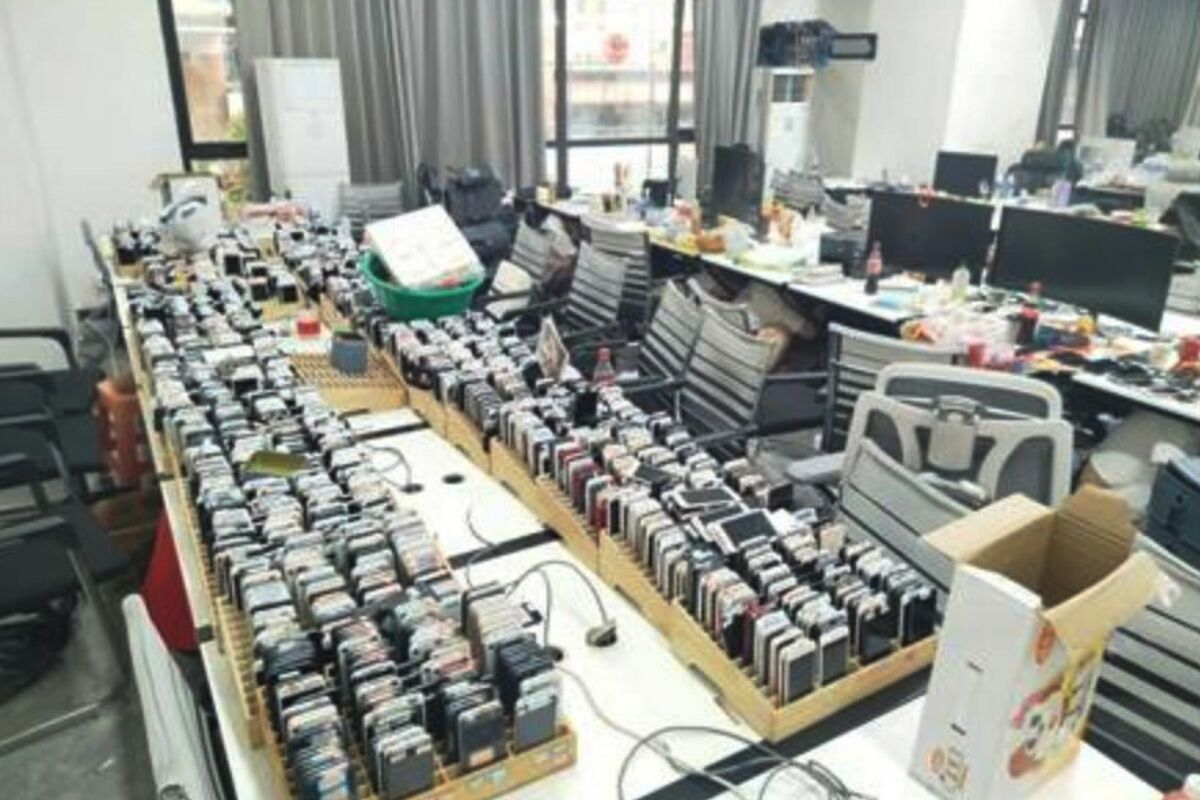
Police seized scores of computers, hundreds of mobile phones, and internet equipment they say were already being assembled for fraud operations. Sixteen of the people found at the locations lacked valid immigration documents. Authorities said the bust prevented what could have become a major transnational fraud hub on Vietnamese soil.
83 Chinese Nationals Found at Saigon Hotel
In an unrelated but strikingly similar case, police in Ho Chi Minh City — Vietnam's commercial capital — discovered 83 Chinese nationals staying at the Emerald Gold Hotel in the city's Binh Duong district. Investigators say the group had rented the entire hotel as a base and was preparing to defraud victims in China.
The suspects had illegally entered Ho Chi Minh City from Cambodia. Vietnamese state media reported that the alleged ringleader, a 37-year-old Chinese national, admitted he had previously worked as a manager at a company operating in Cambodia, and had been tasked by his employer to move to Vietnam, rent premises, and organize new operations.
The group had not yet begun operations before police moved in.
Cambodia as the Breeding Ground
Both cases point back to Cambodia — long the regional epicenter of cyber-fraud compounds. Fraud rings pushed out of Cambodia and other regional havens have been shifting their operations to Vietnam, using luxury apartments and gated villa compounds as new bases to run scams targeting victims across Asia.
The pattern is consistent: ringleaders based abroad direct local associates to rent upscale properties where foreign residents attract little attention, install a foreign national as on-site manager, and bring in additional members on tourist visas. Cells operate in small, dispersed groups and rotate locations to avoid detection.
Cambodia itself remains a problem. Amnesty International reported this week that dozens of suspected scam compounds in Cambodia are still operating despite a months-long government crackdown. International pressure has grown substantially — but criminal networks have proven highly adaptable.
Chinese Criminal Networks at the Core
The FBI has been blunt about who is running these operations. FBI Co-Deputy Director Andrew Bailey this week described the networks as follows: "The Chinese criminal groups behind the scam compounds operate sophisticated transnational networks — they move people, they move money, they move technology, and illicit proceeds across Thailand, Burma, Laos, Cambodia, and beyond."
Bailey called scam compounds among "the most significant threats facing the world today," warning that their reach across Southeast Asia is growing rapidly.
The U.S. government has stepped up its response. In April 2026, the Trump administration's Scam Center Strike Force — led by U.S. Attorney Jeanine Pirro — launched what Pirro called "a new theater of war" against Chinese transnational organized crime. The coordinated actions included criminal charges against two Chinese nationals who managed a cryptocurrency fraud compound in Burma, the seizure of a Telegram channel used to recruit trafficking victims, the shutdown of 503 fake investment websites, and the restraining of over $700 million in cryptocurrency.
Americans alone lost nearly $21 billion to cyber-enabled crimes and online scams in 2025. Globally, the UN Office on Drugs and Crime estimates that online scams caused losses of up to $37 billion across East and Southeast Asia in a single year.
A Spreading Crisis — and Its Human Toll
The criminal networks don't just target financial victims — they also victimize the people they recruit. The Philippines' Bureau of Immigration confirmed this week that 18 Filipino nationals were recently repatriated from Vietnam and Cambodia after being lured with promises of work as livestreamers, only to find themselves trapped in suspected scam or gaming hubs.
The crackdowns in Cambodia and Myanmar have not eliminated these networks — they have simply pushed them elsewhere. Sri Lanka has seen a surge in arrests of more than 1,000 foreign nationals suspected of cybercrime since the start of 2026, the majority from China, Vietnam, and India.
Those running the scams are sometimes willing participants, and sometimes trafficked foreign nationals held against their will and forced to work under threat of violence. A UN report found that workers in Southeast Asian scam centers have come from more than 50 countries worldwide.
Vietnam Tightens Its Response
Vietnamese authorities say they are intensifying efforts to prevent their country from becoming the next regional scam hub. Between December 2025 and March 2026, Hanoi police alone identified three separate cases involving 58 foreign nationals suspected of running online fraud — a sharp increase that police attributed to displacement from crackdowns in neighboring countries.
The two busts this week are a signal that Hanoi is watching the trend closely. But with criminal networks that can pack up, cross a border, and reassemble within days, the challenge for law enforcement across the region remains formidable.
.
Sources
- Reuters — Vietnam police bust group planning large-scale online scam centre (June 12, 2026): https://www.reuters.com/legal/government/vietnam-police-bust-group-planning-large-scale-online-scam-centre-2026-06-12/
- Vietnam.vn — Ho Chi Minh City police discover group of Chinese nationals suspected of high-tech fraud: https://www.vietnam.vn/en/tp-ho-chi-minh-phat-hien-nhom-nguoi-nuoc-ngoai-nghi-hoat-dong-lua-dao-cong-nghe-cao
- Vietnam News — Four suspects arrested over planned large online scam centre: https://vietnamnews.vn/society/1783351/four-suspects-arrested-over-planned-large-online-scam-centre.html
- VnExpress International — Pushed out of Cambodia, Asia's scam gangs move into Hanoi's luxury villas (April 2026): https://e.vnexpress.net/news/news/crime/pushed-out-of-cambodia-asia-s-scam-gangs-are-moving-into-hanoi-s-luxury-villas-5059663.html
- PBS NewsHour / AP — U.S. launches sweeping crackdown on Southeast Asia cyberscams (April 24, 2026): https://www.pbs.org/newshour/world/u-s-launches-sweeping-crackdown-on-southeast-asia-cyberscams-and-sanctions-cambodian-senator
- U.S. Department of Justice — Scam Center Strike Force Actions (April 2026): https://www.justice.gov/opa/pr/scam-center-strike-force-takes-major-actions-against-southeast-asian-scam-centers-targeting
- WebIndia123 / FBI Co-Deputy Director Bailey press briefing (June 2026): https://news.webindia123.com/news/Articles/World/20260610/4460893.html
- TechXplore — Crackdown in Southeast Asia pushes scam networks to Sri Lanka (May 2026): https://techxplore.com/news/2026-05-crackdown-southeast-asia-scam-networks.html
.
What's Your Reaction?
 Like
0
Like
0
 Dislike
0
Dislike
0
 Love
0
Love
0
 Funny
0
Funny
0
 Wow
0
Wow
0
 Sad
0
Sad
0
 Angry
0
Angry
0














Comments (0)