

Reagan and Trump: A Realist’s Approach to Instability in World Powers


.
Diplomacy
Diplomacy is not a trust fall; it is a thermostat. Reagan’s team used set‑piece summits to lower the risk of misread moves, while a defense buildup ensured talks were grounded in reality—think Reykjavik, which led to the INF Treaty. With China, the same principle applies. A friendlier Trump tone toward Xi, when it appears, is a tool to reduce miscalculation and pry open narrow deals—military hotlines, counternarcotics cooperation, farm purchases—without pretending the rivalry has vanished.Information
Information is where tone, proof, and narrative collide. In Reagan’s era, the United States narrated the contest as open versus closed—and backed the words with facts: treaty texts, inspection footage, data on missiles destroyed. The images didn’t just persuade the public; they locked in accountability. “Trust, but verify”—an old Russian proverb that Reagan popularized during his nuclear disarmament talks with the Soviet Union in the 1980s.Today, the information fight is faster and noisier. Friendly leader‑level rhetoric can dominate cable news while the quiet work—alliances, export rules, logistics—looks invisible. The antidote is proof that can be shared quickly. In the Western Pacific, that means treating every tense encounter like a courtroom: video with timestamps, radio logs, AIS tracks, and a short explainer released within hours. Even when Beijing says certain “rules don’t apply,” third parties who set costs (insurers, port authorities, classification societies) respond to credible receipts.
Military
Deterrence is the scaffolding that lets diplomacy work. For Reagan, that meant modernization, alliance exercises, and the confidence that NATO could hold the line. In the Indo‑Pacific, the analogue is the First Island Chain—a natural picket fence running from Japan through Taiwan to the Philippines. The question is whether that fence is sturdy without being incendiary.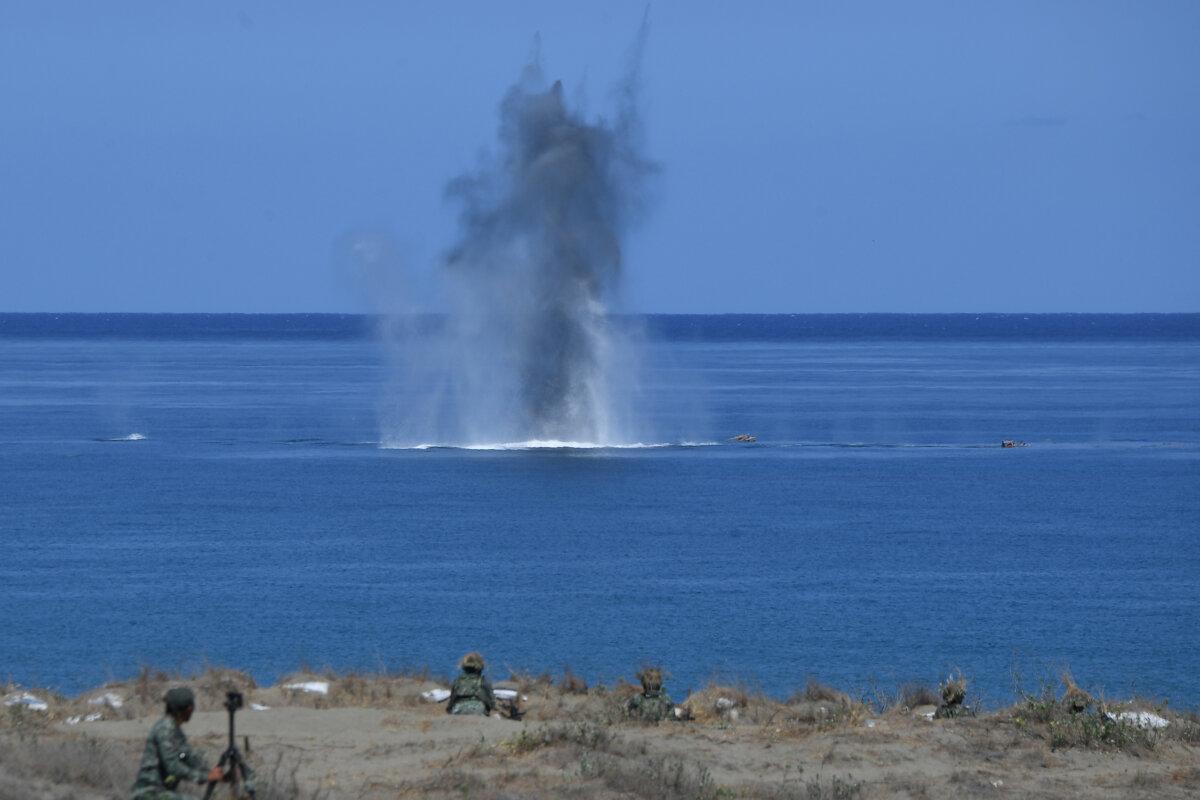
The risk here is miscalculation. Crowded seas and fast jets leave little margin for error. Guardrails must work even when only one side follows them: redundant hotlines at defense and coast‑guard levels, standard scripts for de‑confliction, and pre‑announced consequences for repeated harassment at sea. If a resupply run is water‑cannoned, the response should be automatic: escorts today, evidence release tonight, financial and legal penalties tomorrow. Predictable, bounded steps deny the other side both surprise and excuse.
Economic
Economic statecraft is where the comparison shifts. In the 1980s, the United States and the Soviet Union barely traded. Pressure was blunt and slow. With China, the United States has to think like a plumber, not a bouncer—rerouting flows instead of slamming the door. Tariffs nudge companies to build elsewhere. Export controls say, in effect, “you can sell T‑shirts, but not the crown‑jewel chips,” anchored in rule packages like the U.S. Bureau of Industry and Security (BIS) updates.What a consumer notices: slightly higher prices in some categories, more “Made in U.S., Mexico, or Vietnam” labels, and fewer ugly surprises when a single plant goes dark. The goal isn’t divorce. It’s de‑risking—less single‑point failure, more options under stress. Calm words reduce market panic; quiet plumbing changes the strategic map. Options provide stronger positive outlooks.
The Comparative Lesson
Reagan’s success didn’t come from sweetness; it came from coherence. Defense, diplomacy, and narrative pointed the same way, so negotiations had a keel. The Trump–Xi moment will be judged by the same measure. If warmer language at the top aligns with proof of capability in the First Island Chain and visible progress on de‑risking, then the “mixed messages” are two hands working the same problem—one lowering the temperature, the other raising the costs of coercion. Soft words with soft budgets and photo ops without logistics indicate policy drift; the policy becomes noise, and the initiative moves elsewhere.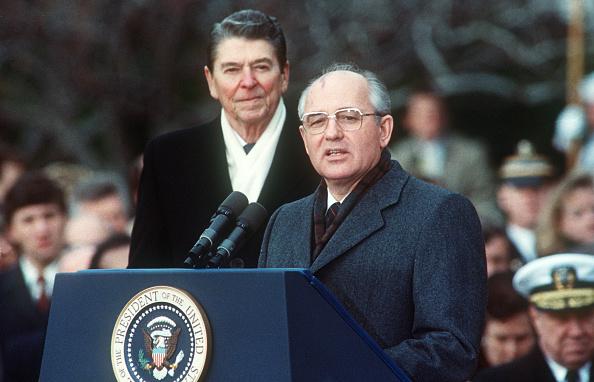
What Middle Powers Do
In the Reagan years, European allies absorbed risk and kept the center of gravity steady, even as domestic debates raged. Today’s middle powers—Japan, the Philippines, Australia, Canada, and key European states—are performing a similar function. They trade with China while tightening security links with the United States and each other. That is not a contradiction; it is a strategy. The more Washington translates glad-handing into real help—maritime domain awareness, cyber hardening, medical support, and spare parts—the easier it is for partners to maintain their balance.Final Thoughts
Think of DIME—or diplomacy, information, military, economic—as four oars in the water, all rowing in the same direction. Progress is steady only when all are synchronized: diplomacy that cools without blinding; information that proves, not just persuades; military posture that deters without tripping into war; and economic plumbing that lowers risk instead of promising an impossible split. Thread IBL (industrial base and logistics) and LR (law and rules) through each leg—money for real capacity, and rules that third parties will enforce—and the contradictions stop looking like confusion. They read as strategy: talk more, yield less, prove everything.What's Your Reaction?
 Like
0
Like
0
 Dislike
0
Dislike
0
 Love
0
Love
0
 Funny
0
Funny
0
 Wow
0
Wow
0
 Sad
0
Sad
0
 Angry
0
Angry
0













Comments (0)