

Your Sleep Habits May Be Silently Damaging Your Brain, Heart, and Spine
Most people know that poor sleep makes them feel tired. But science now shows it can do far more lasting harm — quietly raising the risk of dementia, straining the heart, and damaging the spine. Here is what the research shows, and what you can actually do about it.

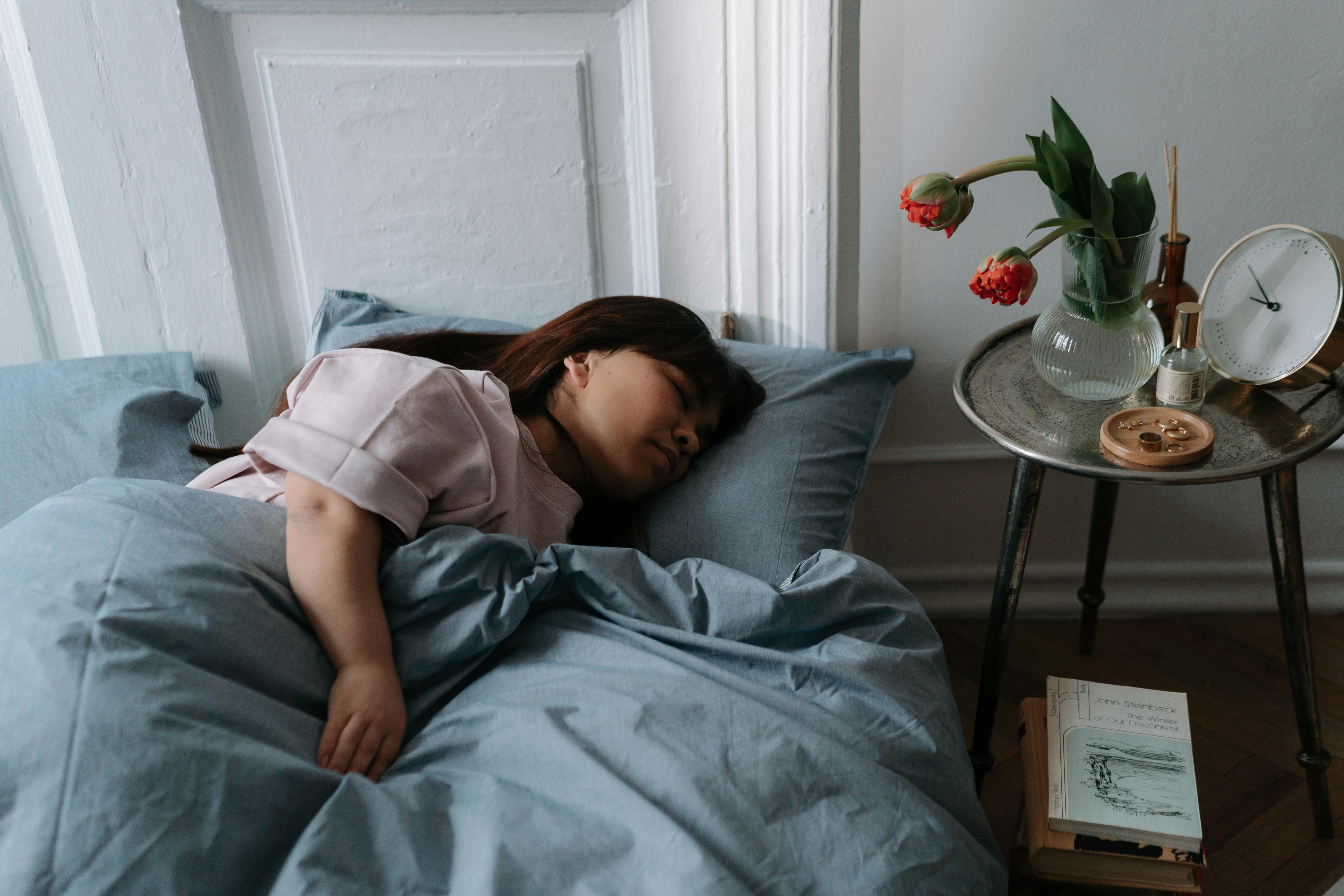
.
Sleep Is Not Just Rest — It Is Repair
Every night, while you sleep, your body runs a kind of internal maintenance program. The brain flushes out waste proteins. The heart slows and recovers. The spine decompresses. Interrupt this process night after night, and the consequences go well beyond feeling groggy in the morning.
A 2023 study published in BMC Medicine by researchers at the University of California, Berkeley found that deep sleep — the slow-wave phase that typically occurs in the first half of the night — can act as a protective buffer against Alzheimer's-related memory loss in older adults. Even among people whose brains already showed signs of amyloid buildup (a protein associated with dementia), those who got more high-quality deep sleep performed measurably better on memory tests the following day.
"With a certain level of brain pathology, you're not destined for cognitive symptoms or memory issues," said Zsófia Zavecz, a postdoctoral researcher at UC Berkeley's Center for Human Sleep Science. "One of those protective factors is sleep and, specifically, deep sleep."
Snoring: More Than Just Noise
Snoring is annoying. But when it happens loudly and regularly, it is often a symptom of obstructive sleep apnea (OSA) — a condition in which the airway repeatedly collapses during sleep, briefly cutting off breathing. Many people with OSA never receive a diagnosis.
A large-scale study published in the journal Thorax by researchers at the University of Birmingham, covering over 193,000 patients across 12 years of UK healthcare records, found that untreated OSA is linked to a 12 percent higher overall risk of dementia and a 29 percent higher risk of vascular dementia specifically. Crucially, patients who received treatment did not show elevated risk compared to the general population.
The standard treatment is a CPAP machine — a device that delivers a continuous flow of air through a mask to keep the airway open. It works, but many patients find it uncomfortable enough to stop using it.
An intriguing alternative recently confirmed by a clinical trial: blowing a conch shell. Researchers at the Eternal Heart Care Centre and Research Institute in Jaipur, India, published results in ERJ Open Research (August 2025) showing that participants with moderate OSA who practiced conch-shell blowing — called "shankh blowing" in Indian yogic tradition — for 15 minutes a day, five days a week, over six months experienced a 34 percent reduction in daytime sleepiness, four to five fewer apnea episodes per hour, and better overnight oxygen levels compared to a control group doing standard deep-breathing exercises.
"It involves a deep inhalation followed by a forceful, sustained exhalation through tightly pursed lips," explained lead researcher Dr. Krishna K. Sharma. "This likely strengthens the muscles of the upper airway — areas that often collapse during sleep in people with OSA." The technique is low-cost, non-invasive, and rooted in thousands of years of practice.
Nightmares and Restless Sleep: What Your Body Is Telling You
Recurring nightmares and excessive movement during sleep are rarely just bad luck. Chronic anxiety, stress, and mental overactivity suppress the brain's ability to transition into deeper, restorative stages of sleep.
Traditional Chinese medicine (TCM) has long described this state as "heart fire rising" — a metaphor for an overworked mind that cannot settle. Regardless of how one feels about TCM as a system, its practical recommendations align well with modern sleep hygiene advice: reduce mental stimulation in the hours before bed, avoid stimulating foods at night, and introduce calming physical practices.
Research has also found a dietary trigger that many people overlook: dairy sensitivity. Those who are sensitive to milk or dairy products may experience low-grade digestive discomfort during the night, which can disrupt sleep and contribute to more vivid or disturbing dreams. For people with frequent nightmares, eliminating dairy before bed is worth trying.
For restless leg movement and difficulty settling into sleep, calming practices such as yoga, stretching, tai chi, or even brief meditation have solid evidence behind them. The goal is to bring the nervous system down from its daytime alert state before the body is asked to sleep.
Waking Up at Night: The Clock Matters
Waking repeatedly during the night — or consistently at the same hour — can reflect real physiological patterns. Waking between 1 and 3 a.m. is frequently associated with liver stress or metabolic processing. Waking between 3 and 5 a.m. often correlates with respiratory or pulmonary issues. Light, fragmented sleep with excessive dreaming is commonly linked to elevated stress hormones and mental exhaustion.
If you wake at night and cannot fall back asleep, resist the urge to toss and turn. Instead, sit quietly for a few minutes — or try a short breathing or meditation exercise — before lying back down. The goal is to interrupt the cycle of frustration that makes falling asleep even harder.
Drooling: Often a Breathing Problem in Disguise
Waking up with a wet pillow is more common than people admit, and it is almost always a sign of mouth breathing during sleep. The most frequent causes are nasal congestion, allergies, sinus problems, or anatomical obstruction of the airway.
Addressing the root cause — whether that means treating seasonal allergies, a deviated septum, or chronic sinusitis — typically resolves drooling and can improve overall sleep quality at the same time.
Your Sleep Position May Be Harming You
How you lie down is not a trivial matter. Different positions carry real physical consequences.
Stomach sleeping is the most problematic. It compresses the chest and lungs, places sustained pressure on the lumbar spine, and forces the neck into an unnatural rotated position for hours at a time. Over months and years, this can contribute to lower back pain, neck stiffness, arm numbness, and recurring headaches.
Back sleeping distributes body weight evenly, reduces facial pressure, and can actually help keep the airway open — making it beneficial for people with mild sleep apnea. Those with arthritis often find this position the most comfortable. The main downside is that it can take time to adjust if you are not accustomed to it.
Side sleeping is the most widely used position, and for good reason. It promotes easier breathing and allows the body to relax naturally. Those with digestive issues or acid reflux generally do better on the left side, which reduces stomach acid pressure on the esophagus. Those with heart palpitations or anxiety-related sleep problems often find the right side more comfortable.
A practical tool worth noting: gentle leg-binding therapy — using soft straps placed above the knees, below the knees, and above the ankles — has been reported to reduce muscle tension and help the body settle into back or side sleeping more easily. It sounds unusual, but the underlying principle is straightforward: reducing involuntary leg movement allows the body to stay in a healthier position through the night.
The Bottom Line
Sleep quality is one of the most powerful levers you have over your long-term brain, heart, and spinal health. It is also one of the most neglected. Snoring, nightmares, restless nights, and poor posture are not minor inconveniences — they are signals worth paying attention to.
The good news is that meaningful improvement rarely requires expensive interventions. Better sleep position, consistent evening routines, dietary adjustments, breathing exercises, and addressing nasal obstruction can all make a measurable difference. Start with the signal your body is already sending you.
.
Sources:
-
Zavecz et al. (2023). "NREM sleep as a novel protective cognitive reserve factor in the face of Alzheimer's disease pathology." BMC Medicine. https://news.berkeley.edu/2023/05/03/deep-sleep-may-mitigate-alzheimers-memory-loss-berkeley-research-shows/
-
Wang J. et al. (2025). "Obstructive sleep apnoea syndrome and future risk of dementia among individuals managed in UK general practice." Thorax / BMJ. https://www.eurekalert.org/news-releases/1084945
-
Sharma KK et al. (2025). "Efficacy of blowing shankh on moderate sleep apnea: a randomised control trial." ERJ Open Research. https://www.sciencealert.com/blowing-a-conch-shell-each-day-could-help-treat-sleep-apnea
-
Meta-analysis on sleep disorders and dementia risk (2025). GeroScience / PubMed Central. https://pmc.ncbi.nlm.nih.gov/articles/PMC12181552/
.
What's Your Reaction?
 Like
0
Like
0
 Dislike
0
Dislike
0
 Love
0
Love
0
 Funny
0
Funny
0
 Wow
0
Wow
0
 Sad
0
Sad
0
 Angry
0
Angry
0















Comments (0)