

Asia on Edge: The Shangri-La Summit That Could Reshape the Pacific Order
Asia's most important defense summit opened in Singapore on May 29, 2026, against a backdrop of mounting tensions. China's military buildup, serious questions about America's commitment to Taiwan, and a world already on fire in the Middle East and Ukraine are setting the stage for a critical three-day dialogue.

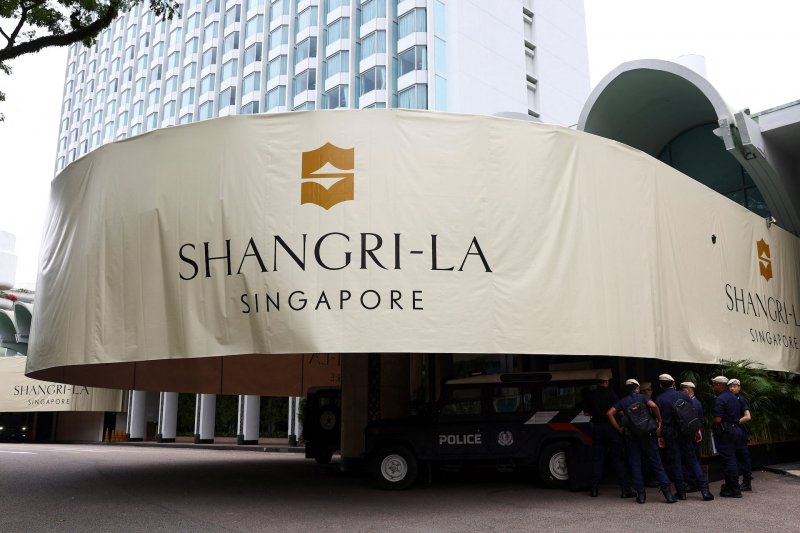
.
Singapore Hosts the Indo-Pacific's Defining Moment
Once a year, Singapore becomes the most important room in the world for security policy. The Shangri-La Dialogue, convened annually by the International Institute for Strategic Studies (IISS), is widely regarded as Asia's premier defense and security summit, bringing together defense ministers, military chiefs, and senior policymakers from across the Asia-Pacific, Europe, and beyond.
The 2026 edition runs from May 29 to 31. And the timing could hardly be more charged.
The Question Everyone Is Asking: Can Washington Still Be Trusted?
The summit's central drama is not a military confrontation – it is a question of credibility. Just two weeks ago, U.S. President Donald Trump traveled to Beijing for a high-profile meeting with Chinese leader Xi Jinping. What came out of that meeting has sent ripples of unease across the entire region.
At the summit, Xi placed Taiwan at the center of the talks, calling it "the most important issue" between the two countries. He warned the United States to exercise "extra caution" in handling the Taiwan question.
Trump's response raised eyebrows on both sides of the Pacific. When asked whether the Taiwanese people should feel more or less secure after his meeting with Xi, Trump replied simply: "Neutral."
He went even further on the question of arms. Trump said "we will see what happens" when asked if he would approve a major arms package to Taiwan, adding that he was not looking to "travel 9,500 miles to fight a war." The pending package is reportedly worth up to $14 billion and would be one of the largest ever sold to the island.
Taiwan is a self-governing democratic island that Beijing claims as its own territory. China has never renounced the use of military force to bring it under its control.
Hegseth Takes the Stage — But Under a Shadow
U.S. Defense Secretary Pete Hegseth arrived in Singapore for his fourth trip to the Indo-Pacific region. During the summit, he is scheduled to meet Singapore's Prime Minister Lawrence Wong and Minister for Defense Chan Chun Sing, in addition to delivering a major plenary address.
His speech is expected to outline the Trump administration's strategic priorities in the region. But given Trump's warm words for Xi and his ambiguous stance on Taiwan, observers will be watching closely for any gap between presidential rhetoric and Pentagon policy.
At last year's Shangri-La Dialogue, Hegseth had struck a far more confrontational tone toward Beijing, declaring that the threat China poses "could be imminent" and that its military was preparing for the real thing. This year, that same assertiveness will be harder to project convincingly.
Vietnam Walks a Tightrope
Vietnamese leader To Lam opened the summit with a keynote address. His appearance carries particular weight — and particular irony.
To Lam has consolidated his grip on power in Hanoi this year, becoming both the Communist Party's general secretary and president, a departure from Vietnam's traditional model of shared leadership. Vietnam has its own territorial disputes with China in the South China Sea, including repeated direct confrontations. At the same time, China remains Vietnam's largest two-way trading partner — a dependency that limits Hanoi's room to maneuver.
Leaked documents revealed that even after Vietnam elevated its diplomatic relations with Washington to the highest level, its military remained skeptical of American intentions and had taken internal steps to defend against what it described as a possible American "war of aggression."
That detail speaks volumes about the distrust that still runs deep in the region, even among countries nominally growing closer to the United States.
China Shows Up — But Sends a Mixed Signal
Beijing's participation this year is itself a statement of sorts. China's attendance remained uncertain in the lead-up to the summit, as Beijing had not confirmed whether its defense minister would attend — after already skipping last year's event.
Chinese Defense Minister Dong Jun was absent from last year's dialogue. According to reports, Beijing is again sending only a lower-level delegation this year. For an event of this importance, that is a deliberate choice — signaling just enough engagement to avoid accusations of stonewalling, while reserving the right to shape the narrative from a distance.
Beyond the Pacific: Ukraine, Iran, and a World Under Strain
The Shangri-La Dialogue has always been about Asia — but the world keeps interrupting. Two other major conflicts are casting long shadows over the proceedings.
Russia has intensified its assault on Ukraine. Just ahead of the conference, Ukrainian President Volodymyr Zelenskyy wrote directly to Trump and to the U.S. Congress, appealing for more American-made air defense ammunition to counter a surge in Russian ballistic missile strikes.
In the Middle East, the situation is also deeply concerning. The conflict involving Iran has led to the closure of the Strait of Hormuz — the narrow waterway through which roughly a fifth of the world's oil normally passes. With that route effectively blocked, global oil prices have surged, creating economic pressure felt far beyond the region. Qatar's defense minister is among the speakers present.
What This Summit Will Reveal
The Shangri-La Dialogue has never been just a talking shop. It is where real intentions become visible — through who shows up, what they say, and what they deliberately leave unsaid.
This year, the central tension is whether the United States remains a dependable security anchor in the Indo-Pacific, or whether the Trump administration's pursuit of a new relationship with Beijing comes at the expense of the region's smaller and more vulnerable nations.
That question will not be fully answered this weekend. But the answers being offered — carefully, cautiously, between the lines — may shape Asia's security architecture for years to come.
.
Sources:
- IISS – Shangri-La Dialogue 2026 official information: https://www.iiss.org/events/shangri-la-dialogue/shangri-la-dialogue-2026/
- CNN Politics – Trump-Xi Beijing Summit, May 14–15, 2026: https://www.cnn.com/politics/live-news/trump-china-visit-xi-meeting-hnk
- NPR – Xi warns Trump on Taiwan at summit: https://www.npr.org/2026/05/14/nx-s1-5822168/trump-xi-summit
- CNBC – How the Trump-Xi meeting is shifting U.S. policy toward Taiwan: https://www.cnbc.com/2026/05/16/trumps-meeting-with-chinas-xi-steers-the-us-away-from-taiwan-again.html
- Reuters / AP via KPBS – Asia defense summit opens amid doubts over U.S. priorities: https://www.kpbs.org/news/international/2026/05/29/asia-defense-summit-opens-amid-doubts-over-u-s-priorities
- Forth News – Hegseth heads to Singapore for Shangri-La Dialogue: https://www.forth.news/stories/CbRtVoTJEY4CpE89F11iP
.
What's Your Reaction?
 Like
0
Like
0
 Dislike
0
Dislike
0
 Love
0
Love
0
 Funny
0
Funny
0
 Wow
0
Wow
0
 Sad
0
Sad
0
 Angry
0
Angry
0












Comments (0)