

Trump’s Second Dance With Xi Amid the Ongoing US–China Trade Talks


.
Every few months, headlines announce another breakthrough in U.S.–China trade talks. Tariffs are trimmed, soybean purchases are promised, rare earths are secured, and a fentanyl crackdown is promised again.
The Cycle Unfolds
It started in January with the Trump administration barely unpacked from its second-term inauguration, raising tariffs on Chinese goods. For example, a 20 percent fentanyl tariff targeting chemical exports linked to America’s opioid crisis. It also moved to close the “de minimis” loophole, the rule that lets millions of low-value parcels from China and Hong Kong enter the United States duty-free. This loophole had morphed into a huge path for e-commerce giants like Shein and Temu, not to mention gray-market smugglers funneling precursor chemicals for street drugs.The fallout was swift. Shipments backed up at ports, U.S. retailers complained about empty shelves, and the U.S. Postal Service suspended inbound deliveries from China and Hong Kong. Car parts vanished from assembly lines, and baby formula prices spiked. By early February, the White House backtracked, saying the ban would roll out later, “after further coordination.”
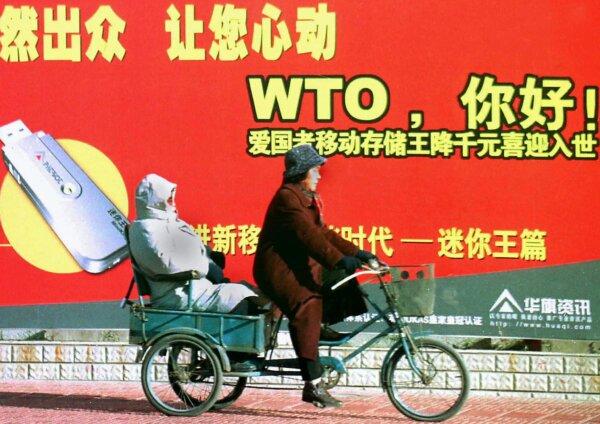
Then came spring in Geneva, after marathon talks, both sides declared a breakthrough: a 90-day truce, with tariffs dropping, with the United States cutting from roughly 145 percent down to about 30 percent, and China from 125 percent to 10 percent. Stocks rallied, commodity prices steadied, and pundits called it a “reset.” Each side agreed to hold fire while “structural issues” were discussed—the same structural issues that have been addressed for the last decade: industrial subsidies, intellectual property theft, forced tech transfers.
The can was kicked into August’s cucumber season. And in the same month, right on schedule, the truce was extended by another 90 days. China’s export machine kept working, while rerouting through Southeast Asia, and U.S. importers kept moving assembly lines to Mexico and Vietnam.
By September, Washington shifted focus from tariffs to technology. The U.S. Commerce Department prepared the Affiliates Rule, an expansion of export controls that would automatically blacklist any foreign subsidiary majority-owned by a sanctioned Chinese company. Beijing protested. State media called it “economic containment,” and Chinese ministries hinted at retaliatory curbs on rare-earth exports, the strategic minerals that power Western electronics and defense systems.
Then, on Oct. 30 in Busan, South Korea, U.S. President Donald Trump and Chinese leader Xi Jinping met on the sidelines of the APEC summit. Trump called it a “12 out of 10” meeting. Xi spoke of “stability and mutual benefit.” Markets rallied, while analysts applauded the “de-escalation.” Then reality returned. Within days, Reuters reported that China was still buying Brazilian soybeans—and Russian non-GMO soybeans—because they were cheaper. In other words, business as usual.
That’s been the strange rhythm of the new U.S.–China relationship: conflict followed by choreography, punishment followed by partial pardon. The topics themselves repeat, like homework that is never finished, yet always reassigned. It gives the appearance of engagement while achieving the stability of a stalemate.
2 Scenarios: The Deal-Maker or the Time-Buyer
In the first interpretation, every new administration inherits the wreckage of past negotiations with the Chinese Communist Party, and yet, each one somehow convinces itself that this time will be different. In that sense, Trump is not an outlier but an inheritor of a long American pattern: the belief that the right kind of leadership can succeed where others failed. It’s also the instinct of the supreme deal-maker he truly is. Not naive, but confident that agreements collapse because of who made them.So the assumption follows: get the right team, the right tone, the right balance of threat and charm—and you can do business with just about anyone, even leaders like Xi. That belief has a distinctly American flavor. It mirrors the national self-image: pragmatic, adaptive, endlessly optimistic that every problem has a negotiable solution.
In the second interpretation, the United States already knows that the CCP cannot be changed through incentives and disincentives, because its behavior is not strictly speaking a strategy; it is an identity.
Like the scorpion in the fable that stings the frog mid-river, even knowing it will drown, the CCP acts according to its nature. Its survival depends on deception, control, and the ability to weaponize dependency. If it honors an agreement, it does so only while the balance of advantage demands it. To expect lasting reciprocity is to misunderstand the creature you’re carrying.
Seen through this lens, the repeated negotiations under Trump are not attempts at reconciliation but time management, a way for Washington to decouple without triggering a global economic meltdown. The United States can’t yet replace Chinese rare-earth minerals or unwind 40 years of supply-chain integration overnight. It needs breathing room: months to relocate factories, years to build refineries, perhaps a decade to restore the industrial depth it once had.
So it engages in this controlled theater. Each “truce” soothes domestic markets, each “breakthrough” buys another quarter of calm. While beneath the surface, procurement strategies, defense alliances, and industrial-policy incentives slowly pivot the West away from Beijing’s grip.
The Leverage We Never Use
When the United States sits across the table from the Chinese Communist Party, it brings enormous leverage: economic, military, and international alliances. But curiously, one form of leverage is seldom used: the CCP’s human rights record. The CCP is so very sensitive to this topic and always overreacts, which could make this a fantastic lever.For decades, every American administration has known—and documented—the persecution of religious and spiritual groups, the reeducation camps, and credible reports of forced organ harvesting from prisoners of conscience, including Uyghurs and Falun Gong practitioners. These are not vague accusations; they’re documented by United Nations rapporteurs, human rights investigators, and independent tribunals. And yet, when senior U.S. negotiators meet with their Chinese counterparts, they focus on soybeans, rare earths, fentanyl precursors, and South China Sea militarization.
That’s perhaps why this topic is studiously avoided—not because it’s untrue, but because it’s too true. Because if Washington publicly acknowledged that the CCP’s actions constitute crimes against humanity, the logical conclusion would not be to strike a better deal, but to end the relationship. That’s a step no administration has yet been willing to take—not Bill Clinton, not George W. Bush, not Barack Obama, not Trump in his first term, not Joe Biden, and perhaps, not even Trump in his second term, as yet. America’s restraint isn’t strictly speaking weakness; it’s fear of clarity—because clarity would force a choice.
But the irony is that this avoidance may actually strengthen Beijing’s hand. The CCP understands that the West will criticize but not act—that its moral outrage has boundaries. So it calibrates repression just below the threshold that would end negotiations altogether.
Conclusion
It is said that some things happen very gradually, and then all at once. This unraveling of world dependence on the CCP might be one of them. Just as it is hard to time the market, it is hard to predict precisely when world events will occur. However, just as value investors try to understand the underlying factors behind a company in a market, we can do the same in geopolitics and “invest” or “dis-invest” accordingly with our money, political capital, and political will. Let’s invest wisely.What's Your Reaction?
 Like
0
Like
0
 Dislike
0
Dislike
0
 Love
0
Love
0
 Funny
0
Funny
0
 Wow
0
Wow
0
 Sad
0
Sad
0
 Angry
0
Angry
0














Comments (0)