

New Party Leader Poised to Steer Japan on More Assertive Course With China


.
Japan’s likely leader-in-waiting Sanae Takaichi is expected to strengthen defense ties with Washington and support for Taipei in a bid to counter Chinese aggression, but experts suggest this hawkish approach must be balanced against the nation’s indispensable economic ties with Beijing.
“Together with so many of you, we have carved a new era for the LDP (Liberal Democratic Party),” Sanae Takaichi, Japan’s former economic security minister, said shortly after defeating her opponent in the party leadership election on Oct. 4.
That victory confirmed her leadership of the ruling LDP and seemed to set her on a clear path to becoming the country’s first female prime minister.
Freer Hand on China
Despite this upheaval, Bonnie Yushih Liao, senior research fellow at the Japan Forum for Strategic Studies (JFSS) in Tokyo, remained optimistic that Takaichi would become premier, noting that the opposition bloc is fragmented.“While the Democratic Party for the People, the Constitutional Democratic Party, and Japan Innovation Party collectively hold enough seats to surpass a majority, their ideological differences make consolidation unrealistic. As the leader of the largest party, Takaichi’s chance of becoming prime minister remains strong,” Liao told The Epoch Times.
Takaichi is widely regarded as having a hawkish stance on China. At an Oct. 9 rally addressing Beijing’s human rights record in northern China, she condemned the regime’s repression of the Inner Mongolian Autonomous Region.
Liao viewed the Komeito party’s departure from the coalition as enabling Takaichi to continue her tougher approach toward Beijing.
“It removes Beijing’s long-cultivated ‘friendly channel’ inside the government. Takaichi can still form a minority cabinet and project authority on her own terms,” Liao said.
‘De-risking, Not Decoupling’
However, Takaichi’s hardline rhetoric is unlikely to alter Japan’s fundamental economic policy toward China, according to Stephen Nagy, a professor at the International Christian University (ICU) in Tokyo.“There is a broad consensus that Japan needs to engage with China economically. I don’t think this equation has changed,” Nagy told The Epoch Times.
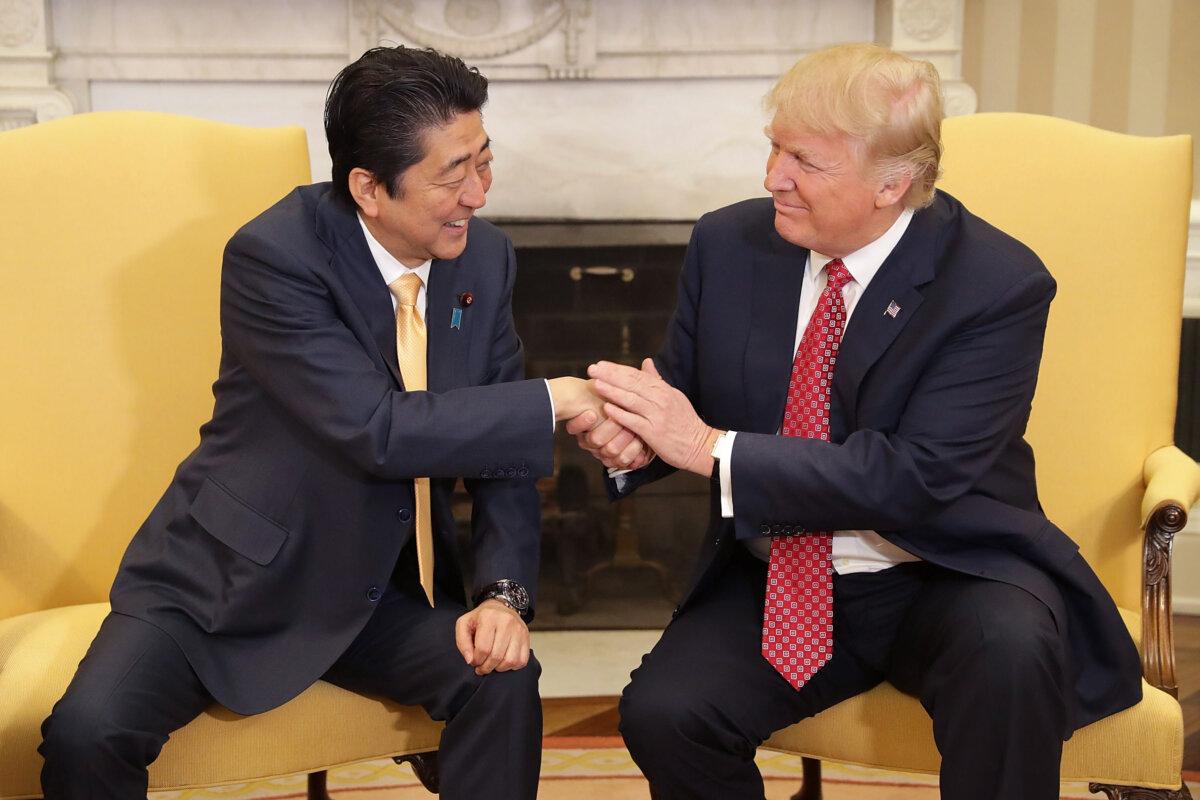
Nagy predicted Takaichi would likely emulate Japan’s late former Prime Minister Shinzo Abe by taking a pragmatic approach to China and tightening political and trade ties with the United States, Australia, the UK, and the EU.
“Because this is really the only way forward. There’s no possible way to really fundamentally securitize bilateral relationships because it would have such a negative impact on the Japanese economy,” he said.
.
Japan’s exports to China totaled $124.63 billion in 2024, while China exported $152.01 billion to Japan, according to the United Nations COMTRADE database on international trade.
Nagy said this is a “very beneficial relationship for both parties,” and it’s difficult to divide them.
Liao at JFSS made a similar remark, suggesting Japan’s playbook on China is “de-risking, not decoupling.”
US–Japan Alliance Deters China’s Double Game
On the security front, Grant Newsham, a retired U.S. Marine officer and former U.S. diplomat, told The Epoch Times that no matter who the prime minister of Japan is, China fully intends to dominate Japan and take Japanese territory.Still, Newsham, the author of “When China Attacks: A Warning to America,” said that Takaichi’s priority on improving defense and joint U.S.–Japan military capabilities will have a stabilizing effect.
“Beijing will complain loudly, but will tread cautiously given the stronger [Japan Self-Defense Forces] and especially the U.S.–Japan defense relationship,” Newsham said.
.

Newsham added that areas such as the Senkaku Islands, the entire Ryukyu Chain, and parts of Japanese maritime territory in the East China Sea are coveted by Beijing as part of its territorial ambitions.
“I would expect Beijing to verbally attack Takaichi and her administration, and they will continue pushing on Japanese territory,” Newsham said.
Despite this expected friction, Newsham anticipated that diplomatic relations between the two nations would remain more or less as they have been for the last 40 years.
“China sometimes bullies and sometimes shows a nice face. But always with the end goal of domination. The two sides talk and make pleasant statements, but at the end of the day, they are not friends,” said Newsham.
Newsham believed that Takaichi is far more likely to risk a skirmish with the PRC than most of her predecessors, as she has a solid understanding of Japan’s economic and national security challenges and believes that any sign of weakness will invite Chinese aggression.
“A more capable JSDF will also allow Japan to more effectively assert its interest in the contested areas. But the real test will be whether the Japanese and U.S. militaries operate together to defend Japanese territory,” he said.
Newsham noted that such cooperation could include joint U.S.–Japan patrols in the southern islands, but he warned that China is unlikely to back down given the growing power of the People’s Liberation Army (PLA).
Threading the Needle on Taiwan
Beyond her hardline stance on national defense, Takaichi is also backing up her vocal pro-Taiwan rhetoric with action.A Japanese delegation delivered a personal letter from Takaichi to Taiwan President William Lai during the island nation’s National Day on Oct. 10.
However, the group stopped short of including an even more prominent lawmaker tipped for a cabinet post—a move interpreted as an effort to strengthen ties with Taipei while avoiding a major diplomatic clash with Beijing.
Liao at JFSS said the calculated approach showed Takaichi’s Taiwan policy is “institutional, not personal.”
“Tokyo will deepen practical ties with Taipei while keeping a communication lane with Beijing,” Liao said.
Nagy echoed Liao’s view, explaining that Takaichi’s support is rooted in a strategic view of Taiwan’s critical importance for technology supply chains and the security of the first island chain.
“She'll continue to be pro-Taiwan, but she will also continue to support the ‘one-China’ policy as defined by Japan, not defined by Beijing. And I think that is actually a really important aspect of how Takaichi is going to continue to thread the needle of cross-Strait relations,” he said.
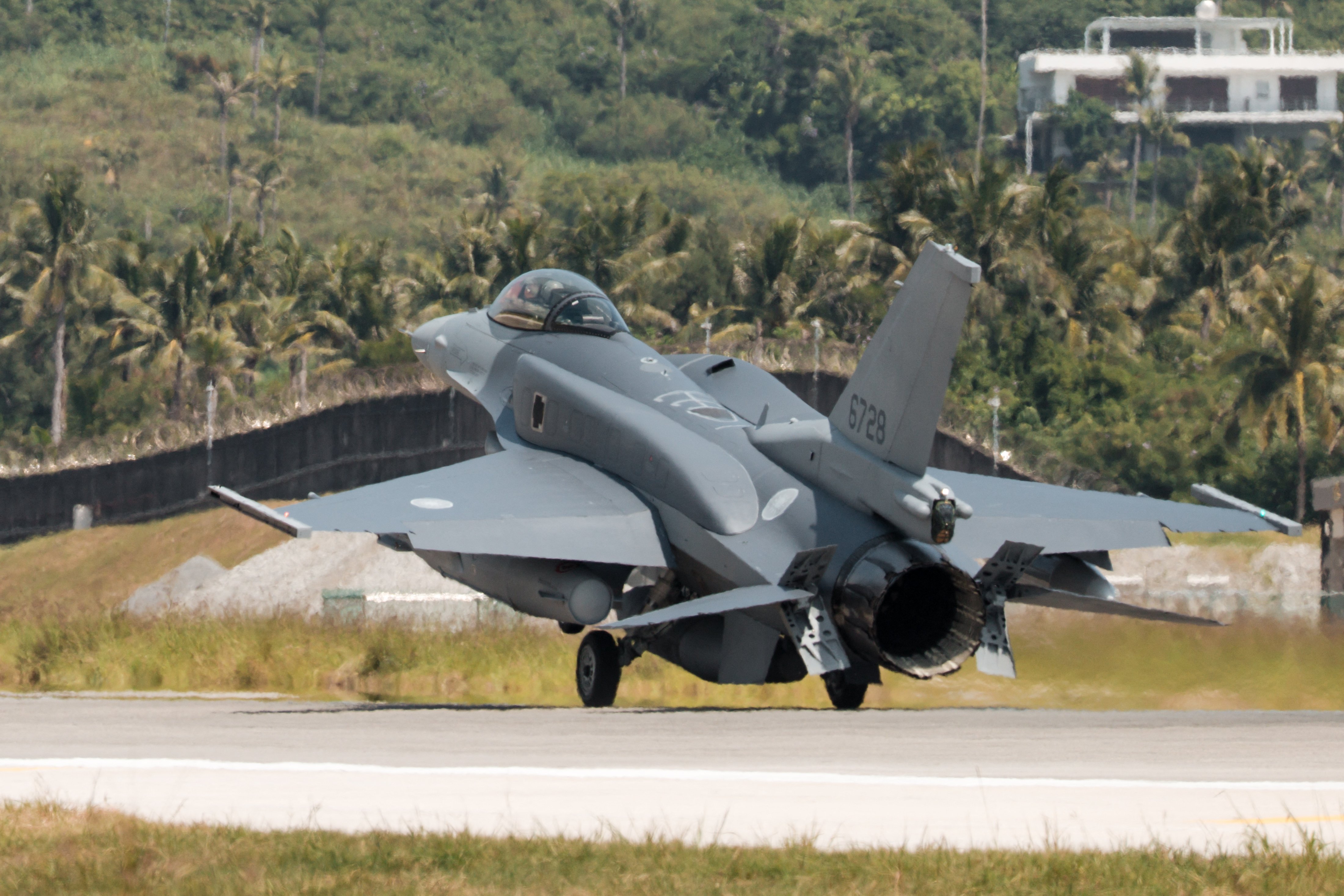
Newsham said that Takaichi wouldn’t be able to change Japan’s Taiwan policy overnight, but she could increase Japan–Taiwan security engagement and further expand coast guard interactions between Taiwan and Japan.
“Takaichi is right about ‘Taiwan’s defense being Japan’s defense’ and I expect she will do more to help Taiwan than all [prime ministers] before her have done,” he said.
.
What's Your Reaction?
 Like
0
Like
0
 Dislike
0
Dislike
0
 Love
0
Love
0
 Funny
0
Funny
0
 Wow
0
Wow
0
 Sad
0
Sad
0
 Angry
0
Angry
0













Comments (0)