

India Urges Caution When Traveling in China After Citizen Detained in Shanghai Airport


.
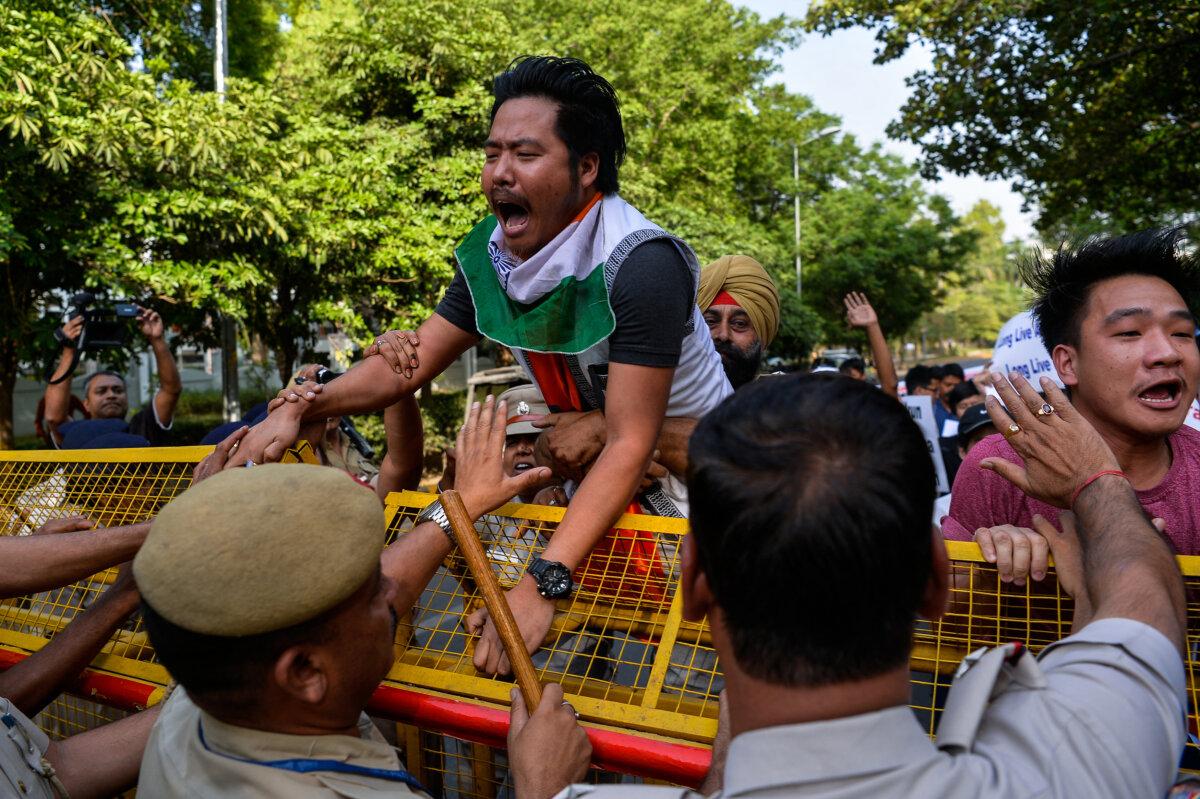
The Indian government said on Dec. 8 that it had told citizens to exercise caution when traveling and transiting through China after an Indian passenger was detained by Chinese border officers at Shanghai airport last month.
“The Ministry of External Affairs advises Indian nationals to exercise appropriate caution when they are traveling to or transiting through China,” he said, according to a translation provided by the ministry.
According to Thongdok, Chinese immigration authorities took issue with her birthplace on the passport, Arunachal Pradesh, an India-administered state that the Chinese communist regime has sought to claim.
The Chinese immigration officers then mocked and laughed at Thongdok, saying “things like ‘you should apply for the Chinese passport, you’re Chinese, you’re not Indian,’” she told ANI.
When asked about the incident on Nov. 25, Mao Ning, a spokeswoman for the Chinese foreign ministry, said its border inspection authorities “carried out procedures in accordance with laws and regulations.”
“Zangnan is China’s territory,” Mao told reporters, using the Chinese name for the Indian state. She said the regime has “never recognized the so-called Arunachal Pradesh illegally set up by India.”
The Indian Ministry of External Affairs, in a Nov. 26 statement, rejected the Chinese regime’s claim.
Jaiswal said the Indian government had lodged a formal protest with Beijing over the “arbitrary detention” of its national.
“Chinese authorities have still not been able to explain their actions, which are in violation of several conventions governing international air travel,” he added.
In 1972, India renamed NEFA as Arunachal Pradesh, a federally administered territory, and in 1987, it was granted statehood under the Indian Constitution.
However, since 2006, China has extended its territorial claims to the entire state, and its Ministry of Civil Affairs has begun assigning formal Chinese names to residential areas, mountain peaks, and rivers in the state, drawing protests from New Delhi.
.
What's Your Reaction?
 Like
0
Like
0
 Dislike
0
Dislike
0
 Love
0
Love
0
 Funny
0
Funny
0
 Wow
0
Wow
0
 Sad
0
Sad
0
 Angry
0
Angry
0














Comments (0)