

IMF Says China’s State-Led Growth Model Is Hurting Other Economies, Calls for Subsidy Cuts


.
The International Monetary Fund (IMF) has sharply criticized China’s state-led growth model, warning that heavy industrial subsidies, debt-financed investment, and weak domestic demand are distorting the economy at home and creating damaging spillovers abroad.
The IMF recommended that China scale back what it described as “unwarranted industrial policy support,” saying that doing so would reduce fiscal costs, improve productivity, and mitigate external imbalances. In particular, the IMF said that Beijing should slash state support for domestic industry by half, while noting that weak domestic demand has made China more reliant on manufacturing exports as a source of growth.
“Higher net exports have also resulted in the emergence of external imbalances, with adverse spillovers to trading partners,” the IMF said. “China’s large economic size and heightened global trade tensions make reliance on exports less viable for sustaining robust growth going forward.”
Criticizing China’s state-led and debt-financed investment and excessive industrial policy support, the IMF said an “overarching priority” should be for the country to transition to a consumption-led growth model, urging a “comprehensive and more forceful response” combining fiscal support with structural reforms.
“Such a policy package will tackle China’s internal imbalances while also reducing external imbalances,” the IMF wrote.
Among the broader structural reforms recommended by the IMF is a call for reducing off-budget investment by local government financing vehicles and reducing debt buildup.
Debate Over Scale of Distortions
Some economists say the IMF’s estimate may understate the scale of support provided to domestic industries.Michael Pettis, a senior fellow at the Carnegie Endowment for International Peace, said that direct subsidies represent only a portion of the distortions affecting China’s economy.
“This is a start, of course, but just barely,” Pettis wrote in a Feb. 19 post on X, referring to the IMF’s recommendation that Beijing cut state subsidies to domestic manufacturers by about 2 percentage points of GDP.
.
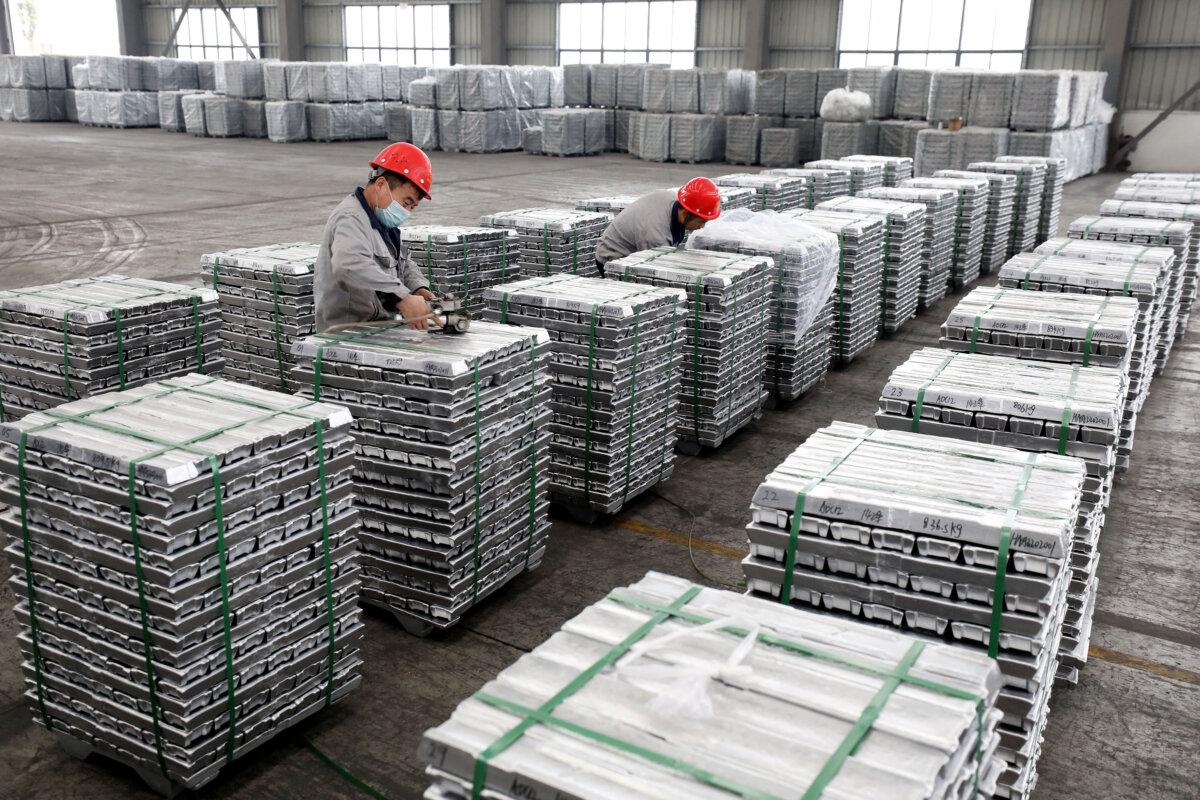
“China spends a lot more than 4 [percent] of GDP subsidizing critical manufacturing sectors, not just through direct central-government subsidies, but also through local-government subsidies and mainly through indirect subsidies.”
Pettis pointed to what he described as indirect transfers from households to producers, including a currency that is undervalued.
The most important of these indirect subsidies, he said, are “undervalued currency, cheap financing costs, and various labor restrictions—all three of which involve transfers from households (as net importers, net savers and workers) to manufacturers.”
He added that cutting central-government subsidies by two percentage points would have a limited impact if broader macroeconomic distortions remain in place.
Questions Over Exchange Rate Policy
The IMF report also addressed exchange rate dynamics, noting that low domestic inflation has contributed to the real depreciation of the Chinese yuan.Some analysts say the IMF’s treatment of China’s exchange rate management was incomplete.
.
Brad Setser, senior fellow at the Council on Foreign Relations, said the IMF’s analysis did not sufficiently address the role of state banks in foreign exchange operations or possible backdoor intervention.
“The IMF’s analysis of China’s exchange rate management remains thin,” Setser said in a post on X, adding in another message that it “just isn’t plausible to ignore backdoor intervention.”
He said that China “can and does target” its exchange rate, and that its current account surplus may be understated by at least one percentage point due to changes in balance-of-payments methodology introduced in 2022 that he said do not accurately reflect investment income.
The U.S. Treasury Department has not designated China as a currency manipulator but has cited concerns about transparency in Beijing’s exchange rate policies.
In its most recent report on foreign exchange policies, Treasury said China stands out among major trading partners for its lack of clarity around currency practices and noted that the renminbi appears substantially undervalued relative to fundamentals.
“Given China’s extremely large and growing external surpluses, and its substantially undervalued exchange rate, it is important that the Chinese authorities allow the RMB [renminbi] exchange rate to strengthen in a timely and orderly manner in line with market pressure and macroeconomic fundamentals,” the Treasury said in a statement, released with the report.
The U.S. Treasury has placed China on its monitoring list of major trading partners whose currency practices and macroeconomic policies must be closely scrutinized.
.
What's Your Reaction?
 Like
0
Like
0
 Dislike
0
Dislike
0
 Love
0
Love
0
 Funny
0
Funny
0
 Wow
0
Wow
0
 Sad
0
Sad
0
 Angry
0
Angry
0













Comments (0)