

Huawei Restructures Cloud Business to Prioritize AI Amid US Tech Rivalry


China’s Huawei Technology will undertake a significant restructuring of its cloud computing sector, focusing resources on artificial intelligence amid increasing tech rivalry with the United States.
This comes as Huawei Cloud CEO Zhang Pingan announced the severance and consolidation of several departments on Aug. 22, with the goal of focusing on developing AI.
According to mainland Chinese media, Huawei Cloud suffered a loss in 2024 and aims to achieve profitability this year through AI. Dozens of departments will be cut or merged, such as the product department, public cloud service department, and R&D department. The restructuring may involve layoffs, affecting thousands of employees.
Huawei Cloud confirmed on Aug. 25 that it will invest more resources in AI and computing.
Huawei’s move coincides with the official announcement put out by the Chinese regime’s State Council on Aug. 26 about in-depth implementation of the so-called “AI+ Action” initiative, which will “promote the extensive and in-depth integration of artificial intelligence with all industries and fields of the economy and society.” It requires all local governments and agencies to ensure the initiative’s effectiveness.
Shen Ming-shih, director of the Division of National Security Research at Taiwan’s Institute for National Defense and Security Research, told The Epoch Times that various industries in China are likely to prioritize the development of AI as a key direction and goal as per the regime’s request.
“Whether it’s the operation of weapons systems, weapons system research and development, or even nuclear power testing, the application of AI will undoubtedly become a major focus over the next 10 to 20 years in China,” Shen said.
The State Council’s announcement also requires “enhancing the ability to apply artificial intelligence to maintain and shape national security.”
U.S.-based economist Davy J. Wong told The Epoch Times that the announcement emphasizes “intelligent warfare” and “new quality combat capabilities.”
Wong said as a core contractor in the Chinese regime’s military technology system, “Huawei’s strategy to shift its focus on AI is not simply a market choice, but a dual effect of economic drive and meeting [the Chinese regime’s] national strategy.”
Huawei is not simply a commercial enterprise, but a key component in China’s military intelligence system, Wong noted.
Regime’s Larger AI Strategy
Currently, Alibaba Cloud holds a 33 percent share of China’s cloud services market, Huawei Cloud has 18 percent, and Tencent Cloud has 10 percent, according to Chinese media.With China’s cloud market growth slowing and fierce price competition in general-purpose IaaS/PaaS, Huawei Cloud must focus its resources on AI-native cloud and industry models, which offer higher gross margins and greater growth potential, Wong said.
“By cutting or merging departments, Huawei Cloud is concentrating funds and manpower on its Ascend computing clusters,” he said.
On the surface, it’s a competition of price and market share among China’s tech giants, which have different business emphasis, Wong said.
“Alibaba focuses on e-commerce and public cloud, Tencent on social networking and content, and Huawei on government, enterprise, and AI-native cloud,” he said.
This is a strategic division of labor for the Chinese regime, Wong said.
Technical Limitations
The United States has imposed restrictions on technology exports to communist China, including to Huawei, because it helps the communist regime develop its military through “civil-military dual-use” programs. Huawei has also been sanctioned by other countries, making it difficult for it to obtain advanced technology from the West.The United States has tightened export control over top-tier graphics processing units (GPUs), restricting China’s access to the Nvidia A100/H100 series, Wong noted.
“The U.S. restrictions are essentially intended to prevent computing power from being used for military intelligence and weapons simulations by the Chinese regime,” he said.
.

However, “Huawei, leveraging its proprietary Ascend 910B/910C chips and MindSpore framework, can still provide a certain level of training and inference capabilities,” he said.
While Huawei’s manufacturing process and energy efficiency lag behind, and its computing power isn’t as high as top-tier Nvidia, “Huawei’s multi-core packaging and system optimizations make it a viable alternative in some scenarios, and are sufficient to support applications such as missile aerodynamic modeling, drone swarm control algorithms, and intelligence big data mining,” Wong said.
Regarding Huawei AI’s competitiveness on the international market, Wong stated that due to export controls, Chinese tech companies face difficulties competing with foreign brands such as AWS, Azure, and GCP in the high-end European and U.S. markets.
Security Concerns
The Chinese regime’s National Intelligence Law, passed in 2017, mandates that all Chinese organizations, companies, and citizens must support and cooperate with state intelligence work.China’s Personal Information Protection Law and cybersecurity regulation: the Measures for the Security Assessment of Data Cross-Border Transfer require a strict review of personal information and important data, including that of foreign users.
.
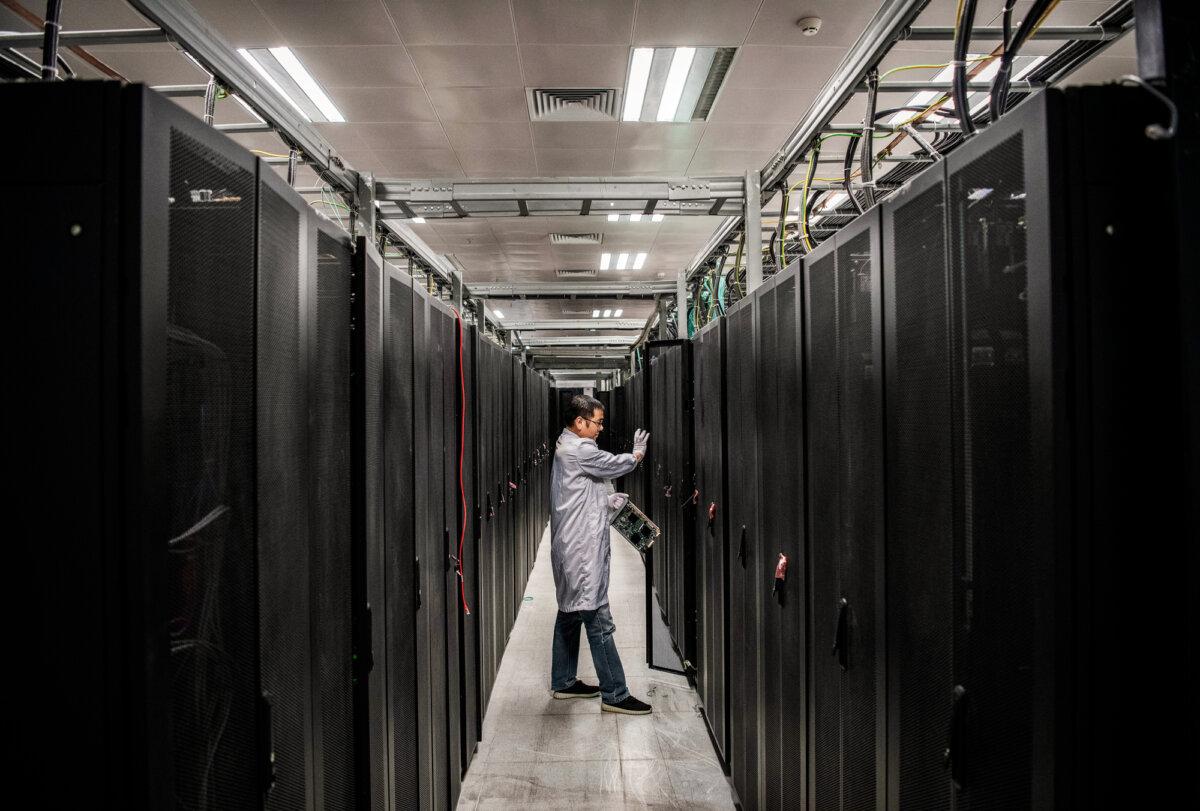
These regulations mean that commercial data on the Chinese clouds could potentially be accessed by the Chinese regime’s military/intelligence systems, Wong said.
In terms of technology, Huawei’s Ascend/CloudMatrix ecosystem remains unstable, Wong said. “If it is sanctioned or updates are halted, overseas users will need to prepare multi-cloud backup and computing power transfer solutions,” he said.
He also suggested foreign users “keep sensitive data off Chinese-owned clouds; add contractual clauses prohibiting military/intelligence reuse of their data; and use BYOK (bring your own key) and third-party audits,” if they decide to use Chinese companies’ AI and cloud services.
What's Your Reaction?
 Like
0
Like
0
 Dislike
0
Dislike
0
 Love
0
Love
0
 Funny
0
Funny
0
 Wow
0
Wow
0
 Sad
0
Sad
0
 Angry
0
Angry
0
















Comments (0)