

China's Hackers Are Waging a Silent War on the World's Tech Industry
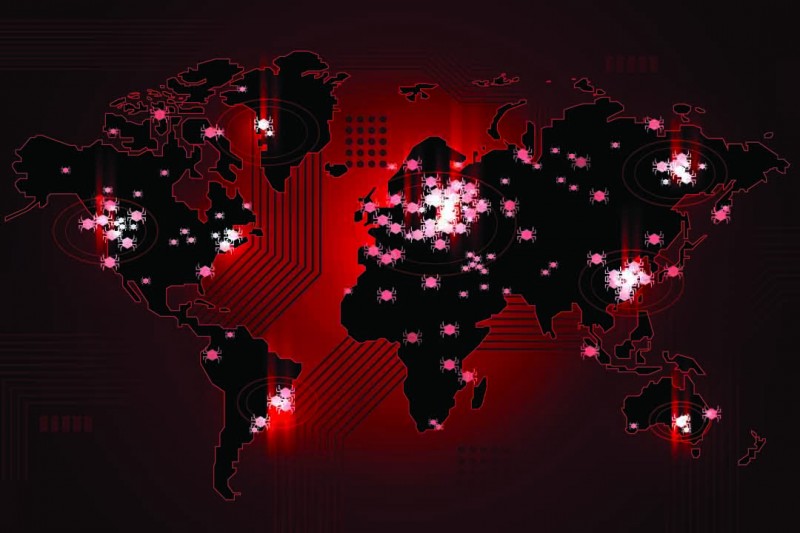
A new report by cybersecurity firm CrowdStrike names China-linked hackers as the single biggest espionage threat to technology companies worldwide. Amid a booming AI race, state-backed operatives are systematically targeting the very intellectual property that the West is building its technological future on — and they are not alone.

.
The Tech Sector: The World's Most Targeted Industry
The global technology industry has once again earned a dubious distinction: it is the most heavily targeted sector by both foreign state actors and criminal hacking groups. That is the central finding of CrowdStrike's 2026 Technology Threat Landscape Report, published on June 9, 2026, covering the period from April 2025 to March 2026.
The report covers companies involved in computer hardware, software development, semiconductors, IT consulting, and technology services — the full spectrum of the modern digital economy. The conclusion is stark: no other industry faces a comparable level of coordinated digital attack.
China Leads the Charge — By a Wide Margin
At the top of the threat list sits China. According to CrowdStrike, hackers linked to Beijing drove more than 58% of all state-sponsored targeted intrusions against the technology sector. That is not a statistical artifact — it is a deliberate strategy.
Adam Meyers, CrowdStrike's senior vice president and head of counter adversary operations, described the scale of what is happening in plain terms: China runs cyberespionage as industrial policy to try to close the AI innovation gap, demonstrating that AI capabilities are the prize adversaries are after.
The hacking campaigns, the report explains, align directly with the Chinese Communist Party's stated national strategic goals — particularly the ambition to achieve global dominance in artificial intelligence by 2030. Targets include not only large frontier AI laboratories but also smaller, more specialized model developers that hold unique and hard-to-replicate expertise.
Stealing What Cannot Be Built Fast Enough
The core logic behind China's cyber offensive is straightforward: when you cannot develop something fast enough, steal it. China-nexus adversaries are escalating espionage against technology organizations to steal the AI capabilities and intellectual property they cannot build fast enough on their own.
This assessment closely mirrors a warning issued by the White House in late April 2026. The White House Office of Science and Technology Policy accused foreign entities, primarily based in China, of running deliberate, industrial-scale campaigns to distill U.S. frontier AI systems, using tens of thousands of proxy accounts to evade detection and jailbreaking techniques to expose proprietary information.
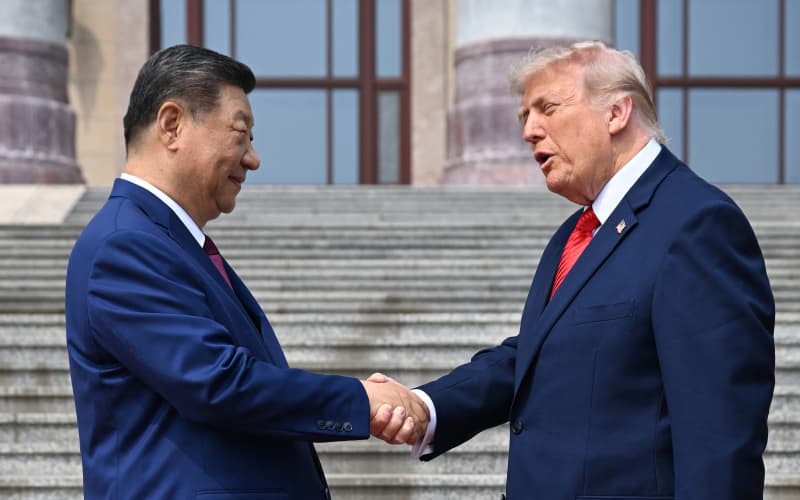
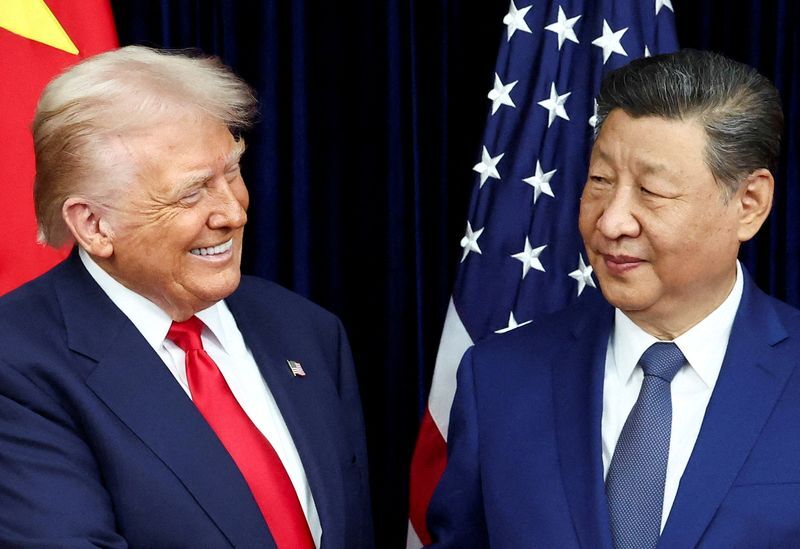
The Trump administration subsequently vowed to crack down on foreign companies' exploitation of U.S. artificial intelligence models, specifically singling out China. The matter was also raised during President Trump's visit to Beijing, where both heads of state discussed AI development and agreed to begin government-to-government dialogue on the topic — even as the espionage activity continued.
North Korea's Invisible Workforce
China is not operating alone in this digital shadow war. North Korea has developed a particularly insidious approach: infiltrating tech companies not through malware, but through fake employees.
North Korean nationals have been securing roles as remote IT contractors and full-time staff within organizations across North America and Western Europe, using standard hiring channels to gain entry. Once inside, these operatives serve two purposes: their salaries are funneled back to the Pyongyang regime, and their access to corporate systems provides a foothold for intelligence gathering and potential sabotage.
A federal judge in Massachusetts recently sentenced Kejia "Tony" Wang, a 42-year-old man from New Jersey, to nine years in prison for running an international fraud operation that placed North Korean IT workers in tech jobs at more than 100 American companies — including Fortune 500 firms. Over the course of three years, the network stole the identities of more than 80 Americans and forged fake government documents to place operatives inside U.S. companies.
The scale of the problem is significant. Estimates suggest that the number of North Korean overseas workers involved in these schemes ranges between 3,000 and 10,000.
Russia, Iran, and the Cybercriminal Marketplace
Beyond China and North Korea, the CrowdStrike report also documents sustained hacking activity from Russian and Iranian-linked groups, targeting technology firms for intelligence collection and, in some cases, deploying destructive malware designed not to steal data but to cause lasting damage.
Meanwhile, financially motivated criminal hackers are also intensifying their pressure on the sector. The report recorded a 30% increase in underground marketplace listings offering unauthorized access to technology company networks — a sign that breaching tech firms has become an increasingly commodified and scalable criminal business.
An AI Arms Race With High Stakes
The broader picture painted by CrowdStrike is one of a technology industry under permanent siege. The same wave of AI investment that has driven extraordinary market valuations has simultaneously made these companies the most attractive espionage targets on the planet.
With the world's most valuable AI assets concentrated inside technology firms, the sector is the most targeted industry in the world. The innovation that makes these companies valuable is precisely what makes them a target.
Beijing has publicly dismissed CrowdStrike's findings. A spokesperson for the Chinese Embassy in Washington stated that China opposes hacking and fights such activities in accordance with the law, rejecting what it called "vilification and smears under the pretext of cybersecurity." China's foreign ministry similarly urged the U.S. to abandon its biases and do more to promote scientific and technological exchanges.
For Western technology companies, however, the threat is not hypothetical. It is measured, documented, and growing.
.
Sources:
- CrowdStrike – 2026 Technology Threat Landscape Report (Press Release via INN): https://investingnews.com/crowdstrike-2026-technology-threat-landscape-report-china-steals-ai-capabilities-it-can-t-build/
- Reuters – White House accuses China of industrial-scale AI theft (April 23, 2026): https://www.usnews.com/news/top-news/articles/2026-04-23/white-house-accuses-china-of-industrial-scale-theft-of-ai-technology-ft-reports
- NPR – Trump administration vows crackdown on Chinese AI exploitation (April 24, 2026): https://www.npr.org/2026/04/24/g-s1-118582/administration-crackdown-on-chinese-firms-exploiting-u-s-ai-models
- Fortune – North Korean IT workers infiltrating US tech companies (April 26, 2026): https://fortune.com/2026/04/25/north-korean-it-worker-scheme-american-faciliators/
- Help Net Security – North Korean remote IT worker infiltration scheme (March 19, 2026): https://www.helpnetsecurity.com/2026/03/19/north-korean-remote-it-workers-corporate-infiltration-scheme/
- CNBC – US State Department orders global warning on China AI theft (April 25, 2026): https://www.cnbc.com/2026/04/25/us-global-warning-alleged-china-ai-theft.html
.
What's Your Reaction?
 Like
0
Like
0
 Dislike
0
Dislike
0
 Love
0
Love
0
 Funny
0
Funny
0
 Wow
0
Wow
0
 Sad
0
Sad
0
 Angry
0
Angry
0












Comments (0)