

Iran Moves to Formalize Strait of Hormuz Toll — And Washington Is Furious
Iran's ambassador to Moscow has publicly confirmed that the Strait of Hormuz will reopen — but on new terms set jointly by Iran and Oman, including mandatory transit fees for passing ships. The declaration puts Tehran on a direct collision course with the Trump administration, which has vowed to block any such arrangement by force if necessary.

.
The World's Most Critical Oil Passage — Now With a Price Tag
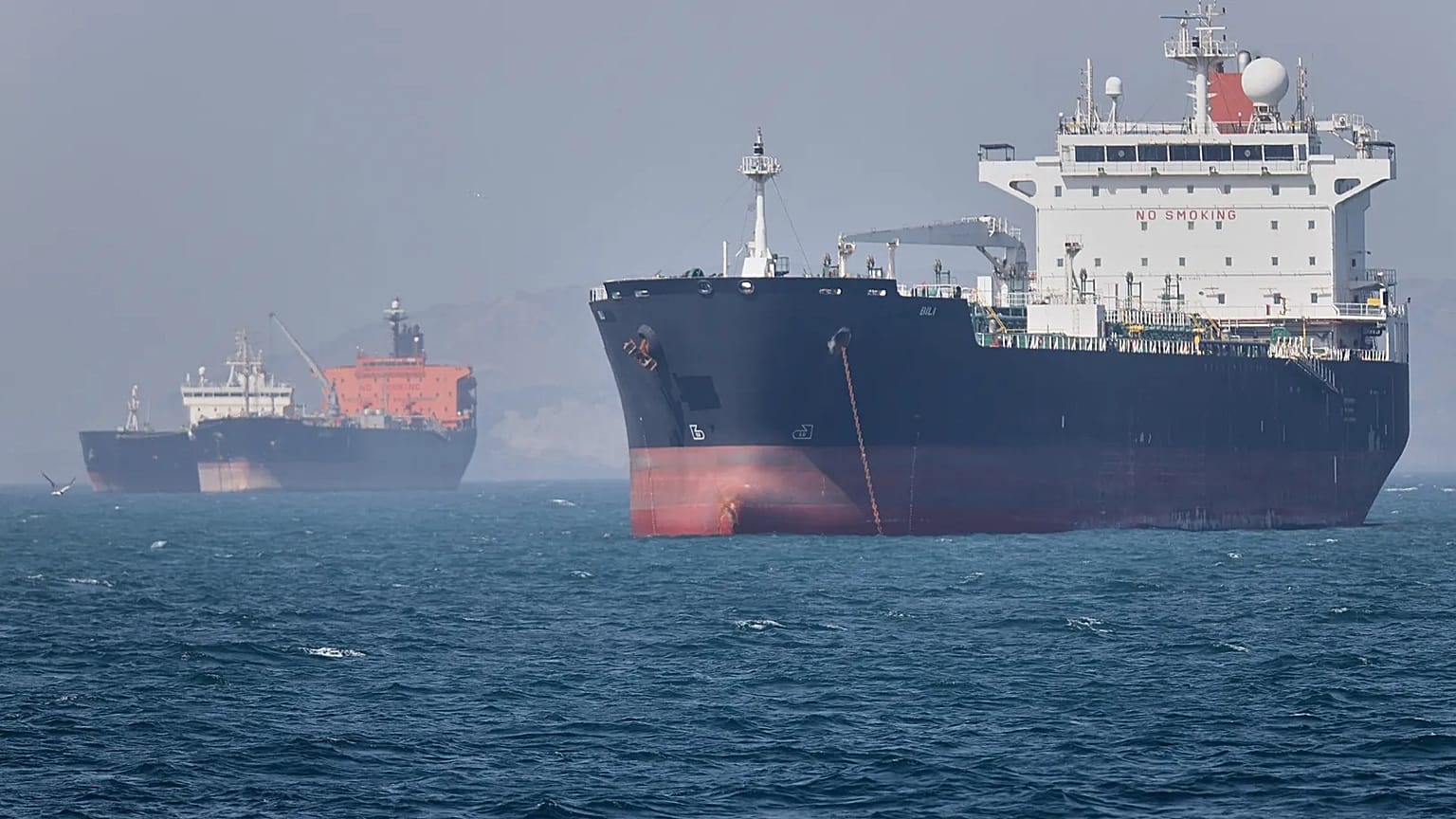
The Strait of Hormuz is a narrow waterway — just 34 kilometers (about 21 miles) wide — separating the Persian Gulf from the Indian Ocean. Before the current conflict between the U.S.-Israeli coalition and Iran erupted on February 28, 2026, roughly one-fifth of the world's oil supply passed through it every day. Now, Iran wants to turn that passage into a toll road.
On Monday, Iran's ambassador to Russia, Kazem Jalali, told the Russian newspaper Izvestia that the strait would reopen — but under new conditions to be set jointly by Iran and Oman. "Iran and Oman provide certain services related to this strait," Jalali said. "Fees will be charged for those services."
He provided no further details on the fee structure, the collection mechanism, or a timeline.
Not Just Talk — Fees Already Being Charged Informally
The announcement is not entirely new in practice. Since the war began, Iran has already been charging some vessels informally. According to reporting by Bloomberg, payments of up to $2 million per voyage have been sought on a case-by-case basis — accepted in cash, Chinese yuan, or even cryptocurrency. Iran's newly established Persian Gulf Strait Authority became operationally active on May 18, 2026, signaling a move toward formalizing this system.
A $1-per-barrel fee — payable in yuan or stablecoin — has also been reported as part of a broader Iranian proposal, according to Bloomberg. Payments reportedly required going through an intermediary agency linked to Iran's Revolutionary Guard Corps (IRGC).
Experts note the economic logic is blunt: for shipping companies with tankers sitting idle in the Gulf, paying a multi-million dollar fee is still cheaper than the daily costs of an anchored vessel — crew wages, loan payments, insurance premiums and all.
Washington Draws a Hard Line
President Donald Trump has made his position unambiguous: no tolls, no exceptions. When asked about the possibility of Iran and Oman jointly managing the strait, Trump declared flatly at a cabinet meeting in late May: "Nobody is going to control it. It's international waters, and Oman will behave just like everybody else, or we will have to blow them up."
Treasury Secretary Scott Bessent reinforced the message, warning that the U.S. would "aggressively" impose sanctions on Oman if it participated in any tolling arrangement with Iran. Bessent also said Oman's ambassador had assured him that no such tolls were being planned.
Trump further demanded that the strait must be "immediately open" to unrestricted shipping with no fees — a condition he listed alongside Iran's nuclear disarmament as a requirement for any permanent peace deal.
Oman's Complicated Position
Oman sits at the center of this standoff in more ways than one. Geographically, the strait runs through both Iranian and Omani territorial waters — making Oman a necessary partner in any formal transit regime. Diplomatically, Oman has long served as a quiet intermediary between Washington and Tehran, earning a reputation as the "Switzerland of the Middle East."
Iran's deputy foreign minister Kazem Gharibabdi previously stated that Tehran was drafting a protocol with Oman requiring ships to obtain permits and licenses to use the strait — framing it as a measure to facilitate rather than restrict passage. Whether Muscat will ultimately sign on remains unclear. Oman has acknowledged holding talks with Iran on transit options but has not confirmed any agreements.
The Legal Question Nobody Agrees On
Iran's claim to charge fees rests on a contested legal argument. The Strait of Hormuz, while an international passage, runs entirely through the territorial waters of Iran and Oman — not through open international waters. Iran argues this gives it the right to impose service charges.
The UN's International Maritime Organization (IMO) disagrees sharply. "There is no international agreement where tolls can be introduced for transiting international straits," an IMO spokesperson told Reuters in late May. "Any such toll will set a dangerous precedent." Greece's Prime Minister Kyriakos Mitsotakis similarly called the idea "completely unacceptable."
Global Stakes: Asia Feels the Pinch Most
The near-closure of Hormuz since late February has sent energy prices soaring and triggered fears of synchronized economic shocks across Asia. Japan, which previously imported around 95% of its oil needs from the Middle East, had a Japan-linked tanker pass through the strait in May — reportedly without paying any fee, according to Japanese officials.
Meanwhile, Israel carried out fresh strikes on military targets in western and central Iran on Monday — even after Trump reportedly urged Prime Minister Benjamin Netanyahu to hold back. The strikes underscore how far the region remains from any stable resolution.
For now, the world's most important oil chokepoint remains exactly that — a chokepoint — with billions of dollars in energy trade, and the geopolitical ambitions of several major powers, hanging in the balance.
.
Sources:
- Reuters – Hormuz Strait will be open with transit fees, Iran envoy to Moscow quoted (June 8, 2026): https://www.reuters.com/business/energy/hormuz-strait-will-be-open-with-transit-fees-iran-envoy-moscow-quoted-2026-06-08/
- Reuters – Explainer: Can Iran charge fees for ships to transit the Strait of Hormuz? (April 7, 2026): https://www.aol.com/articles/explainer-iran-charge-fees-ships-161746415.html
- Bloomberg – Iran Charges Some Ships Hormuz Transit Fees for Safe Passage (March 24, 2026): https://www.bloomberg.com/news/articles/2026-03-24/iran-charges-some-ships-hormuz-transit-fees-for-safe-passage
- CNBC – Iran war: U.S. threatens sanctions and military action against Oman (May 29, 2026): https://www.cnbc.com/2026/05/29/oman-trump-sanctions-iran-war-bessent.html
- Al Jazeera – Maths behind Hormuz toll: Is paying Iran cheaper than the blockade? (May 21, 2026): https://www.aljazeera.com/features/2026/5/21/maths-behind-hormuz-toll-is-paying-iran-for-transit-cheaper-than-blockade
- Fox News / Reuters – UN shipping agency warns Hormuz toll would set dangerous precedent (May 2026): https://www.foxnews.com/world/strait-hormuz-toll-would-set-dangerous-precedent-un-shipping-agency-warns
- TIME – Trump Threatens to 'Blow Up' Oman Over Strait of Hormuz (May 28, 2026): https://time.com/article/2026/05/28/us-iran-oman-trump-war-threat-strait-hormuz-peace-deal/
.
What's Your Reaction?
 Like
0
Like
0
 Dislike
0
Dislike
0
 Love
0
Love
0
 Funny
0
Funny
0
 Wow
0
Wow
0
 Sad
0
Sad
0
 Angry
0
Angry
0














Comments (0)