

How to Protect Against Chikungunya With Natural Remedies

.
Chikungunya often mimics other mosquito-borne diseases such as dengue and Zika, with similar symptoms of joint pain, high fever, and other flu-like symptoms.
With cases surging worldwide, the search for protection has increased, drawing on both conventional medicine and traditional remedies.
How TCM Views Mosquito-Borne Illnesses
In TCM, diseases such as chikungunya are not only understood in terms of viruses and mosquitoes but also as conditions that result from “dampness” and “excess heat and inflammation.”When these two forces combine—what TCM calls “damp-heat”—they create fertile ground for illness. Just as a swamp forms when water (dampness) meets summer heat, the body becomes a warm, stagnant environment where pathogens can flourish. For example, someone living in a hot, humid climate who also struggles with poor digestion or fluid retention may be more vulnerable to mosquito-borne illnesses.
From this perspective, prevention involves more than just avoiding mosquito bites. It means draining dampness to reduce internal stagnation, clearing toxins to fight infection, and strengthening the spleen system—which TCM views as responsible for transforming food into energy and fluids. A strong spleen reduces dampness and improves immunity.
Natural Mosquito Repellent Methods
On the “Health 1+1” program on NTD, a sister outlet of The Epoch Times, Shu Rong, director of Doctor Rong’s TCM Clinic in the UK, shared several natural methods for mosquito prevention.1. Aromatic Sachets
Simple herbal sachets can double as both a natural mosquito repellent and a way to support the body’s energy in TCM.3 grams atractylodes (Cang zhu)
3 grams notopterygium root (Qiang huo)
3 grams ligusticum root (Gao ben)
3 grams chuanxiong rhizome (Chuan xiong)
3 grams angelica dahurica (Bai zhi)
3 grams patchouli (Guang huo xiang)
3 grams costus root (Mu xiang)
- Grind equal parts of each herb into a fine powder.
- Measure about 20 grams for each sachet.
- Place the mixture into a small piece of gauze or a thin cloth pouch.
- Keep the sachet in a pocket, under your pillow, or in your car.
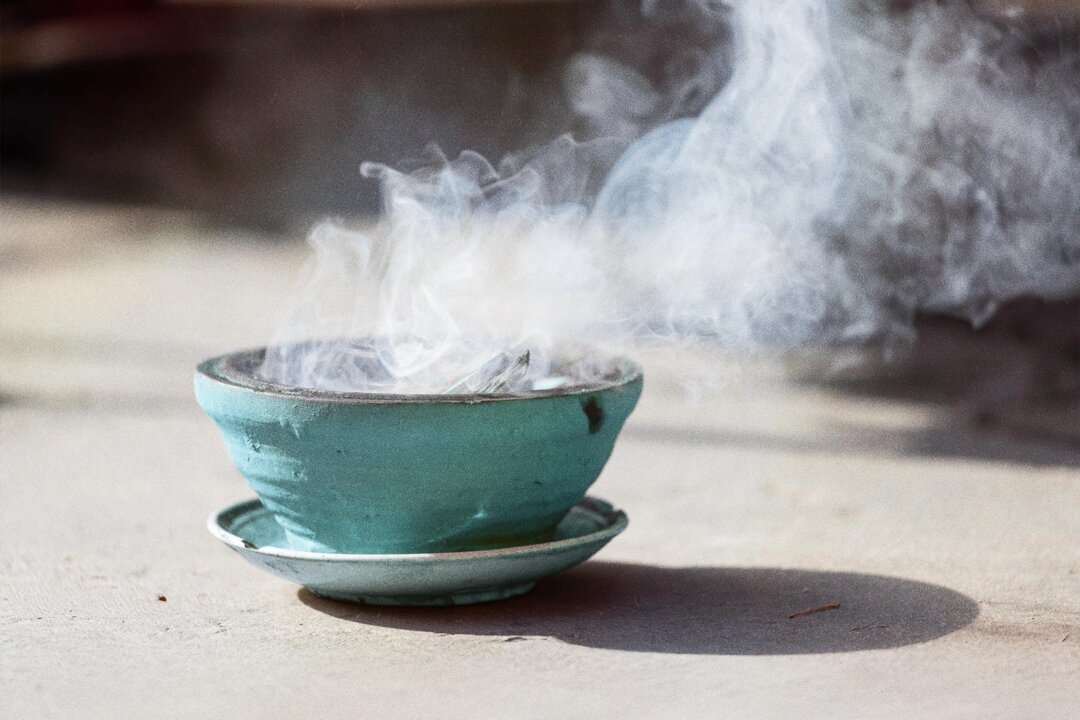
2. Herbal Smoke Method
Burning aromatic herbs has long been used in TCM to drive away insects while cleansing the air of impurities.10 to 15 grams angelica dahurica (Bai zhi)
10 to 15 grams atractylodes (Cang zhu)
10 to 15 grams costus root (Mu xiang)
5 to 10 grams agarwood (Chen xiang)
5 to 10 grams sandalwood (Tan xiang)
Use any combination of the herbs above, depending on availability and preference.
- Grind the herbs into a fine powder.
- Mix the powder with moxa floss in a 1-to-1 weight ratio.
- Place the mixture in a fire-resistant container and burn it.
- Use approximately 20 to 50 grams per session, depending on the size of the space.
- Close all doors and windows, and allow the smoke to permeate the room for about one hour.
- Ventilate the room afterward.
Strengthening the Body From Within
Repellents help, but TCM emphasizes internal protection just as much as external.Recipe: Astragalus Spleen-Tonifying Tea
This gentle herbal tea is used in TCM to strengthen the spleen, reduce dampness, and boost the body’s defenses against infection.10 grams astragalus root (Huang qi)
5 grams white atractylodes (Bai zhu)
10 grams poria (Fu ling)
3 grams licorice root (Gan cao)
3 grams tangerine peel (Chen pi)
- Place the herbs in a ceramic thermal cup.
- Pour boiling water over the herbs and steep for about 20 minutes.
- Re-steep the same herbs multiple times throughout the day.
Spleen-Strengthening Foods
In TCM, mosquito-borne illnesses are closely associated with internal dampness. As part of daily dietary care, it is advisable to eat more foods that strengthen the spleen and eliminate dampness.Personal and Home Protection Guidelines
While TCM emphasizes strengthening the body’s internal defenses, personal and home protection remain critical. Chikungunya is spread by the bite of Aedes mosquitoes. Unlike malaria-carrying mosquitoes, these species are most active during the day. The following measures can reduce the chance of being bitten:- Eliminate standing water: Mosquitoes lay eggs in stagnant water—even small amounts, which serve as the starting point of the transmission cycle. Eggs can survive in dry conditions for several months and hatch within days once they come into contact with water. Common sources include plant saucers, buckets, trash bins, and other containers around the home.
- Install physical barriers: Use window and door screens to prevent mosquitoes from entering indoor spaces.
- Wear protective clothing and repellent outdoors: When outdoors, wear light-colored, long-sleeved clothing, as dark colors are more likely to attract mosquitoes. Apply mosquito repellent to exposed skin for added protection.
What's Your Reaction?
 Like
0
Like
0
 Dislike
0
Dislike
0
 Love
0
Love
0
 Funny
0
Funny
0
 Wow
0
Wow
0
 Sad
0
Sad
0
 Angry
0
Angry
0

















Comments (0)