

Pacific Nations Split on Deep-Sea Mining as US Pushes to Curb China’s Critical Minerals Dominance


Pacific nations are rethinking the deep-sea mining of their vast undersea mineral deposits, with some favouring environmental safeguards and others turning to Beijing.
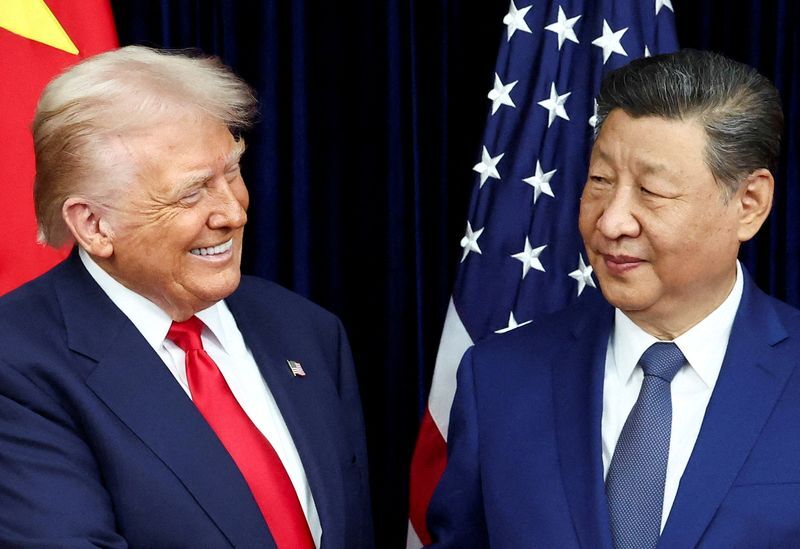
It comes as the Trump administration is seeking to bypass U.N. regulations to accelerate deep-sea mining for critical minerals like nickel and cobalt, aiming to reduce reliance on China amid surging EV demand.
In April, President Donald Trump signed an executive order prioritising U.S. leadership in seabed mapping and mineral exploration, aiming to ensure reliable access to critical minerals like manganese, nickel, cobalt, and rare earth elements, which are used in everything from defence systems and batteries to smartphones and medical devices.
Access to these minerals is a crucial factor in the health and resilience of the U.S. supply chain.
The order was surprising for two reasons: it reversed his 2020 executive order, which placed a moratorium on drilling and mining in waters off the U.S. southeast coast until 2032; and it went beyond America’s Exclusive Economic Zone (EEZ).
Under Trump’s order, America’s National Oceanic and Atmospheric Administration (NOAA) gains the authority to issue permits for exploration and mining in United States and international waters.
A few years ago, several Pacific nations would have welcomed the opportunity to access an alternative approvals mechanism as they chafed at the slow progress being made under the ISA regime.
Eleven countries in the region were keen to move ahead, including Kiribati, Papua New Guinea, Tonga, and the Cook Islands—whose undersea resources have been the subject of numerous subsea surveys since the 1970s, and which issued exploration contracts to three companies in 2022, aiming for mining to begin as early as 2028.
.

Pacific Leaders Choose Different Paths
Papua New Guinea, which was one of the first countries to permit deep-sea mining in its EEZ, has now called a halt to all sea floor mining activity.Prime Minister James Marape announced in June that his government would stop all operations in the absence of robust scientific evidence and proper environmental safeguards, despite reported losses of $120 million (US$70 million).
However, Nauru, just 21 square kilometres and with a population of 12,000, is standing by its contract with Canadian firm The Metals Company (TMC).
It was able to finalise the contract under the ISA regime because it is one of 19 “sponsoring states” that have been allocated an area of the Pacific in the Clarion-Clipperton Zone, a vast area of the Pacific Ocean that sits between Hawai'i, Kiribati, and Mexico and spans 4.5 million square kilometres and contains huge deposits of critical minerals.
Nauru’s president, David Adeang, has argued at the U.N. that the benefits of taking minerals to use them for batteries to increase electrification outweigh any environmental damage that might be caused.
In addition to Nauru, Tonga, Kiribati, and the Cook Islands have special rights in the zone.
Tonga also has a pre-existing agreement with TMC dating back to 2021, which it updated in early August.
The original contract only permitted exploration activity and was signed under the ISA framework. The company’s announcement did not make clear whether the contract covered mining activity under either the NOAA or ISA pathways.
In Kiribati, TMC has abandoned a contract that covered a third of its Pacific Ocean exploration area. A U.S. Securities & Exchange Commission filing by the company appears to indicate that this occurred at the instigation of the Kiribati government, which announced in May that it had held talks with Beijing’s ambassador to “explore potential collaboration for the sustainable exploration of the deep ocean resources.”
.

A more cautious approach is being taken by the Cook Islands, which is three-and-a-half years into its five-year exploration phase.
The Cook Islands Seabed Minerals Authority’s partnerships and cooperation director, Edward Herman, said, “We need baseline data to make an ethical, informed, science-based decision, so if the data is not available, we will require more data.”
New Zealand’s Coalition Flips Direction
A late entry to the list is New Zealand. The previous Labour government not only ruled out seabed exploration but also ended gas extraction and land-based mining.However, the coalition government of National, NZ First, and ACT parties has no such reservations.
It recently scrapped the moratorium and introduced special “fast track” legislation, which allows certain pre-selected projects to bypass a lot of the environmental impact assessments that would otherwise have been required.
One of those is a plan to mine 50 million tonnes of South Taranaki seabed every year for 30 years, which has just cleared the first hurdle in the process.
Trans-Tasman Resources (TTR) aims to extract vanadium, claiming the site contains a world-class resource that could contribute NZ$1 billion (US$590 million) annually to the economy. The heavy mineral sands also contain iron ore and titanium.
The “fast track” legislation means the public hasn’t been able to make submissions on the project.
Opponents, including environmental groups, opposition parties, and critics, claim there is “massive” opposition, and some Māori tribes claim it breaches the Treaty of Waitangi. Provisions referencing Treaty principles appear in key laws, including the Crown Minerals Act and the Exclusive Economic Zone and Continental Shelf (Environmental Effects) Act.
In 2021, the Supreme Court cited these obligations when it rejected a 2016 marine discharge application by TTR to mine the seabed in the Taranaki Bight.
It’s possible the latest approval may also end up in court, though the government is determined to allow mining, and has legislation progressing through parliament could result in the removal of Treaty principles clauses from legislation.
What's Your Reaction?
 Like
0
Like
0
 Dislike
0
Dislike
0
 Love
0
Love
0
 Funny
0
Funny
0
 Wow
0
Wow
0
 Sad
0
Sad
0
 Angry
0
Angry
0














Comments (0)