

How Trump’s China Pivot Turned Taiwan Into a US Strategic Priority: Miles Yu


.
The United States’ strategic focus on countering the Chinese Communist Party (CCP) began during President Donald Trump’s first term and has since hardened into a bipartisan consensus—making Taiwan’s security a core U.S. national interest, according to Miles Yu, a senior fellow and director of the China Center at the Hudson Institute and a former adviser to then–Secretary of State Mike Pompeo.
.
Yu said Washington formally reoriented its national defense strategy toward China under Trump, marking the most significant shift in U.S. grand strategy since World War II.
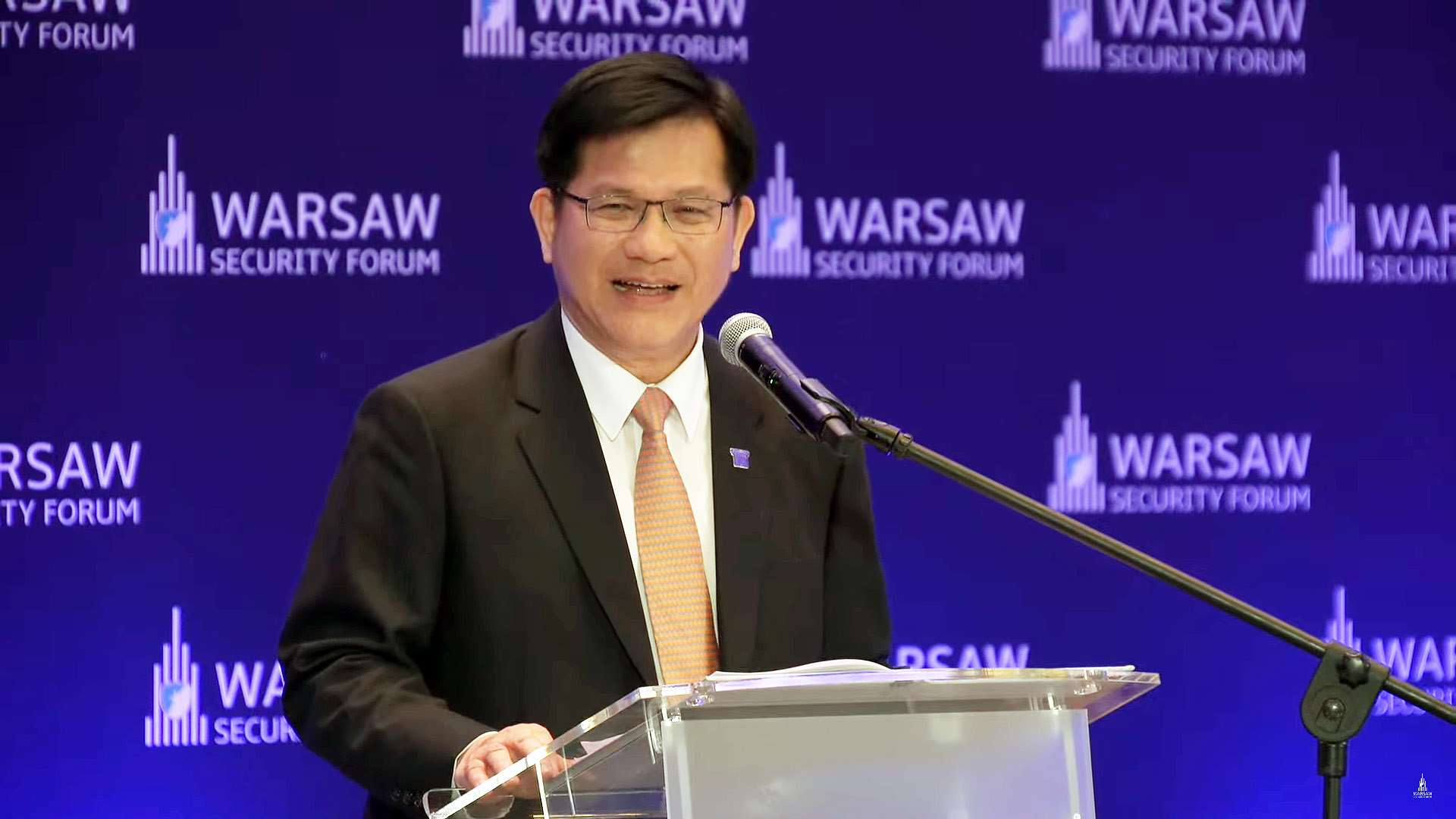
Speaking at a forum in Taipei on Dec. 15, Yu said, “Protecting Taiwan is an act of altruism—and also a necessity rooted in self-interest.”
A Historic Strategic Pivot
Yu said U.S. national security strategy has undergone only two major transformations over the past 80 years.The first came in 1947, when Washington reshaped its entire national apparatus—industry, education, science, defense, and intelligence—to confront the global expansion of the communist Soviet Union. That shift produced the National Security Act of 1947 and defined U.S. strategy throughout the Cold War.
.
The second transformation, he said, began around 2015 when Trump entered the presidential race and accelerated after his election in 2016. In 2017, the Trump administration released a new National Security Strategy that identified the CCP as the United States’ primary strategic threat.
.
That document marked a decisive pivot away from Russia and the Middle East entanglements and toward the Indo-Pacific, according to Yu.
“Russia’s economy is less than one-tenth the size of China’s, the CCP’s military buildup has far outpaced Russia’s, and the United States has assessed that NATO allies have the economic capacity—and should be required—to increase defense spending to counter the Russian threat,” he said.
Trump’s Second-Term Approach
Looking at Trump’s second term, Yu said Washington’s posture toward Beijing has hardened further.“There is now a consensus [across the aisle] in U.S. politics that the CCP is the number one threat,” he said.
Yu described Trump’s current national security team as highly centralized and loyal, with fewer internal dissenters than during his first term. He added that Trump has lost faith in trade agreements with Beijing after previous deals failed to materialize.
.
“Trump will no longer believe in negotiating trade agreements with the CCP,” he said. “[What he believes in] now is tariffs.”
Yu said the core objective of Trump’s trade policy is to force genuine market access and reciprocity. Countries closely tied to China’s export chain—such as Canada and Mexico—have faced higher U.S. tariffs after Chinese goods were routed through them to circumvent trade barriers during the Biden administration.
Similar concerns, Yu said, have driven U.S. tariffs on Vietnam, Cambodia, and Malaysia.
.
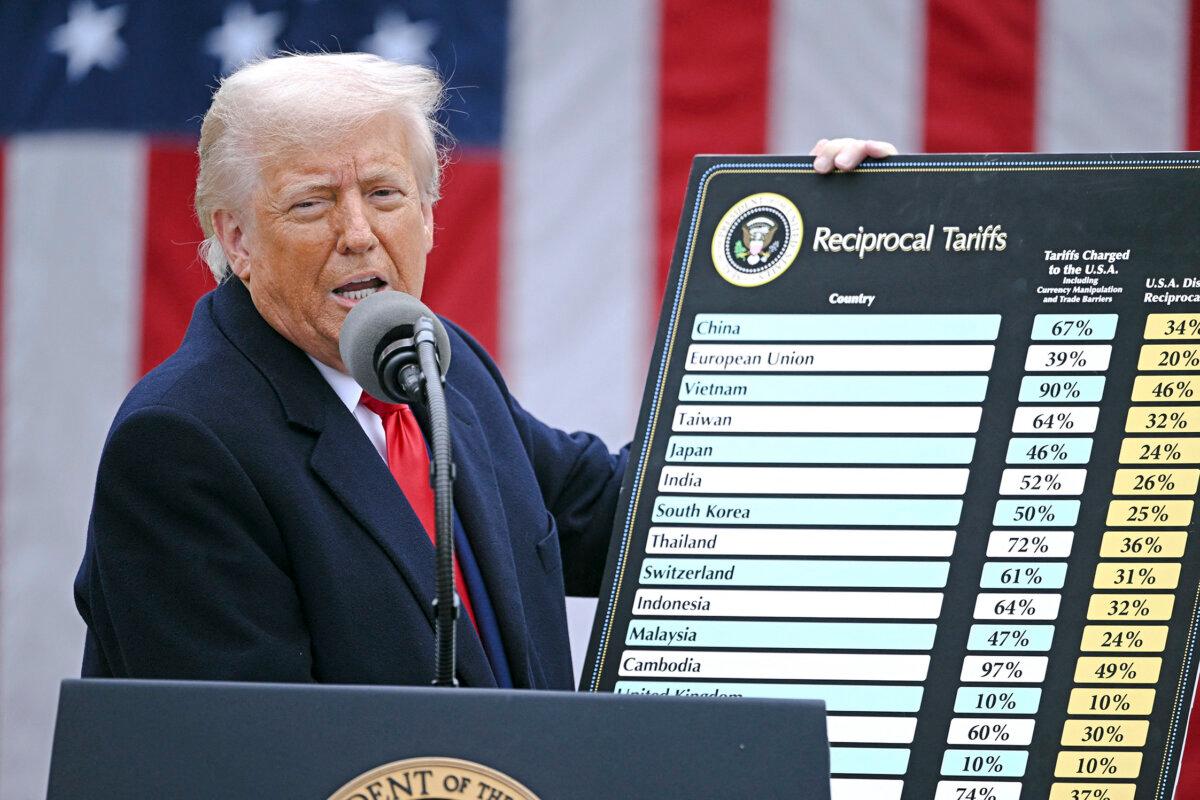
President Donald Trump holds a chart as he delivers remarks on reciprocal tariffs at the White House, on April 2, 2025. Brendan Smialowski/AFP via Getty Images
.
Deterrence Without Direct Conflict
Yu emphasized that Washington’s strategy toward Beijing is not aimed at immediate military confrontation, but at long-term deterrence.That includes strengthening national security, tightening border controls, combating fentanyl trafficking, expanding missile defense systems, and countering China’s influence in the Western Hemisphere—such as efforts to weaken the China-aligned Maduro regime in Venezuela.
.
At the same time, Yu said, the United States is increasingly relying on collective defense rather than unilateral action.
“The United States is strengthening deterrence against the CCP by emphasizing collective defense rather than relying solely on U.S. power—sharing security responsibilities among partners,” he said.
What Washington Looks for in Allies
Yu pointed to Poland, Japan, South Korea, and Israel as examples of allies Washington deeply values.He pointed out that Poland stands out within NATO for raising defense spending to more than 5 percent of GDP after emerging from communist rule. South Korea, meanwhile, has achieved a high degree of operational integration with U.S. forces and can rapidly convert civilian shipbuilding and heavy industry into wartime production.
.
“The United States helps those who help themselves,” Yu said. “Whether America will truly help Taiwan depends largely on whether Taiwan shows the determination to defend itself.”
.
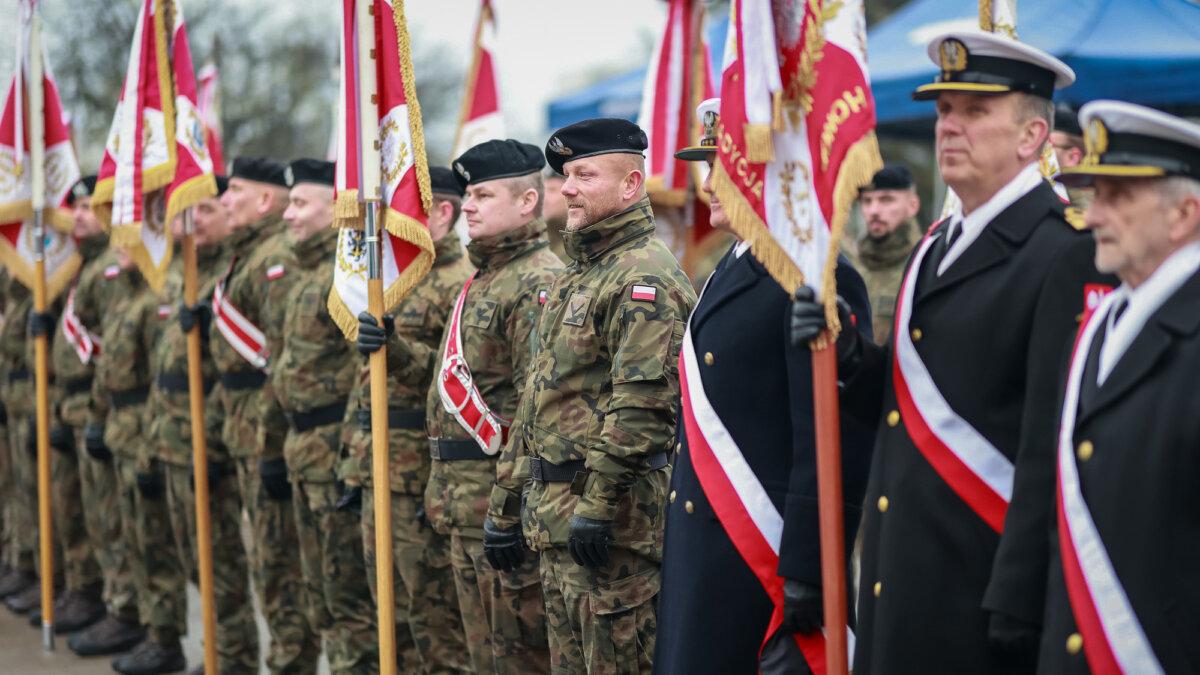
Polish army and navy officers on parade on Navy Day in front of the ORP Błyskawica Ship Museum in Gdynia, Poland, on Nov. 28, 2024. Polish Ministry of Defense/Flickr
.
Taiwan’s Security Is in America’s Interest
Yu drew a sharp distinction between Washington’s “one China policy” and Beijing’s “one China principle.”“The United States does not recognize Taiwan as part of the People’s Republic of China and firmly opposes any unilateral attempt to change the status quo by force,” he said.
Taiwan’s importance, Yu argued, extends beyond values. As a leading democracy in Asia and a global hub for semiconductor manufacturing, Taiwan sits at the heart of both regional security and the global economy.
.
“If Taiwan falls, the first island chain would be severely compromised,” he said.
Yu also rejected Beijing’s claim that Taiwan’s status is a purely internal Chinese matter. He noted that U.N. Resolution 2758 never determined Taiwan’s sovereignty and that the Treaty of San Francisco left Taiwan’s final status unresolved.
.
Recent statements by Japanese leaders underscore the point. Japanese Prime Minister Sanae Takaichi has openly said that “a Taiwan contingency is a Japan contingency”—remarks that Yu said angered Beijing precisely because they exposed what he called the CCP’s false narrative on Taiwan.
“The status of Taiwan is an international issue,” Yu said. “It is not an internal affair of the CCP.”
.
Zhongyuan contributed to this report.
.
What's Your Reaction?
 Like
0
Like
0
 Dislike
0
Dislike
0
 Love
0
Love
0
 Funny
0
Funny
0
 Wow
0
Wow
0
 Sad
0
Sad
0
 Angry
0
Angry
0














Comments (0)