

How Chinese EVs Have Impacted Global Markets—and What It Means for Canada as It Opens Its Market


.
Earlier this month, Prime Minister Mark Carney struck a deal with China to allow 49,000 Chinese electric vehicles into Canada annually at a 6.1 percent tariff, replacing the 100 percent tariff imposed in 2024 amid concerns over Beijing’s non-market practices.
China’s auto market is a crowded one, leading Chinese auto manufacturers to increase exports to markets around the world, where they can offer their vehicles at lower costs than the domestic manufacturers in those countries.
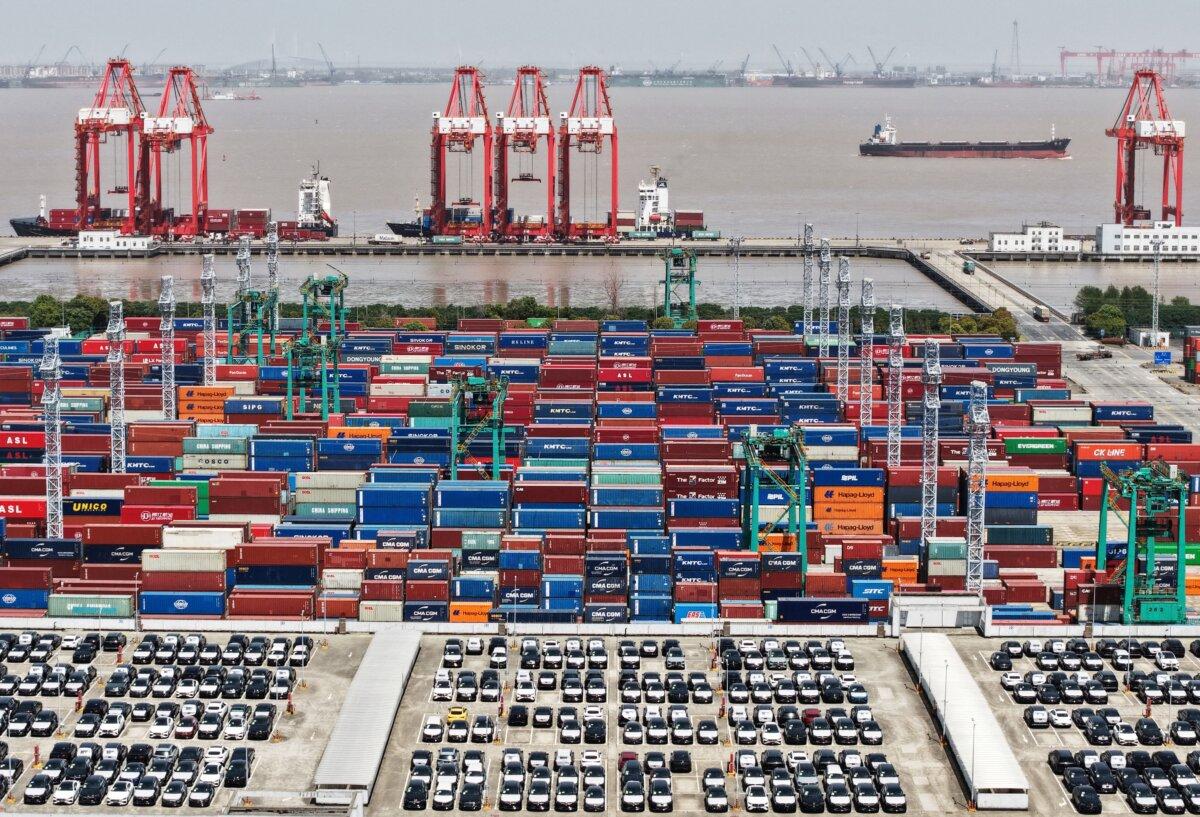
China’s auto exports grew by 21 percent in 2025, driven by increased shipments of EVs, according to the China Association of Automobile Manufacturers. Deutsche Bank economists have estimated that China’s vehicle exports will rise by 13 percent in 2026. China’s key auto export destinations include Europe, South America, Russia, and Southeast Asia, among other areas.
.
Europe
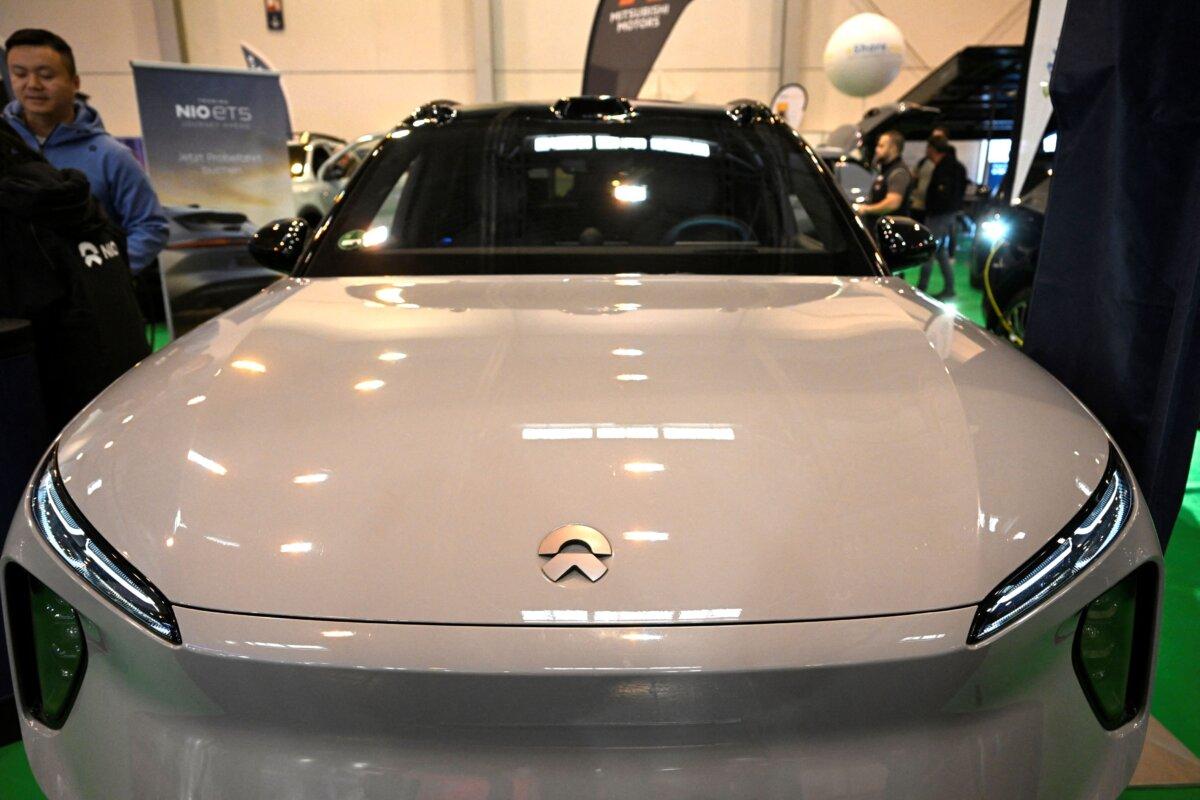
Chinese EVs have entered Europe’s auto market in large volumes over the last few years, and are expected to continue to make gains in the years ahead, despite measures imposed by the European Union (EU) such as tariffs and minimum import pricing.“China achieved its leadership position through subsidies and various competitive advantages such as its access to natural resources, its large internal market, cheap labour and cheap technologies,” the report said, adding that Chinese EVs are sold at approximately 20 percent below the price of European-manufactured EVs.
Chinese-made cars rose to 6 percent of sales in the EU in the first half of 2025, up from 5 percent in the same period of 2024, according to the European Automobile Manufacturers’ Association (ACEA) and S&P Global Mobility.
Meanwhile, EU-based manufacturers made up 74 percent of total EU car sales in the first half of 2025, the ACEA said, with Germany producing approximately 20 percent of cars sold in the EU, followed by Spain, Czechia, and France.
Chinese auto manufacturers are expected to double their European market share to approximately 10 percent by 2030, according to consulting firm AlixPartners.
Meanwhile, automakers such as Ford and Volkswagen have said they had plans to reduce their European workforces, due to competition from subsidized Chinese EVs and weaker domestic EV demand.
.
Argentina, Brazil
Chinese EV maker BYD is expanding in South America, with the launch of sales of its EVs in Argentina in October 2025. Argentina’s government has allowed up to 50,000 electric and hybrid vehicles without tariffs in 2026, instead of the usual 35 percent tariff. The government said it expects roughly 40,000 units to enter the country by the end of January.BYD can currently import approximately 7,800 EVs under an allocation it was given by Argentina, according to Stephen Deng, manager for BYD in Argentina. Local car dealers have said the deal will likely benefit lower-cost Chinese carmarkers such as BYD.
Pablo Naya, CEO of Argentine EV company Sero Electric, says he believes the Argentine industry can “manage to compete” because at some point the government will impose more duties on the Chinese competitors. “China won’t be able to continue subsiding the products they send abroad,” he said on Jan. 21, according to the Associated Press.
Chinese-made cars are also expanding in Brazil as the Brazilian government welcomes foreign companies to do business in its country.
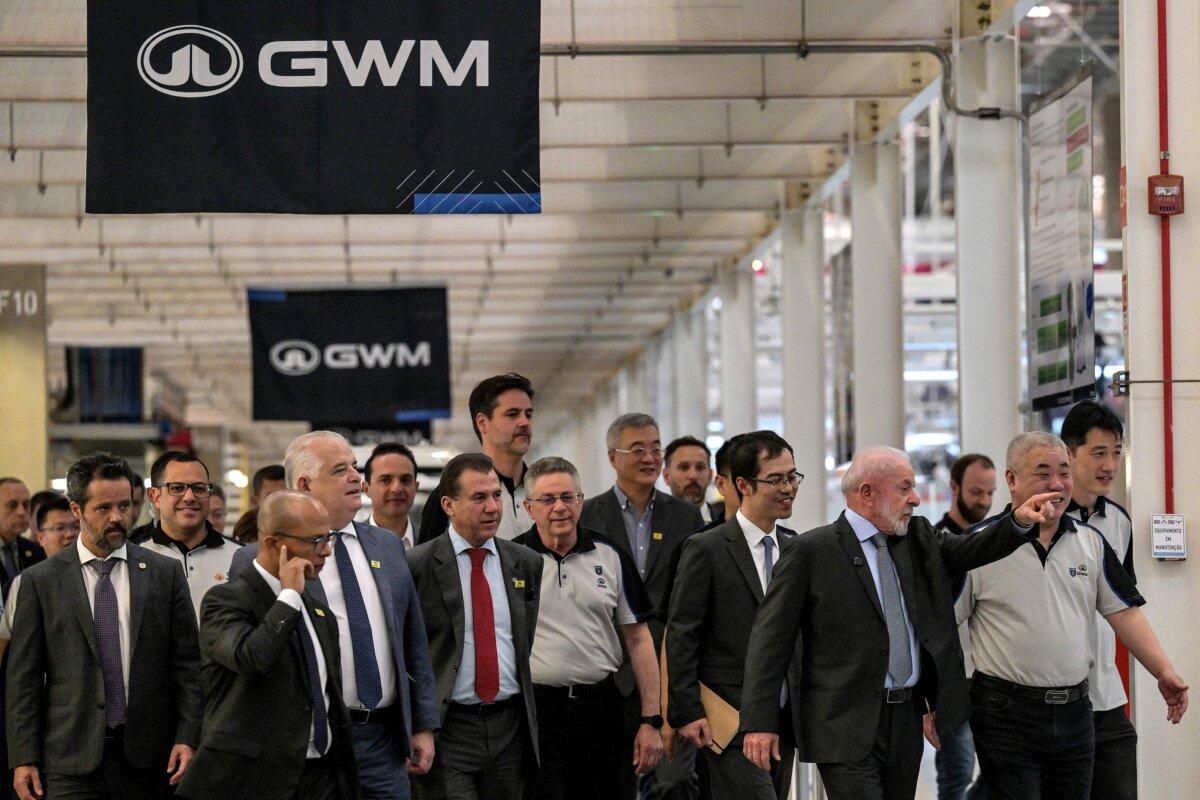
“Count on the Brazilian government. Whoever wants to leave, leave. Whoever wants to come, we welcome you with open arms,” Brazilian President Luiz Inacio Lula da Silva said at a local opening ceremony in August for a factory for Chinese auto company GWM. He noted that automakers such as Ford and Mercedes have scaled back their operations in Brazil, but he was pleased with the arrival of companies like GWM.
BYD also has a new factory in Brazil, and the manufacturer’s growth has faced pushback from local industry and labour groups who say that a large influx of Chinese EVs will hurt domestic auto production and jobs.
Canada
Meanwhile, Canadian automotive representatives are voicing concern about an influx of Chinese EVs potentially undermining Canada’s auto sector.The proportion of the market could be even greater if EVs are broken down by types. For example, 49,000 vehicles represents roughly half of all sales of battery-electric vehicles in Canada in 2025.
“It is expected that within three years, this agreement will drive considerable new Chinese joint-venture investment in Canada with trusted partners to protect and create new auto manufacturing careers for Canadian workers, and ensure a robust build-out of Canada’s EV supply chain,” the PMO said, adding that more than 50 percent of the Chinese EVs are expected to be “affordable” with an import price of less than $35,000.
He said the future of Canada’s auto sector depends on securing the country’s trade relationship with the United States, the destination for 90 percent of Canadian-made autos. “Diversification is not an option for automotive as markets in Europe and Asia are better served by assembly plants in those regions,” Kingston said.
.
Automotive Parts Manufacturers’ Association president Flavio Volpe, who also spoke at the press conference, said letting 50,000 EVs into Canada would be the equivalent to wiping out a full auto plant shift, which would impact thousands of Canadian jobs directly and indirectly.
National Unifor President Lana Payne, who represents 40,000 auto sector workers in Ontario, said jobs have been put “on the chopping block.” She said the Canadian government had made a deal to give Beijing market access without “guarantees or any real commitments.”
Former Prime Minister Justin Trudeau had slapped 100 percent tariffs on Chinese EVs in late 2024, following the lead of the Biden administration.
Industry Minister Mélanie Joly said on Jan. 26 that Ottawa will soon release its auto strategy to address the changing landscape. She also announced the launch of an “Auto Task Force” with Ontario to better coordinate work to support the industry.
“The idea of this Auto Task Force will be about looking at future strategic investments, making sure also that we protect our workforce, and frankly, their unionized workforce, and also making sure that trade works for workers and that they don’t feel that it’s going against them,” Joly said.
The minister did not have an update on the federal EV mandate at the time. Ottawa paused its EV sales mandate for the 2026 model year last fall and announced a 60-day review amid pressure from the industry to scrap it entirely.
What's Your Reaction?
 Like
0
Like
0
 Dislike
0
Dislike
0
 Love
0
Love
0
 Funny
0
Funny
0
 Wow
0
Wow
0
 Sad
0
Sad
0
 Angry
0
Angry
0















Comments (0)